 Campbell Of Cawdor Modern
This sett was a number in a weaver’s ledger before it was a name, and the family it is named for changed the spelling of its own lands to match a line in Shakespeare.
Muriel Calder, carried off
The Campbells of Cawdor begin with an abduction. In 1499 Muriel Calder, daughter and heiress of John Calder, seventh Thane of Calder in Nairnshire, was seized and taken away to Campbell country. Her uncles fought the Campbells over it at Daltullich and lost. In 1510, aged about twelve, she was married to Sir John Campbell, third son of the 2nd Earl of Argyll. Sir John lived at Calder from 1524 until his death in 1546; Muriel died in 1573 and the thanedom passed to her grandson John Campbell. The estate and the castle have descended in the family since, and the line later held Islay from 1612 until 1726, when it was sold to Daniel Campbell of Shawfield.
It is worth being plain that this is how the Campbells expanded generally: by marriage into a heritable title, backed where necessary by force and confirmed afterwards by law. The Cawdor case is simply one of the better documented instances.
Calder into Cawdor
The two spellings are the same name. Cawdor represents the English pronunciation of Calder, and in the early nineteenth century Lord John Campbell settled the matter by changing castle, village and family designation together so that they matched the title Shakespeare had given Macbeth. The peerage followed the family rather than the other way round: a barony of Cawdor of Castlemartin in the 1790s, and in 1821 John Frederick Campbell was created first Earl Cawdor. Earl Cawdor is head of the branch — Colin Campbell has held the earldom since 1993 — though the Standing Council of Scottish Chiefs lists the branch without a separately recognised clan chief, the chiefship of the whole name resting with the Duke of Argyll.
A number, then Argyle, then Cawdor
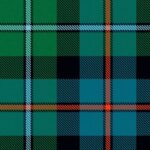
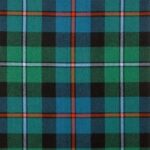
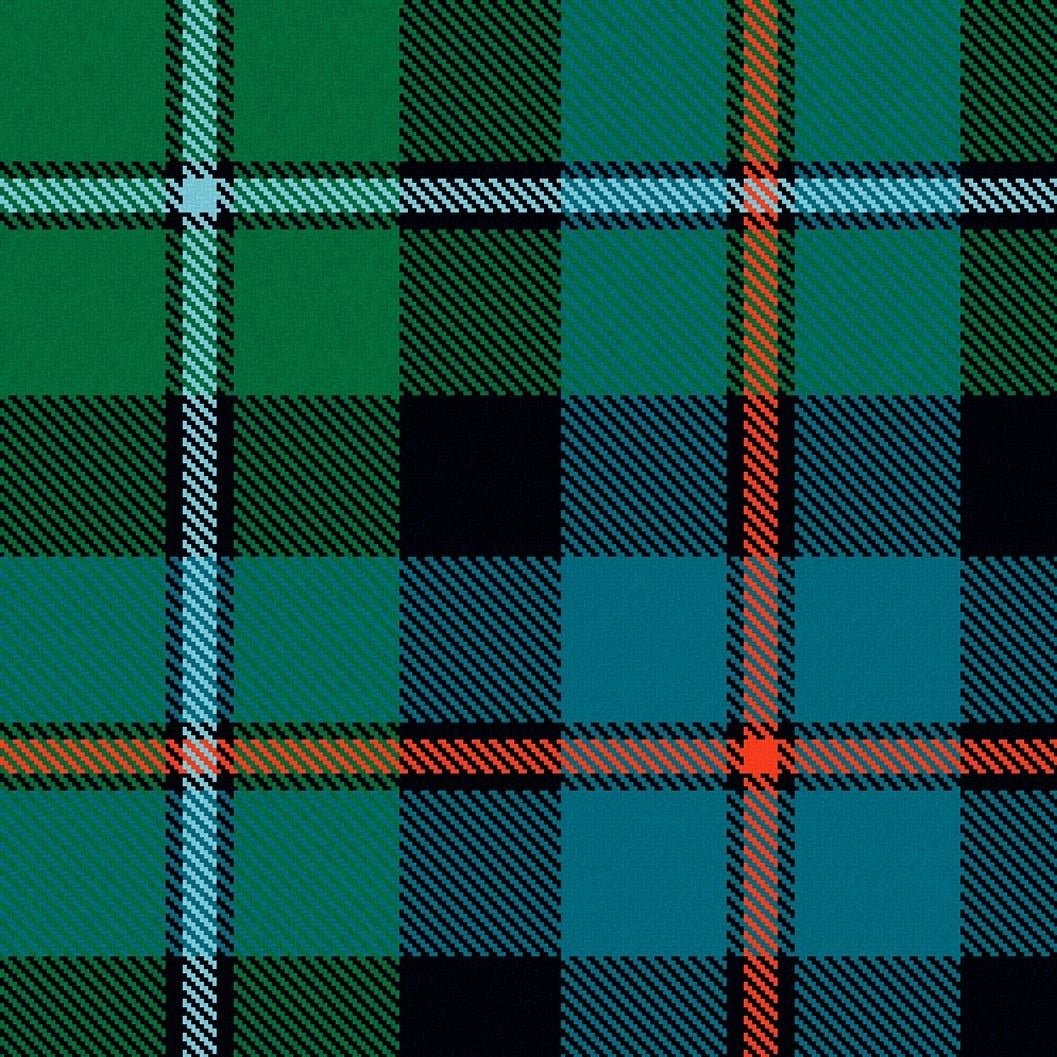
The pattern itself is the Government sett with red and light blue lines added, and its naming history is well recorded. It began as one of the numbered patterns of Wilsons of Bannockburn, with no family attached at all. It acquired the name Argyle towards the end of the eighteenth century — the register gives 1798, while a clan society account puts the change slightly earlier, and the two have not been reconciled — and was appearing as Argylle by 1819. Not until William and Andrew Smith published The Authenticated Tartans of the Clans and Families of Scotland in 1850 is the full title Campbell of Cawdor printed. It is in the Parisian Clans Originaux of 1880 as well, and a sample survives in the Dalgety collection held by the Scottish Tartans Authority.
Two further details are worth having. The identical threadcount is also recorded under the name MacCorquodale, which is entirely normal in the trade: one set of weaving instructions could be sold to more than one market under more than one label. And in 2009 a weave made for the Earl of Cawdor used a noticeably different arrangement of the same colours, so even the family version is not fixed for ever. Anyone who wants the exact figures should take them from the Scottish Register of Tartans entry rather than from a retailer.
Why the chief approves this one
Alastair Campbell of Airds listed four Campbell tartans as carrying chiefly authority in Campbell Tartan (1985): Campbell, Campbell of Cawdor, Campbell of Breadalbane and Campbell of Loudoun. Cawdor is authorised by MacCailein Mòr, which is more than can be said for the dress Campbell or for the pattern sold as Campbell of Argyll, both of which successive dukes have refused. The reason is straightforward. Cawdor is a genuine cadet line of documented descent from the house of Argyll, and its sett is a differenced version of the clan pattern rather than an invention with a Campbell label attached.
Who it is for
Campbells descended from or connected with the Cawdor line have the obvious claim, and so do Calders and Cawdors, since the names are the same and the thanedom is the origin of the branch. Beyond that there is no restriction and never has been; nobody will ask, and no authority exists to refuse. If you are choosing between Campbell setts on grounds of standing rather than colour, this is among the four the chief recognises, and the branch it belongs to can be traced by charter rather than by tradition.
References
Wikipedia, Clan Campbell of Cawdor and Clan Campbell; Clan Campbell Society (North America), Campbell of Cawdor tartan page; Alastair Campbell of Airds, Campbell Tartan (1985), as cited there; William and Andrew Smith, The Authenticated Tartans of the Clans and Families of Scotland (1850); Scottish Tartans Authority tartan database notes; Scottish Register of Tartans.