
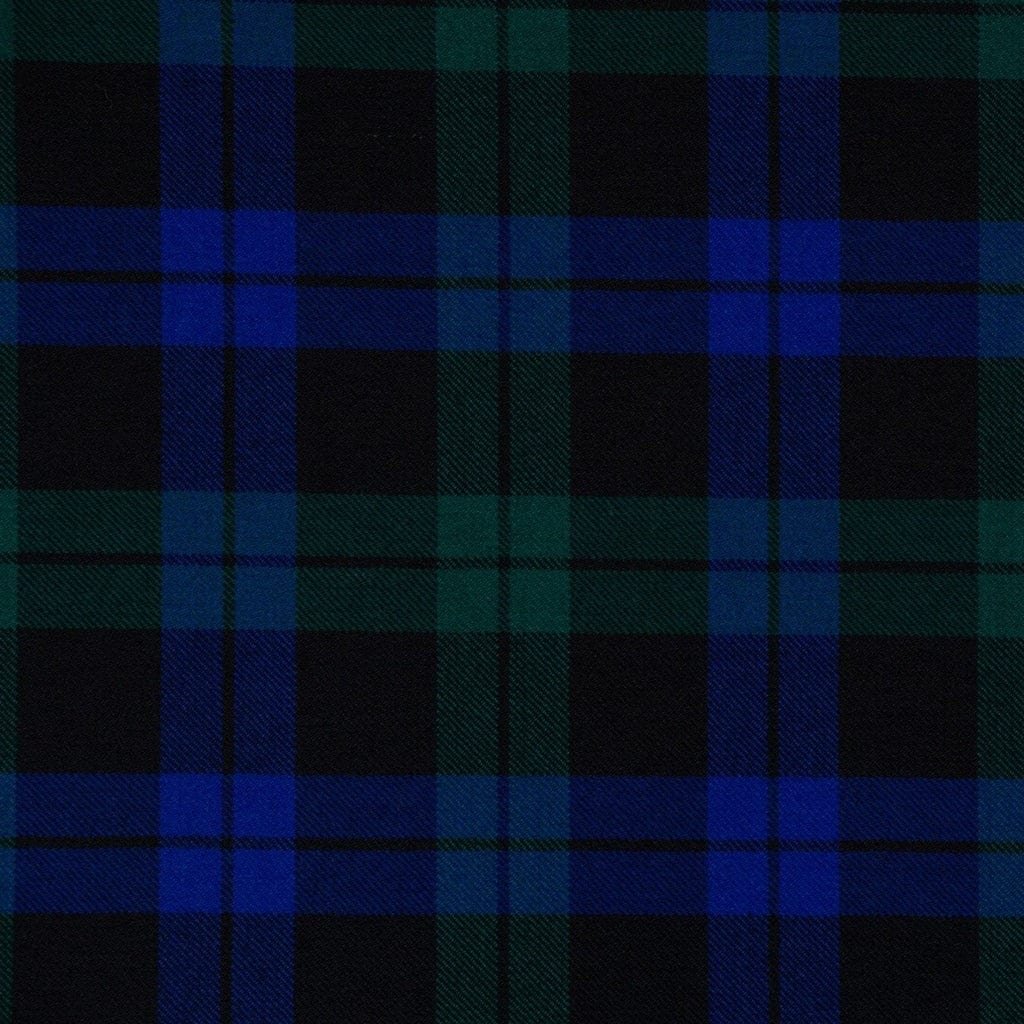
 Campbell of Lochawe Modern
Lochawe is the territorial style every Campbell chief used before there was an earldom of Argyll, and the sett that now carries the name rests on a single eighteenth-century painting that may not show what it is said to show.
Before Argyll there was Lochawe
The lordship of Loch Awe came into the family by marriage to an Ó Duibhne heiress, and for several generations the head of the kindred was styled of Lochawe rather than of anywhere else. Sir Archibald Campbell, called Gillespic, who was dead before 1394, held the lordship and is the patrilineal ancestor of the Earls of Argyll; accounts differ as to whether he took it by inheritance from his father or through the setting aside of his brother Dougall. His son Colin, known as Colin Iongantach, was followed by Duncan, created Lord Campbell, and from that line the earldom descends.
The physical seat was Innis Chonnel, a stone castle of the thirteenth century on a small island in Loch Awe, in Campbell hands from at least 1308 and possibly fortified long before. Colin Campbell, made first Earl of Argyll in 1457, moved the chiefly household to Inveraray, and Innis Chonnel was turned over to less dignified work as the earls’ prison, kept for them by captains drawn from the MacArthurs and afterwards the MacLachlans. Dòmhnall Dubh MacDonald, heir to the Lordship of the Isles, was held there after the sea fight at Bloody Bay in 1484 and got out. The castle is still in Argyll ownership and is not open; it can be seen from the road on the eastern shore.
A sett from a portrait, and doubts about the portrait
The pattern is the simplest of the Campbell family: three colours only, blue, black and green, with the black block much widened and none of the guard lines that the Government sett carries. The archive of the Scottish Tartans Society treated it as a simplified manufacturers version — a weaver’s reduction of the standard Campbell rather than anything independent. Alastair Campbell of Airds argued otherwise in Campbell Tartan (1985), citing a painting of about 1770 showing a medical officer of the 42nd Regiment wearing this arrangement. A later note on the register pushes back: a painting is not a threadcount, the clarity of that picture is open to question, and what a portraitist rendered as three broad bands may simply be an approximation of the regimental sett he was looking at. The record does not settle it. A woven sample of the pattern survives in the Tom Sinclair scrapbook, but that is a nineteenth-century trade source, not eighteenth-century evidence.
Why a plainer sett is not automatically an older one
It is tempting to read a three-colour Campbell as the ancestor of the six-colour ones, on the assumption that patterns grow more elaborate over time. The pattern books do not support that assumption. Wilsons of Bannockburn and the firms that followed them both simplified and elaborated setts constantly, according to what a loom could run cheaply and what a market would buy, and a stripped-down version of a design can postdate the full one by decades. No cloth of the eighteenth century labelled Campbell of Lochawe is known. What exists is a plain dark check attributed to Lochawe in the later trade record, which is a perfectly respectable thing for a tartan to be, provided it is not sold as something else.
Who it is for
There is no separate chief of Lochawe and there has not been one since the style was absorbed into the earldom in the fifteenth century. The designation belongs to the head of the whole name, MacCailein Mòr, and his approved list — four setts, according to Airds in 1985 — does not include this one. That is not a prohibition. Any Campbell, and for that matter anyone else, may wear it, and its plainness is a genuine attraction to people who find the Government sett busy. But a Campbell who wants the pattern with the chief’s authority behind it should take the plain Campbell, which is the Government tartan, and know that the Lochawe sett is a quieter relative of it rather than its forebear.
References
Wikipedia, Archibald Campbell of Lochawe, Clan Campbell and Innes Chonnel Castle; Clan Campbell Society (North America), Innis Chonnel Castle page; Alastair Campbell of Airds, Campbell Tartan (1985), and the Scottish Tartans Society notes with the editorial rebuttal, as recorded in the Scottish Tartans Authority tartan database; Scottish Register of Tartans.