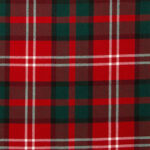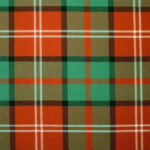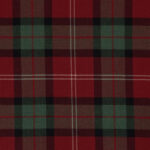
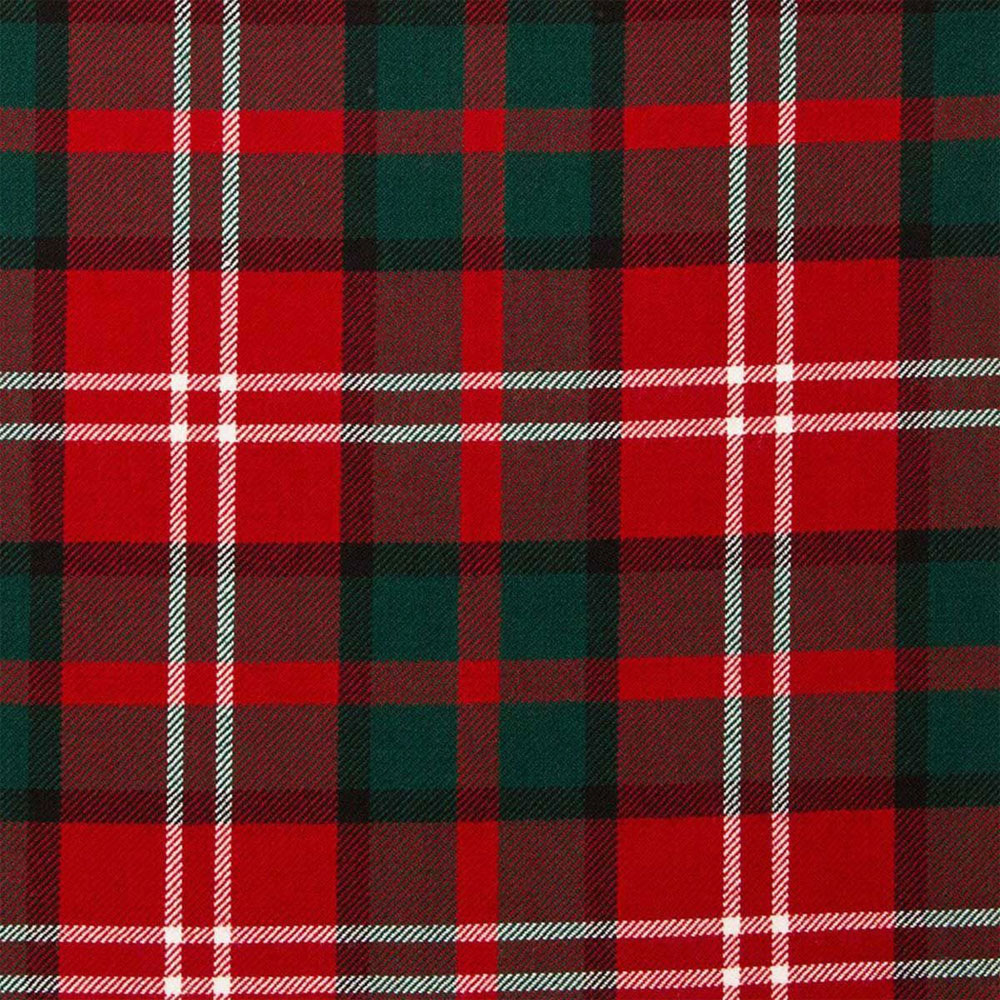
 Nisbet Modern
Clan Nisbet
Nisbet is a Border territorial name, taken from the barony and lands of Nisbet in the parish of Edrom, Berwickshire — probably a nose-shaped hill or a nose-shaped bend in a river. Two different kinds of record mark the beginning, and the distinction is worth keeping. On 17 September 1139 David I confirmed a grant of the town lands of Nesebite to Coldingham Priory, originally made by Cospatrick, 2nd Earl of Dunbar: that is the earliest dated record of the place. About 1160 William de Nesbite witnessed a charter by Patrick, Earl of Dunbar, to the same priory: that is the earliest record of a person of the name.
Thomas Nisbet was Prior of Coldingham from 1219 to 1240 and is recorded holding the villa de Nesbyt in 1235. Philip de Nesbit appears in the Ragman Rolls of 1296, and Adam Nisbet afterwards received a charter from Robert the Bruce for the lands of Knocklies. Another Thomas Nesbyt was Prior of Coldingham from 1446 until his resignation on 15 July 1456. Philip Nesbit was executed at Glasgow on 28 October 1646, after the Battle of Philiphaugh. The family’s real distinction, though, is heraldic: Alexander Nisbet published his essay on cadency in 1702 and his System of Heraldry in 1722, and he remains among the most cited of Scottish armorial writers. He died in 1725, after which the chiefship passed to a cadet line. The clan society states that a plausible line of descent can be traced to 1444 and that father-to-son descent is clear from Sir Philip Nisbet of that Ilk onwards; the careful word is its own.
The chiefship was then vacant for some four centuries. In 1994 the Lord Lyon recognised Robert Anthony Ellis Nesbitt as Chief of the Name and Arms of Nesbitt — discussions with Lyon having begun the previous year. He died on 15 August 2000 and was succeeded by his son, Mark Nesbitt of that Ilk, the present chief. Lyon’s recognition is expressly of “Nesbitt (or Nisbet)”, so both spellings fall under the one chiefship.
The Nisbet tartan
The documented position is unusual and the clan society states it plainly: the Nisbet tartan is not a Nisbet design. It is the sett that appears in the Vestiarium Scoticum as Mackintosh, later applied to the Nisbet name, and there is no historical connection between the two families to explain how that happened. The Vestiarium Scoticum, published in 1842 by the brothers who styled themselves Sobieski Stuart, is a proven forgery: Sir Walter Scott doubted it as early as 1829, and chemical testing in 1895 found that the manuscript they offered as a 1721 copy had been treated to make the writing look older. The society’s own conclusion is that, use of tartan in Lowland families being a nineteenth-century innovation, the Nisbet tartan may well be of recent origin. Two modern dress setts also exist — a Nisbet Dress recorded no earlier than 1981, and a mauve and white dancing sett — both genuinely distinct patterns, neither with a recorded designer.
A note on honesty: Nisbet Modern, Ancient, Hunting and Muted are colourways of that one sett, not four tartans, and the sett itself is the Mackintosh pattern under another name. Nisbet does not appear in the Vestiarium Scoticum — Macintosh does — so the 1842 date belongs to the Mackintosh entry and is no evidence of Nisbet tartan use in 1842. No Nisbet sett predates the commercial era, and there is no Wilsons of Bannockburn attribution.
Clan facts
| Chief | Mark Nesbitt of that Ilk, Chief of the Name and Arms of Nesbitt (or Nisbet); also styled Baron of West Nesbitt |
|---|---|
| Motto | “I byd it” — “I shall endure”. The clan society renders it I Byd It and also translates it “I shall preserve”; other sources print I byde it for “I endure it” |
| Plant badge | Oak |
| Lands | Nisbet House and the barony of Nisbet, parish of Edrom, Berwickshire; the lands of Knocklies. A Berwickshire Lowland family: no Gaelic patronymic is recorded |