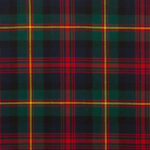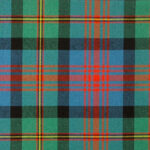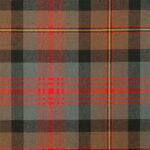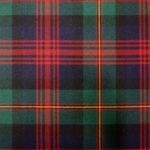
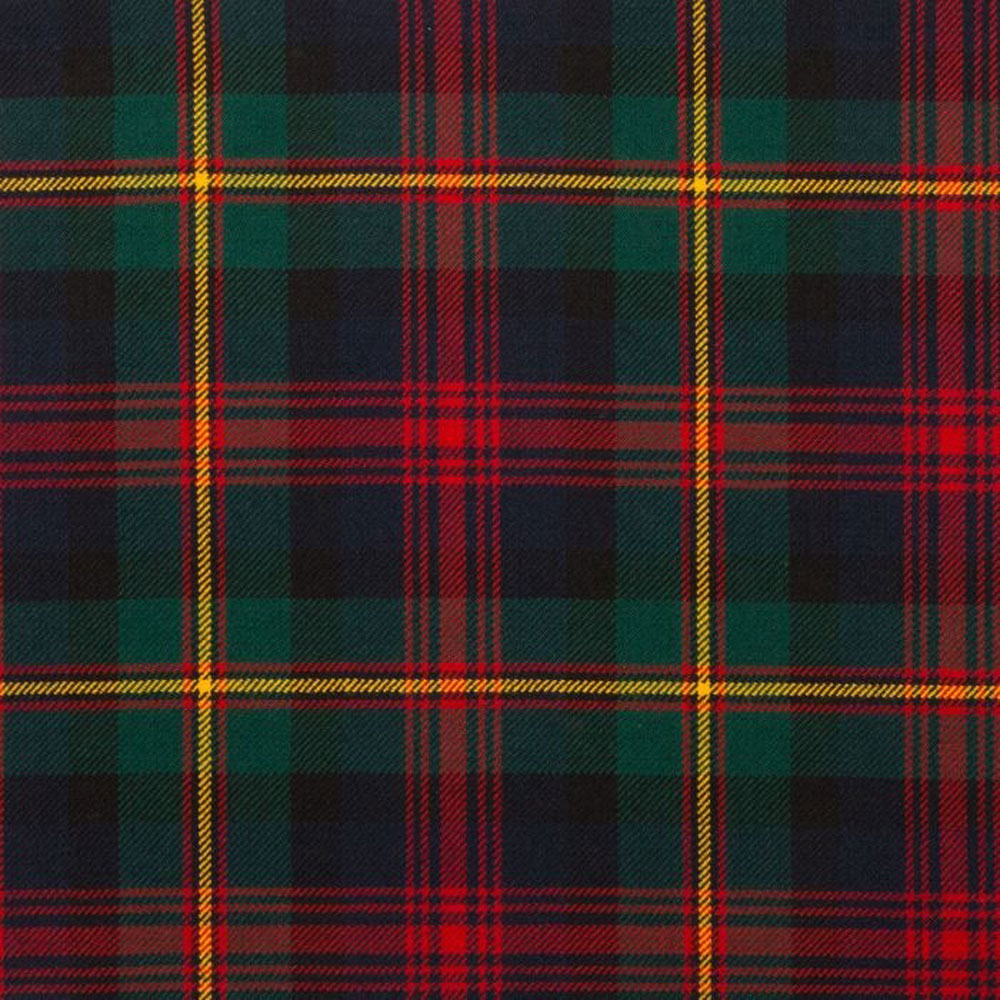
 Logan Modern
Clan Logan
Logan comes from the Gaelic lagan, a hollow or little valley — a topographic name, which is why it arises independently in several places. Its earliest secure record is precise: Adam of Logan witnessed a charter of Alexander II on 25 August 1236. The Lowland branches, which carried the chiefly line, held lands in the parish of Old Cumnock in Ayrshire as Logans of that Ilk, and at Restalrig near Edinburgh, earlier called Grugar, which became the principal seat. A separate Highland branch settled at Drumderfit in the Black Isle, in Easter Ross, with burials at Kilmuir kirkyard.
Six Logans appear in the Ragman Rolls of 1296. About 1330, on the authority of the poet John Barbour writing decades afterwards, Sir Robert and Sir Walter Logan accompanied Sir James Douglas carrying the heart of Robert the Bruce towards the Holy Land, and both died in Spain. Robert Logan received the lands of Grugar from Robert III in 1394 and was appointed Admiral of Scotland in 1400; a Robert Logan was given as a hostage for the release of James I in 1424; and the Logans of Restalrig sold the superiority of Leith to Mary of Lorraine in 1555. George Logan registered arms at the Court of the Lord Lyon in 1672. Hugh Logan died without an heir in 1802, and he was the last recognised chief.
The tradition that the Highland Logans and the MacLennans are one stock — the Logans of the North, Gaelic Siol Ghillinnein — is widely held in both families, but the Clan Logan Society states plainly that the documentary evidence available today does not conclusively prove the relationship. The MacLennan name derives from Mac Gille Fhinnein, son of the follower of St Finnan, which is etymologically unrelated to lagan. The stories of Gilligorm and the skirmish at Drumderfit around 1372, and the war cry Druim nan Deur, “ridge of tears”, are tradition rather than record; three mutually inconsistent versions of the Highland origin survive. We have found no support at all for the claim, sometimes repeated, that Logans or MacLennans fought at the Battle of the North Inch in 1396.
The Logan tartan
There is no distinct Logan clan sett. The Logan tartan and the MacLennan tartan are one pattern of eleven bands and 236 threads, recorded under both names, and its provenance is unusually good. It was published by James Logan in The Scottish Gaël in 1831, the earliest systematic printed record of setts, which gives fifty-five clan tartans as stripe depths in eighths of an inch — and that book contains a Logan entry and no MacLennan entry at all. The name Logan therefore has priority in print, and MacLennan was attached to the same sett later. This is eleven years before the Vestiarium Scoticum, in which neither name appears, so the sett is not a Sobieski Stuart invention; nor is there any Wilsons of Bannockburn attribution.
A note on honesty: Logan Modern, Ancient, Weathered and Muted are colourways of that one sett, not four tartans, and Logan, MacLennan, “Logan and MacLennan” and “MacLennan (or Logan)” are all names for the same cloth — a Logan and a MacLennan buy the identical sett, labelled either way. No Logan sett predates the commercial era: 1831 is the earliest record, and as the Clan Logan Society itself observes, modern clan tartans largely developed during the nineteenth century and should not be treated as proof of mediaeval relationships. The “Logan or Skene” variant sometimes mentioned, and the claim that it inspired the Utah state tartan, we have not been able to corroborate and do not repeat.
Clan facts
| Chief | None — the chiefship has been vacant since 1802. Since 18 December 2025 the family has had a Commander recognised by Commission of the Lord Lyon, J. Kevin Logan, following a supervised gathering in Edinburgh in April 2025. A Commander is not a chief; the office exists to lead the search for an heir to the chiefship |
|---|---|
| Motto | Hoc majorum virtus — “this is the valour of my ancestors”. Traditional slogan: Druim-nan-deur, “the ridge of tears” |
| Plant badge | Furze (gorse) |
| Lands | Restalrig near Edinburgh, the principal seat; Grugar, granted 1394; Old Cumnock, Ayrshire; the Highland branch at Drumderfit, Black Isle, Easter Ross |