
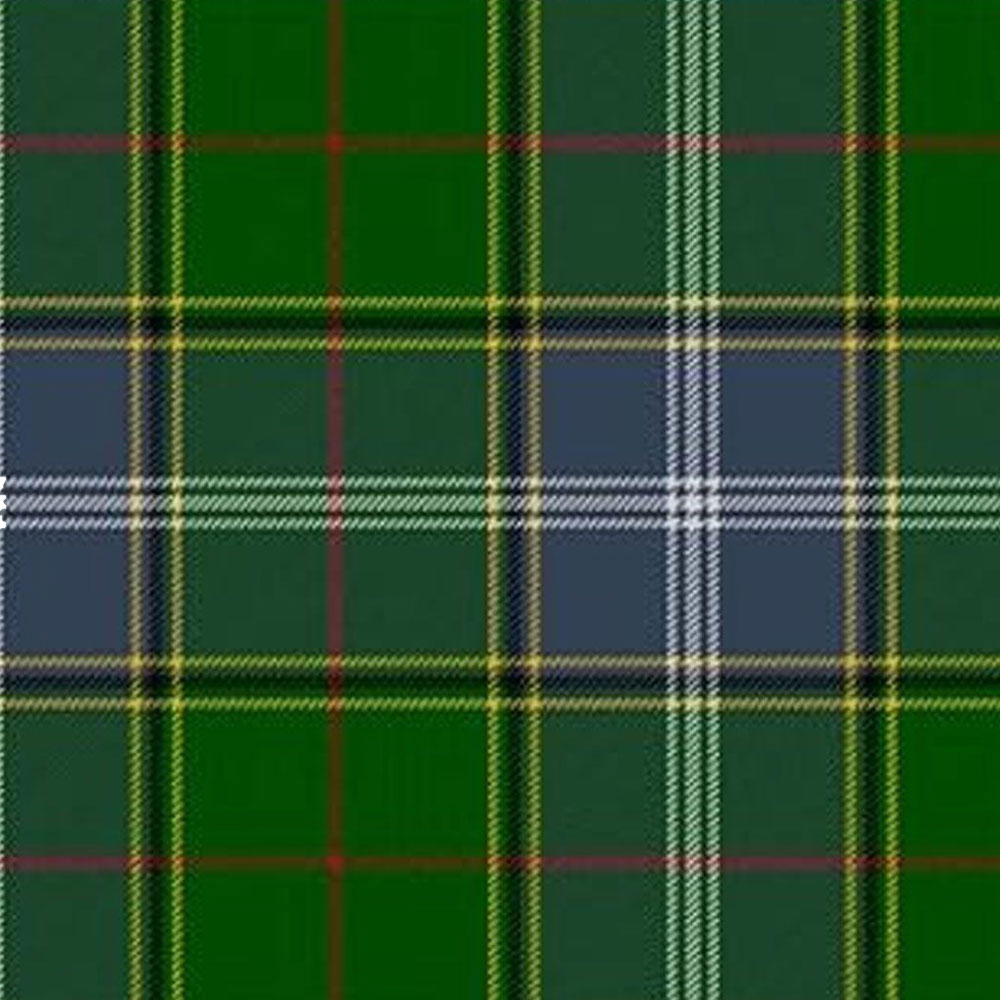
Clan Pringle
The Pringles take their name from Hoppringle, in the parish of Stow near Galashiels. Elias of Hoppringle performed fealty to Edward I on 28 August 1296 and sealed the document, which is the earliest hard record of the family; the claim that the surname dates from the reign of Alexander III rests on a family historian’s assertion rather than a cited charter. The original seat was Hoppringle, with Torsonce on Gala Water becoming the chiefly seat later. The family held Stichill, Smailholm Tower, Buckholm Tower, Whytbank Tower, Old Gala House, Yair House and Haining House at various periods, and arrived at Torwoodlee in 1501, where fourteen lairds have succeeded one another since.
The Pringles were a Border riding family, with recorded rivalries against the Elliots and Armstrongs. John Hoppringle of that Ilk and Torsonce, the last chief of the old line, died on 21 December 1737, and the chiefship then lay dormant for some 282 years. Sir Norman Murray Archibald MacGregor Pringle of that Ilk and of Stichill, 10th Baronet, lodged a petition with the Court of the Lord Lyon in 2009; it was held pending resolution of his claim to the Stichill baronetcy, settled in 2016. The Lyon Court heard the petition on 27 June 2019 and the Findings and Reasons recognising him as Chief of the Name and Arms of Pringle are dated 18 February 2020. Pringle of Scotland, the Hawick knitwear company, is a separate commercial business and its history is not the family’s.
The Pringle tartan
The Clan Pringle Association states plainly that there is no traditional Pringle clan tartan: the Pringles are a Lowland clan, and tartan kilts were not their dress. The Association put the matter to a vote and in 2017 adopted the Border Reiver, the black-and-white shepherd check, as its official tartan — an adoption, not an inheritance. For those who prefer a district sett, the Association points to Gala Water, woven by Wilsons of Bannockburn in 1793 and belonging to the Pringle home ground, and to Roxburgh Red, Ettrick Forest (Lochcarron, 1995) and Teviotdale (Lochcarron, 1996).
A note on honesty: the sett most often sold as “the Pringle clan tartan” was designed by Tony Murray and woven by D. C. Dalgliesh of Selkirk around 1988 as a personal tartan for one family, and the Association is explicit that it is not a clan tartan. Pringle does not appear in the Vestiarium Scoticum, and no Pringle sett predates the commercial era. Two further traps: Pringles of Inverness is a twentieth-century mill whose fashion tartans carry the name but are not family setts, and the Ancient, Modern and Weathered versions of any of the above are dye shades — colourways, not separate tartans.
Clan facts
| Chief | Sir Norman Murray Archibald MacGregor Pringle of that Ilk and of Stichill, 10th Baronet, Chief of the Name and Arms of Pringle, recognised 18 February 2020 |
|---|---|
| Gaelic patronymic | Not recorded — a Lowland Border family |
| Motto | Amicitia Reddit Honores — “Friendship gives honour” |
| Plant badge | Not recorded. No plant badge is attested for Pringle |
| Lands | Hoppringle in the parish of Stow; Torsonce on Gala Water; Stichill, Torwoodlee and Smailholm, Scottish Borders |