
Home › Tartans › Elliot Ancient
Elliot Ancient Tartan
A clan and family tartan, available to order. Everything we make in Elliot Ancient: kilts, kilted skirts, accessories and full Highland outfits, every piece cut to your own measurements.
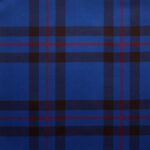 Elliot
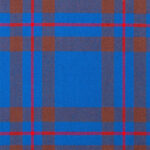 Modern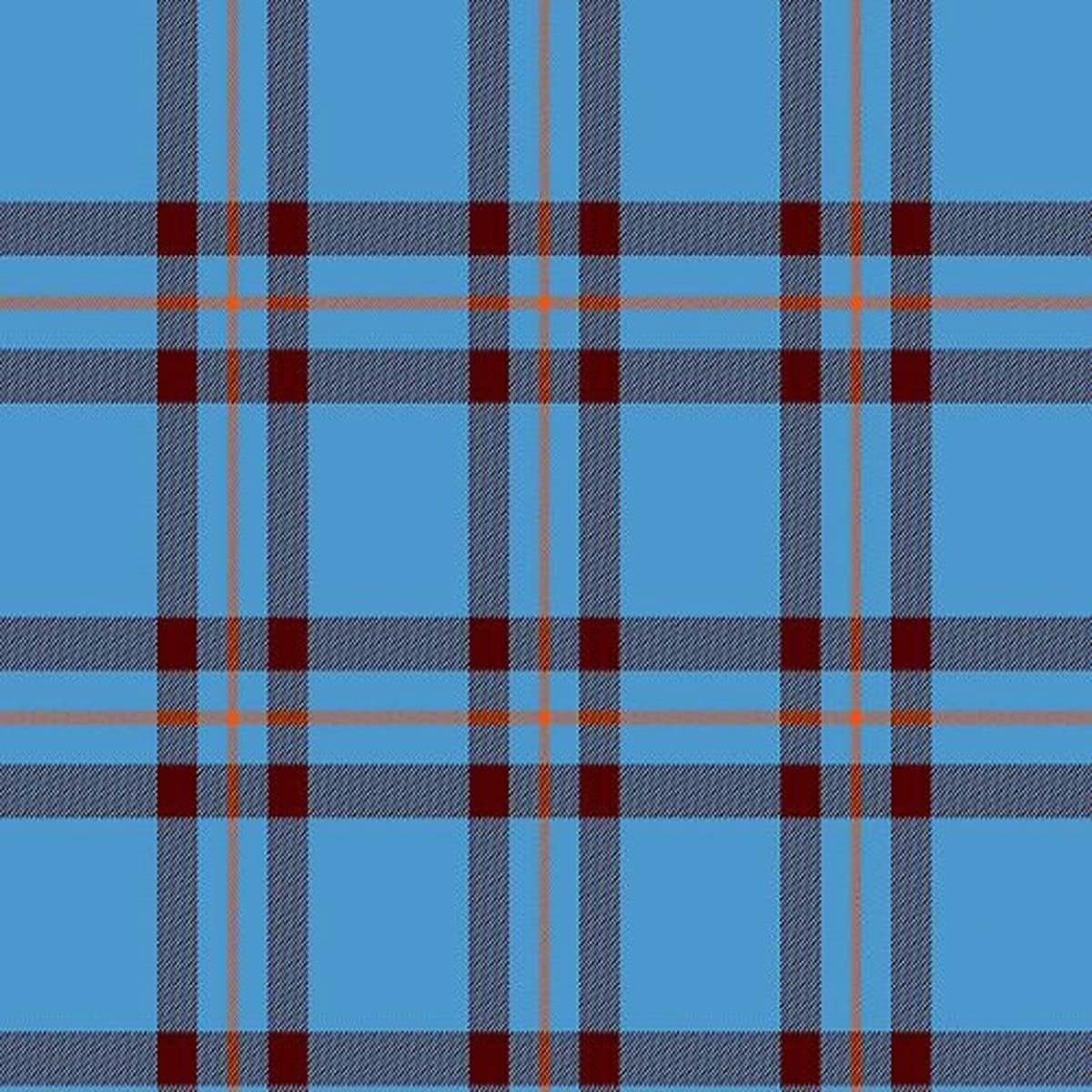
Elliot Ancient Tartan · Ancient
The Elliot Ancient tartan, made to order by Kilt 4 Less. Choose it for a kilt, a kilted skirt, an accessory or a full Highland outfit — everything below is cut to your own measurements.
- Tartan typeClan and family tartan
- Colours in it
- Blue
- Grey
- Settings availableAncient and Modern
- How it is madeMade to order and cut to your own measurements
Choose your product
Products in Elliot Ancient
Everything below can be made in the Elliot Ancient tartan. Choose a product, then pick your size and options on the next page — the tartan is already selected for you.
Listed in this tartanone item
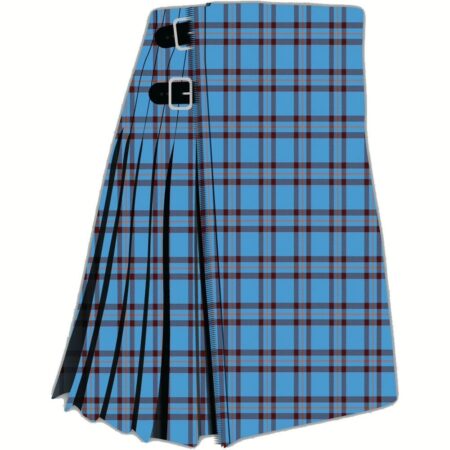 Listed in this tartan
Elliot Ancient Tartan Kilt
Available in Elliot Ancient
Original price was: £241.80.£159.00Current price is: £159.00.View →
Kiltsthree styles
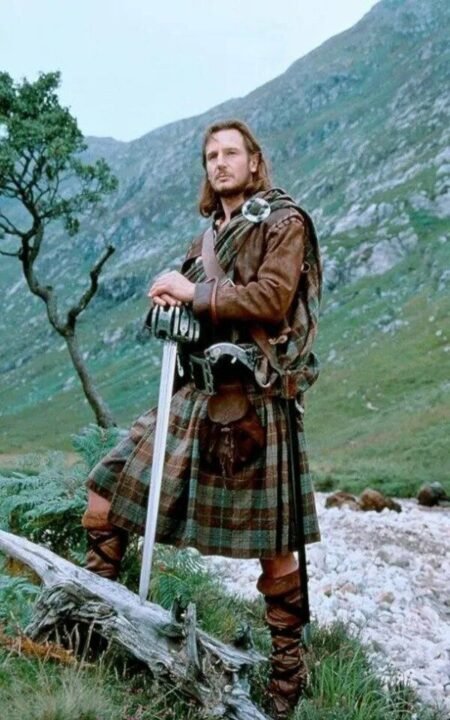 Made to order
Great Kilt, 6 Yards
Available in Elliot Ancient
Original price was: £205.00.£60.00Current price is: £60.00.Configure → Made to order
Tartan Utility Kilt
Available in Elliot Ancient
Original price was: £110.00.£60.00Current price is: £60.00.Configure →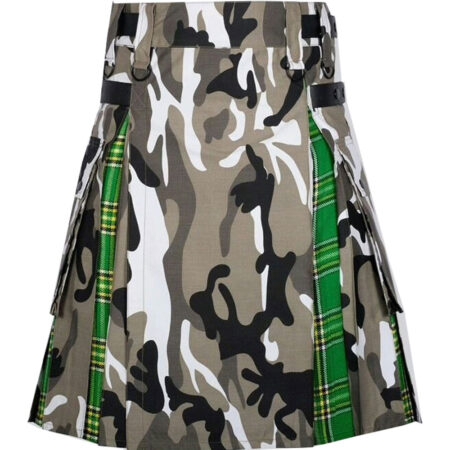 Made to order
Utility Cargo Hybrid Kilt
Available in Elliot Ancient
Original price was: £110.00.£65.00Current price is: £65.00.Configure →
For womenfour styles
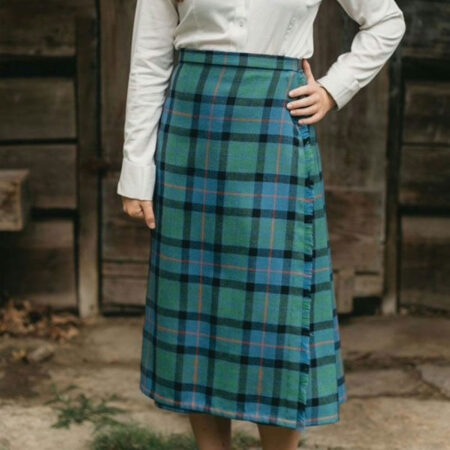 Made to order
Tartan Kilt for Women
Available in Elliot Ancient
Original price was: £120.00.£77.00Current price is: £77.00.Configure →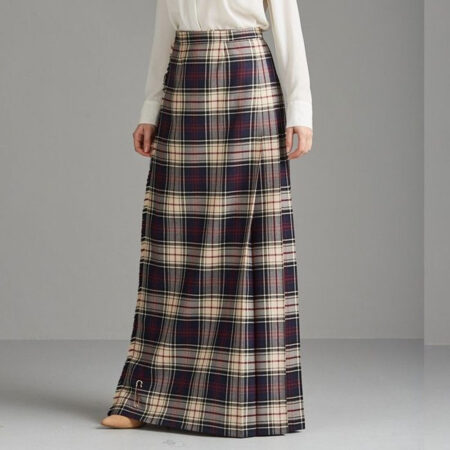 Made to order
The Classic Kilted Skirt, Maxi
Available in Elliot Ancient
Original price was: £350.00.£89.00Current price is: £89.00.Configure → Made to order
Long Kilted Skirt, Maxi
Available in Elliot Ancient
Original price was: £199.00.£145.00Current price is: £145.00.Configure →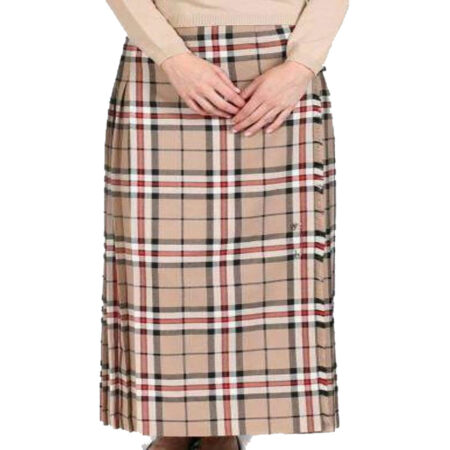 Made to order
Full Length Hostess Kilt
Available in Elliot Ancient
Original price was: £135.00.£95.00Current price is: £95.00.Configure →
For childrenone style

Accessoriesfour styles
 Made to order
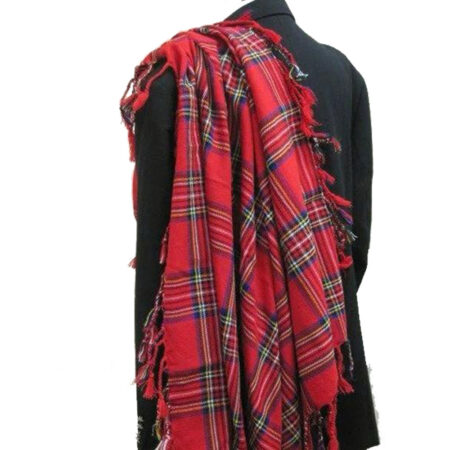
Tartan Fly Plaid
Available in Elliot Ancient
Original price was: £80.00.£45.00Current price is: £45.00.Configure →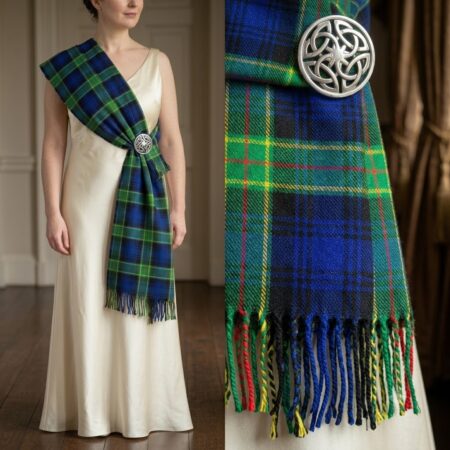 Made to order
Tartan Sash
Available in Elliot Ancient
Original price was: £99.00.£49.00Current price is: £49.00.Configure →
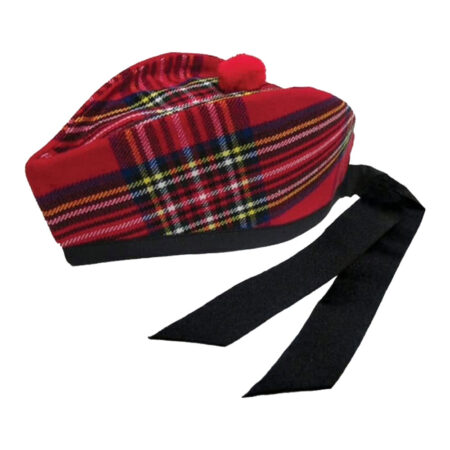
Full Highland outfits39 styles
 Made to order
Men’s 8 Yard Prince Charlie Kilt Outfit
Available in Elliot Ancient
Original price was: £499.00.£315.00Current price is: £315.00.Configure → Made to order
McCalls Highland Kilt Outfit With Argyll Jacket
Available in Elliot Ancient
Original price was: £510.00.£325.00Current price is: £325.00.Configure →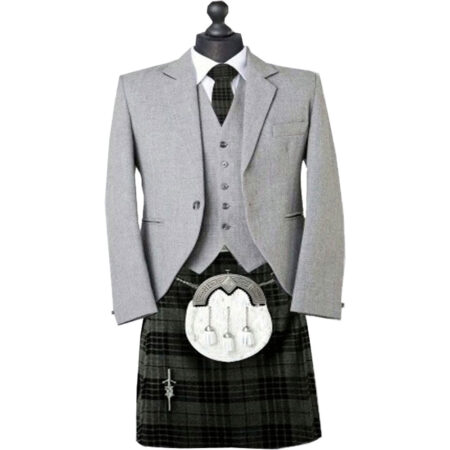 Made to order
Scottish Wedding Men Kilt Outfit
Available in Elliot Ancient
Original price was: £700.00.£304.00Current price is: £304.00.Configure →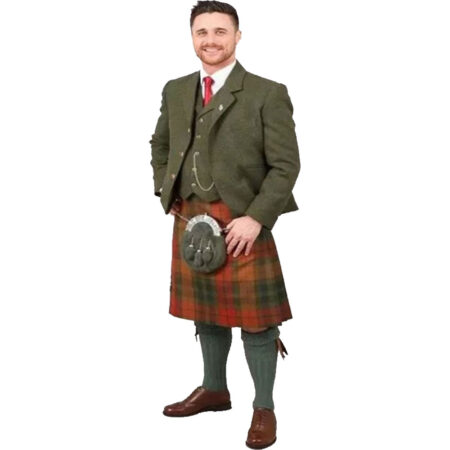 Made to order
Forest Green Tweed Jacket Kilt Outfit
Available in Elliot Ancient
Original price was: £489.00.£249.99Current price is: £249.99.Configure →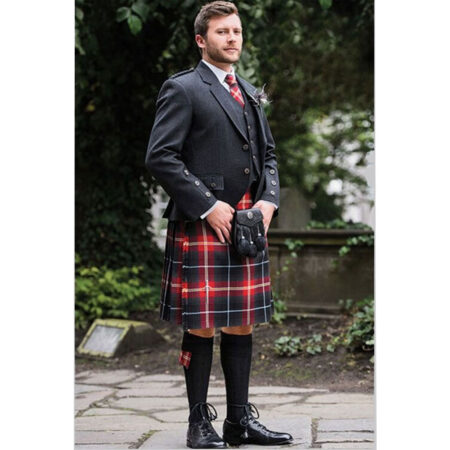 Made to order
Aberdeen Forever Tartan Argyll Kilt Outfit
Available in Elliot Ancient
Original price was: £623.22.£300.00Current price is: £300.00.Configure →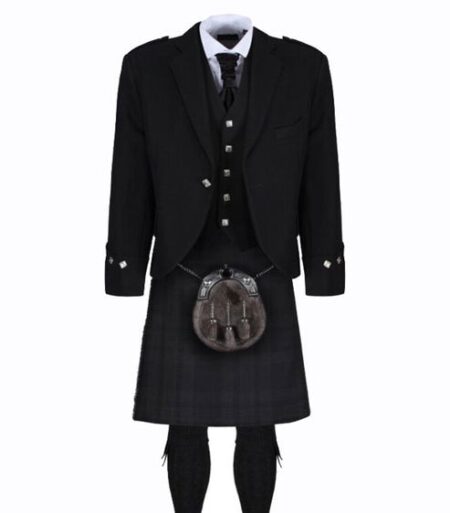 Made to order
Black Isle Argyll Jacket Kilt Outfit
Available in Elliot Ancient
Original price was: £504.00.£315.00Current price is: £315.00.Configure →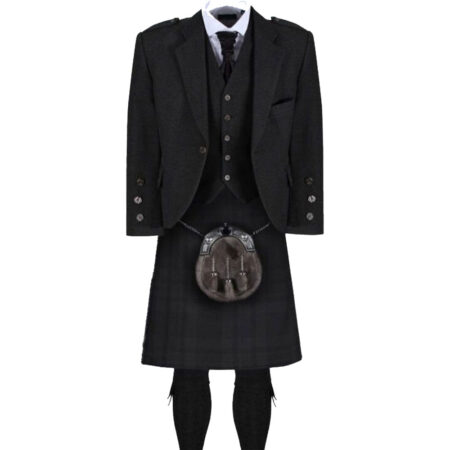 Made to order
Black Isle Dark Grey Tweed Jacket Kilt Outfit
Available in Elliot Ancient
Original price was: £510.00.£315.00Current price is: £315.00.Configure →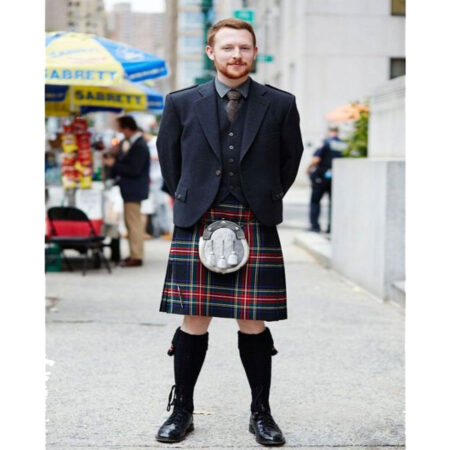 Made to order
Black Stewart Tartan Argyll Kilt Outfit
Available in Elliot Ancient
Original price was: £467.22.£235.00Current price is: £235.00.Configure →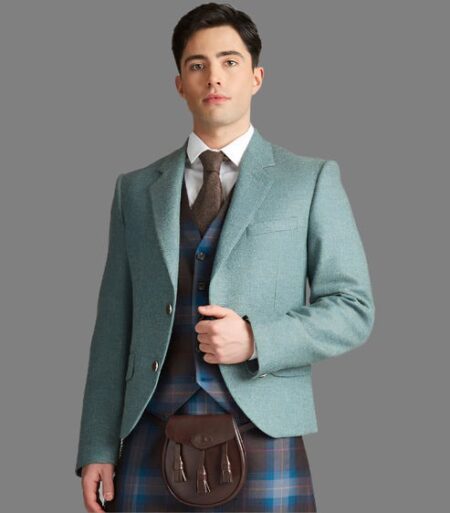 Made to order
Blue Lovat Tweed Jacket Kilt Outfit
Available in Elliot Ancient
Original price was: £504.00.£350.00Current price is: £350.00.Configure →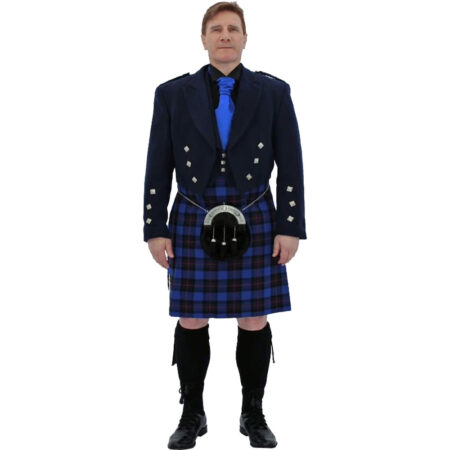 Made to order
Blue Prince Charlie Rangers Outfit
Available in Elliot Ancient
Original price was: £500.00.£320.00Current price is: £320.00.Configure →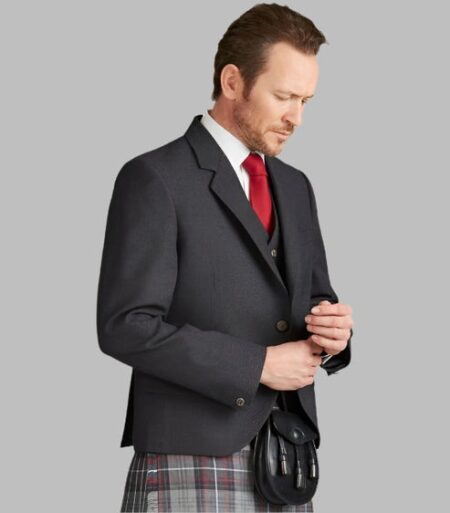 Made to order
Charcoal Grey Tweed Jacket Kilt Outfit
Available in Elliot Ancient
Original price was: £504.00.£350.00Current price is: £350.00.Configure →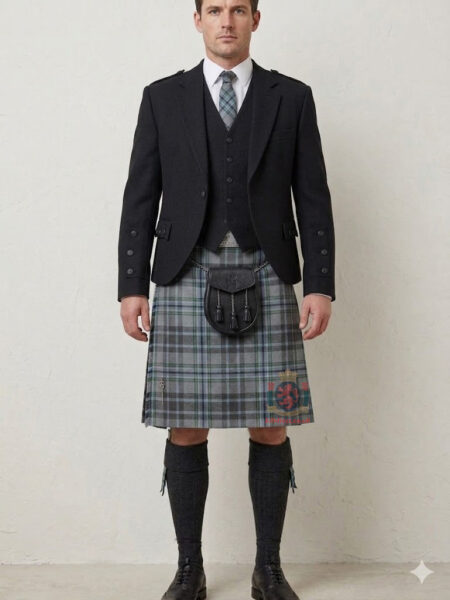 Made to order
Clan Giants Causeway JR679T Tartan Black Jacket Kilt Outfit
Available in Elliot Ancient
Original price was: £545.00.£299.00Current price is: £299.00.Configure →
The sett
About the Elliot Ancient tartan
One of the few Border names whose chiefship has run unbroken from a reiving tower on Hermitage Water to a woman recognised in her own right as twenty-ninth of the line.
Where the name comes from, and where it does not
The origin is genuinely obscure and the family’s own historians say so. The tradition is that the name was first written Ellot, that the family came from Glenshie in Angus, and that it moved south into Teviotdale during the reign of Robert I. There is a circumstance that makes the move plausible without proving it: in 1320 William de Soulis was convicted of treason and his Liddesdale lands passed to the king’s son, and a king who had just taken a dangerous frontier lordship into his own hands had every reason to plant loyal families on it. That is an argument from likelihood, not a charter. The letter i was introduced into the surname only around 1650, which is why Elliot, Eliott, Elliott and Ellot are all the same family and none of them is the correct form.
Liddesdale
The chiefs sat at Redheugh. A strong tower was built in 1470 on a cliff above the ford on Hermitage Water, and Robert Ellot appears as tenth chief in 1476. Another Robert Ellot, the thirteenth, was killed at Flodden in 1513. With the Armstrongs, the Elliots held something like a hundred towers through Liddesdale, which gives a fair idea of how the valley was organised: not as an estate but as a network of fortified houses, each holding a few miles of ground.
The feuds are documented in some detail. In 1565 Scott of Buccleuch hanged four Elliots for cattle-lifting; three hundred Elliots rode in answer, both sides took heavy losses, and the quarrel was afterwards patched up. The following year came the incident everyone knows. James Hepburn, fourth Earl of Bothwell, was wounded in a skirmish near Hermitage Castle by John Elliot of Park, the man the ballads call Little Jock Elliot, and Mary, Queen of Scots made her long ride from Jedburgh to see him — an episode that did a good deal to entangle her with Bothwell and, through him, with the ruin of her reign. The crown answered the Elliots in 1569 with a force of close to four thousand men, which burnt out their country.
After 1603
The Union of the Crowns ended the reiving economy because it abolished the frontier that made it profitable. Borderers were hanged, and many were shipped to Ulster. The family survived through its branches. Sir Gilbert Eliott of Stobs was made a baronet of Nova Scotia in 1666 and became chief in 1673; the third baronet remodelled the old tower of Stobs into a mansion house in 1764; and George Augustus Eliott, of that house, held Gibraltar through its great siege and its relief in 1782. Another branch acquired Minto in 1703, and from it came Gilbert Elliot-Murray-Kynynmound, first Earl of Minto, diplomat and afterwards Governor-General in Bengal. The motto is Fortiter et recte, boldly and rightly, and the crest an upraised fist gripping a sword, which for once matches the history.
Hermitage, which explains the rest
Hermitage Castle stands at the centre of all of this. Nicholas de Soulis built a motte and bailey there about 1240; the Soulis forfeiture of around 1320 removed them; Sir William Douglas, the Knight of Liddesdale, took the place in 1338, and the first Earl of Douglas raised most of the stone castle that survives in the middle of the fourteenth century. It passed from the Black Douglases at their forfeiture in 1455 and was later held by Bothwell. After 1603 it was useless and was left to decay until repairs in 1820. A family that spent three centuries within sight of it was never going to be a quiet one.
The chiefship, and who may wear the sett
The chiefship passed to Margaret Eliott of Redheugh, recognised as twenty-ninth Chief of the Name and Arms. Scottish practice places no bar on a woman succeeding to a chiefship, though the Stobs baronetcy, being a different kind of dignity, went to a male heir. Anyone of the name in any of its spellings may wear the tartan, and the branch spellings do not divide it.
The pattern comes in the usual pair of dye treatments. The lighter one is meant to suggest the softer tones of vegetable dyeing and carries finer lines; the stronger one uses the deeper blues and darker reds that chemical dyes made possible from the middle of the nineteenth century. They are the same sett, and the difference is in the dyepot rather than the loom.
Sources: Clan Eliott, Wikipedia; Border Reivers, Wikipedia; Hermitage Castle, Wikipedia; Clan Armstrong, Wikipedia; Scottish Tartans Authority, The History of Tartan.
Near neighbours
Other Elliot setts
The same pattern in different depths of colour. Any of them can be made up in any style above.
Not the sett you were after?
All 2,107 tartans are available to order, and any of them can be cut into any style on this page.