
Home › Tartans › Ferguson Hebridean
Ferguson Hebridean Tartan
A clan and family tartan, available to order. Everything we make in Ferguson Hebridean: kilts, kilted skirts, accessories and full Highland outfits, every piece cut to your own measurements.
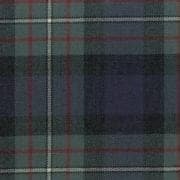
- Standard
Ferguson Hebridean Tartan · Standard
The Ferguson Hebridean tartan, made to order by Kilt 4 Less. Choose it for a kilt, a kilted skirt, an accessory or a full Highland outfit — everything below is cut to your own measurements.
- Tartan typeClan and family tartan
- Colours in it
- Black
- Grey
- How it is madeMade to order and cut to your own measurements
Choose your product
Products in Ferguson Hebridean
Everything below can be made in the Ferguson Hebridean tartan. Choose a product, then pick your size and options on the next page — the tartan is already selected for you.
Kiltsthree styles
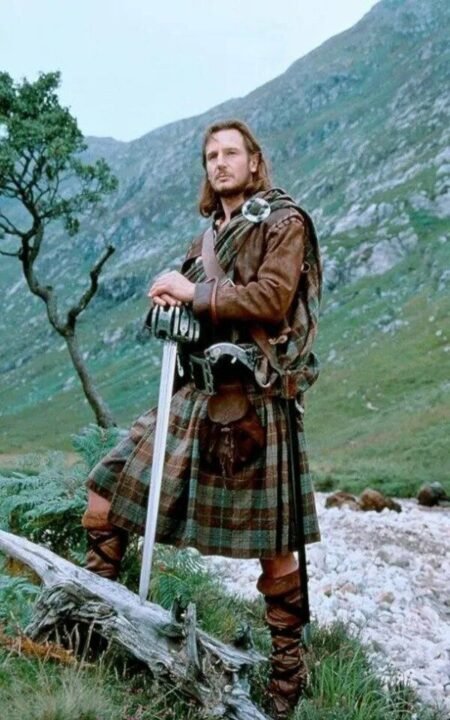 Made to order
Great Kilt, 6 Yards
Available in Ferguson Hebridean
Original price was: £205.00.£60.00Current price is: £60.00.Configure → Made to order
Tartan Utility Kilt
Available in Ferguson Hebridean
Original price was: £110.00.£60.00Current price is: £60.00.Configure →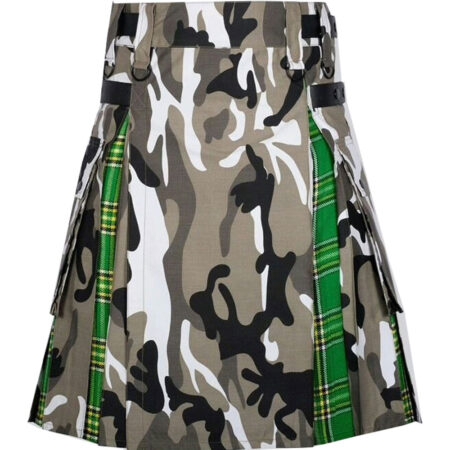 Made to order
Utility Cargo Hybrid Kilt
Available in Ferguson Hebridean
Original price was: £110.00.£65.00Current price is: £65.00.Configure →
For womenfour styles
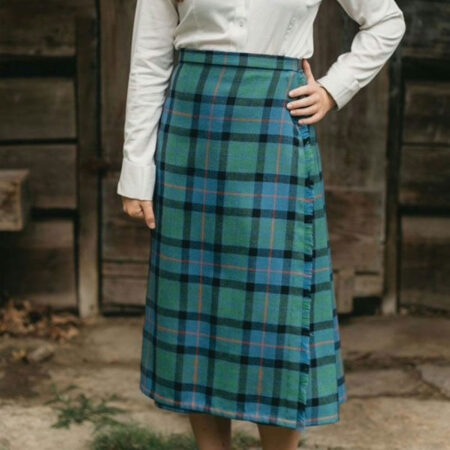 Made to order
Tartan Kilt for Women
Available in Ferguson Hebridean
Original price was: £120.00.£77.00Current price is: £77.00.Configure →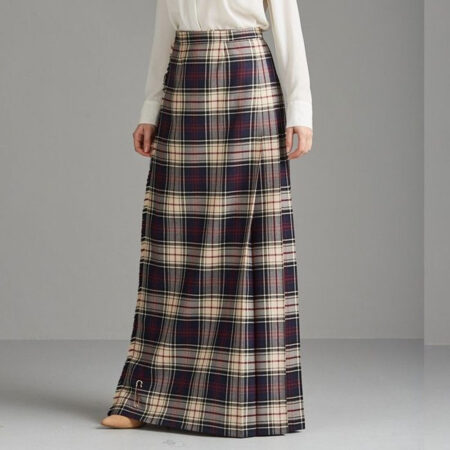 Made to order
The Classic Kilted Skirt, Maxi
Available in Ferguson Hebridean
Original price was: £350.00.£89.00Current price is: £89.00.Configure → Made to order
Long Kilted Skirt, Maxi
Available in Ferguson Hebridean
Original price was: £199.00.£145.00Current price is: £145.00.Configure →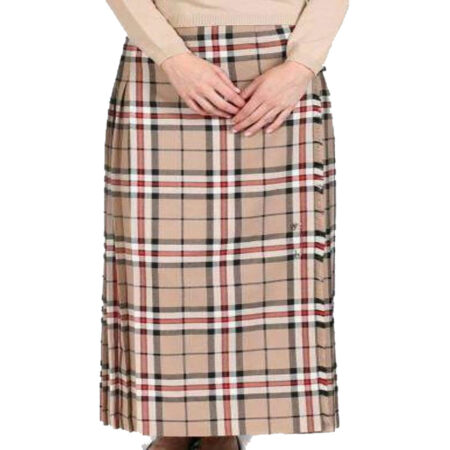 Made to order
Full Length Hostess Kilt
Available in Ferguson Hebridean
Original price was: £135.00.£95.00Current price is: £95.00.Configure →
For childrenone style

Accessoriesfour styles
 Made to order
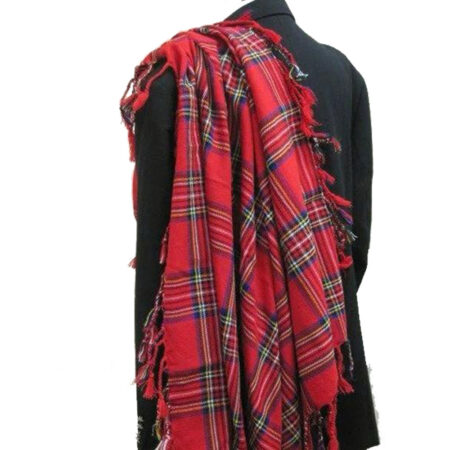
Tartan Fly Plaid
Available in Ferguson Hebridean
Original price was: £80.00.£45.00Current price is: £45.00.Configure →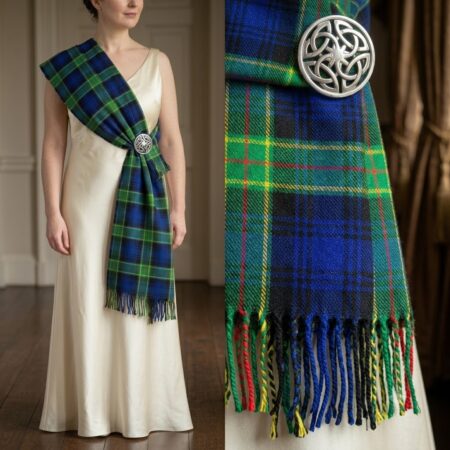 Made to order
Tartan Sash
Available in Ferguson Hebridean
Original price was: £99.00.£49.00Current price is: £49.00.Configure →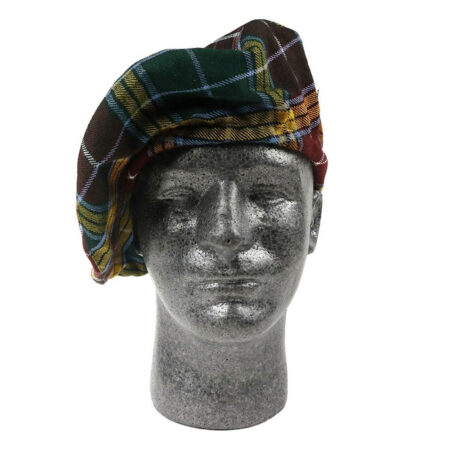
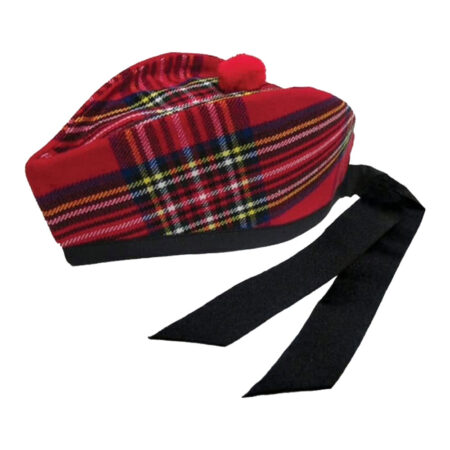
Full Highland outfits39 styles
 Made to order
Men’s 8 Yard Prince Charlie Kilt Outfit
Available in Ferguson Hebridean
Original price was: £499.00.£315.00Current price is: £315.00.Configure → Made to order
McCalls Highland Kilt Outfit With Argyll Jacket
Available in Ferguson Hebridean
Original price was: £510.00.£325.00Current price is: £325.00.Configure →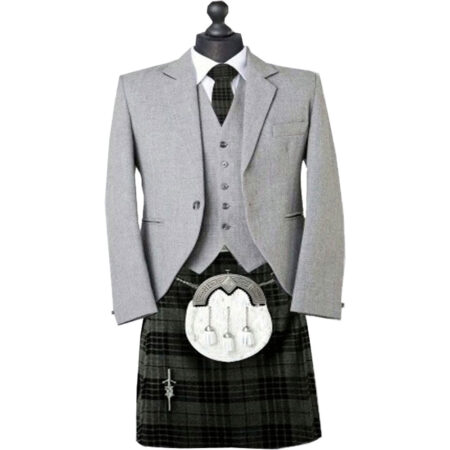 Made to order
Scottish Wedding Men Kilt Outfit
Available in Ferguson Hebridean
Original price was: £700.00.£304.00Current price is: £304.00.Configure →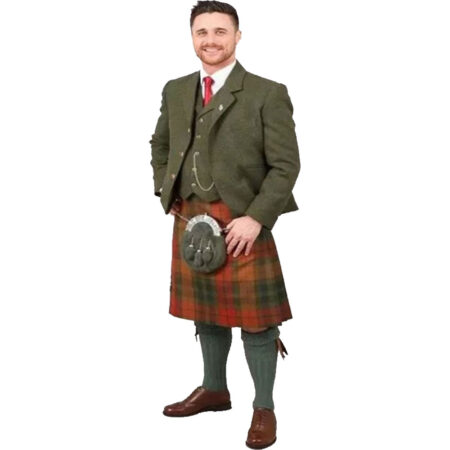 Made to order
Forest Green Tweed Jacket Kilt Outfit
Available in Ferguson Hebridean
Original price was: £489.00.£249.99Current price is: £249.99.Configure →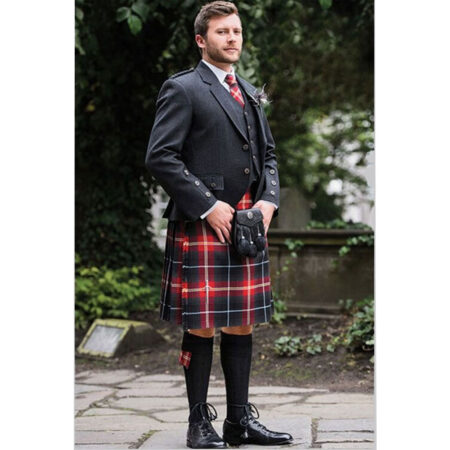 Made to order
Aberdeen Forever Tartan Argyll Kilt Outfit
Available in Ferguson Hebridean
Original price was: £623.22.£300.00Current price is: £300.00.Configure →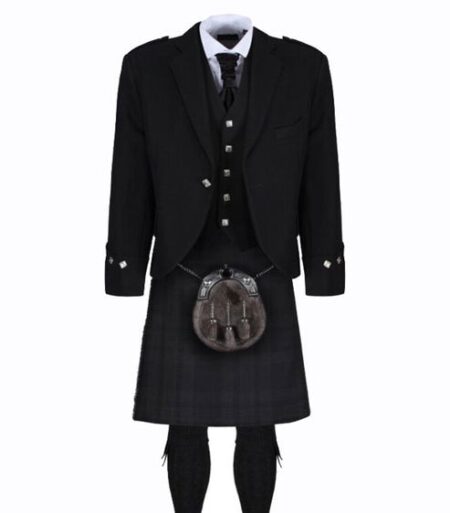 Made to order
Black Isle Argyll Jacket Kilt Outfit
Available in Ferguson Hebridean
Original price was: £504.00.£315.00Current price is: £315.00.Configure →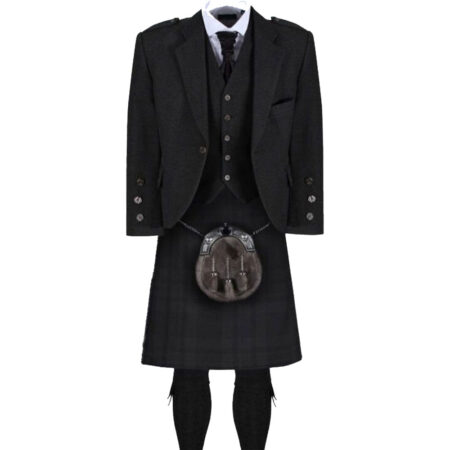 Made to order
Black Isle Dark Grey Tweed Jacket Kilt Outfit
Available in Ferguson Hebridean
Original price was: £510.00.£315.00Current price is: £315.00.Configure →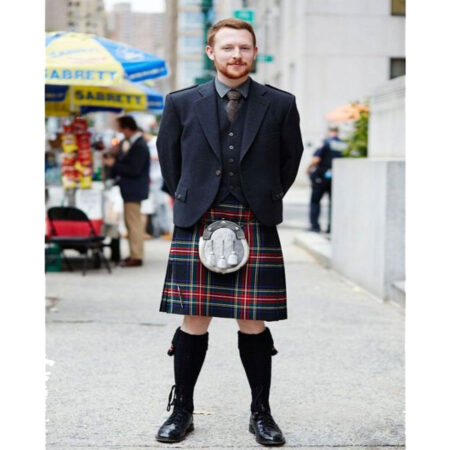 Made to order
Black Stewart Tartan Argyll Kilt Outfit
Available in Ferguson Hebridean
Original price was: £467.22.£235.00Current price is: £235.00.Configure →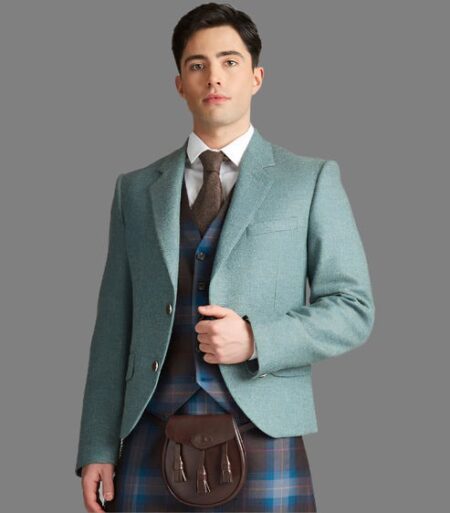 Made to order
Blue Lovat Tweed Jacket Kilt Outfit
Available in Ferguson Hebridean
Original price was: £504.00.£350.00Current price is: £350.00.Configure →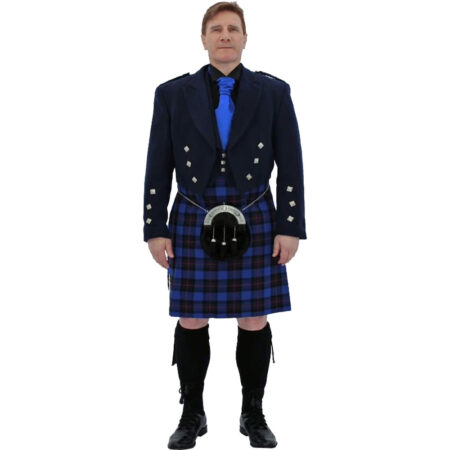 Made to order
Blue Prince Charlie Rangers Outfit
Available in Ferguson Hebridean
Original price was: £500.00.£320.00Current price is: £320.00.Configure →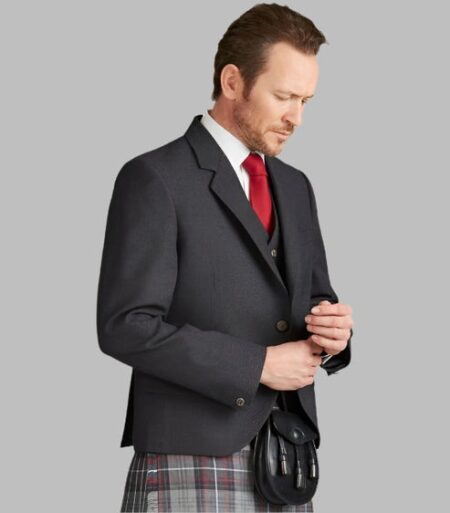 Made to order
Charcoal Grey Tweed Jacket Kilt Outfit
Available in Ferguson Hebridean
Original price was: £504.00.£350.00Current price is: £350.00.Configure →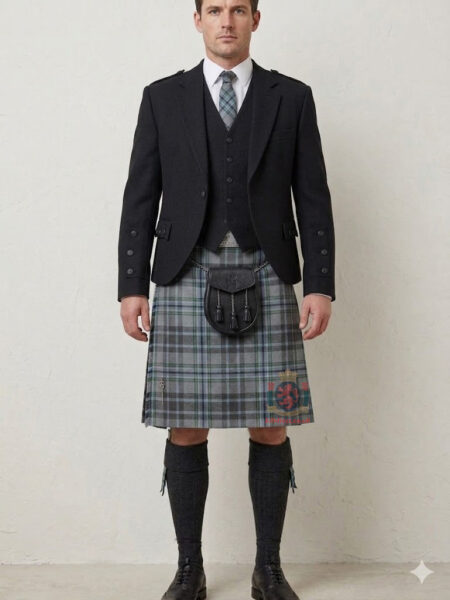 Made to order
Clan Giants Causeway JR679T Tartan Black Jacket Kilt Outfit
Available in Ferguson Hebridean
Original price was: £545.00.£299.00Current price is: £299.00.Configure →
The sett
About the Ferguson Hebridean tartan
Most clan setts belong to one kindred; this name belongs to several that are not related to each other, and the heraldry says so plainly.
Sons of more than one Fergus
Fergus was a common personal name across Gaelic Scotland and Ireland, and a patronymic built on a common name will be coined independently wherever the name is used. MacFhearghuis means son of Fergus, and it arose in Ross-shire, in Perthshire, in Argyll, in Aberdeenshire, in Ayrshire and in Dumfriesshire without any of those lines needing to be connected. The clan literature is unusually candid about this: there is no evidence for a single ancestor, and the arms of the chief differ substantially from those borne by other Fergusson families, which in Scottish heraldic practice is close to a formal statement that the families are separate.
The competing ancestors are worth naming because they explain the geography. The Argyll Fergussons claim descent from Fergus Mór, the king whose people crossed from Ireland into Dalriada, and their shields tend to carry a boar head, a charge associated with the early Scots of the west. The Ayrshire and Dumfries lines look instead to Fergus of Galloway, who died in 1161, a substantial figure under David I and Malcolm IV who restored the church at Whithorn and founded Dundrennan Abbey. Both are attachments made to a famous name rather than demonstrated pedigrees, and the record does not decide between them.
Kilkerran, and the first certain date
The chiefly line is the Ayrshire one, at Kilkerran in Carrick. The family may have held those lands from the twelfth century, but the first certain record is John Fergusson of Kilkerran in 1464, and a careful account of the name will say so rather than reaching further back. Earlier than that there is a single useful sighting of the surname at work: a John, son of Fergus, witnessed a charter of Edward Bruce signed in 1314, in the aftermath of Bannockburn.
By about 1600 the Fergussons spread through southern Carrick had acknowledged Fergusson of Kilkerran as their chief, which is the point at which the name starts behaving like a clan rather than a scattering of households. The politics that went with it were Ayrshire politics. In 1601 the Fergussons rode in the following of John Kennedy, fifth Earl of Cassillis, in the feud between the Cassillis Kennedys and the Kennedys of Bargany, and were present at the skirmish near Maybole in which the laird of Bargany was killed.
From advocates to a baronetcy
The family made its later standing in the law rather than in the field. Sir John Fergusson, born about 1653, was an advocate and a member of the Faculty of Advocates, and was created a baronet of Nova Scotia in 1703. His son James went to the bench of the Court of Session in 1735 and took the judicial title Lord Kilkerran. The seventh baronet, General Sir Charles Fergusson, served nearly forty years in the army. The present chief is Sir Adam Fergusson of Kilkerran, tenth baronet, recognised as Chief of the Name and Arms of Fergusson, with his seat still at Kilkerran House in Ayrshire. The crest is a bee on a thistle above a red cap of maintenance, the motto Dulcius ex asperis, sweeter after difficulties, and the plant badge the little sunflower.
Why there is more than one sett
Because the name belongs to unrelated families, the tartan record is plural by design rather than by accident. Patterns are recorded for Fergusson of Atholl and for Fergusson of Balquhidder, both Perthshire attributions, alongside a dress setting and the pattern generally sold as the clan sett. That is not a case of one family changing its mind; it is separate districts being supplied with separate designs during the nineteenth century, when weavers and pattern books were attaching setts to surnames at speed. Where a wearer can identify a Perthshire, Atholl or Balquhidder descent, the corresponding sett is the more accurate choice. Modern, Ancient, Weathered and Muted are dye conventions applied to the same thread arrangement and do not indicate a different family.
Anyone, in practice
There is a recognised chief, so the claim is clear as far as it goes. Anyone spelling the name Fergusson or Ferguson has the ordinary claim, and so do bearers of the long list of names the clan counts as associated, among them Fergus, Ferrie, Ferries, Ferris, MacKerras, MacKersey, Keddie, Kidd, Hardie and MacAdie. Two cautions belong with that. First, association lists are the gift of a chief and not a genealogical finding; a Kidd is not thereby descended from a Fergus. Second, no clan tartan is restricted in Scots law and no register of permitted wearers exists, so the question is one of accuracy rather than of permission — and with this name, accuracy mostly means knowing which Fergusson family you come from.
Sources: Wikipedia, Clan Fergusson and Scottish clan; George Way and Romily Squire, Collins Scottish Clan and Family Encyclopedia, as cited there; Burke’s Peerage, Fergusson of Kilkerran, as cited there.
Near neighbours
Other Ferguson setts we list
This sett has no listing of its own yet. These are the Ferguson tartans we list separately, all available to order in the same way.
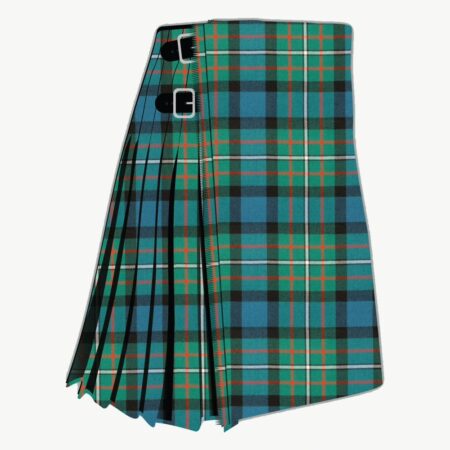 Made to order
Ferguson Ancient Tartan Kilt
Original price was: £210.00.£99.00Current price is: £99.00.View →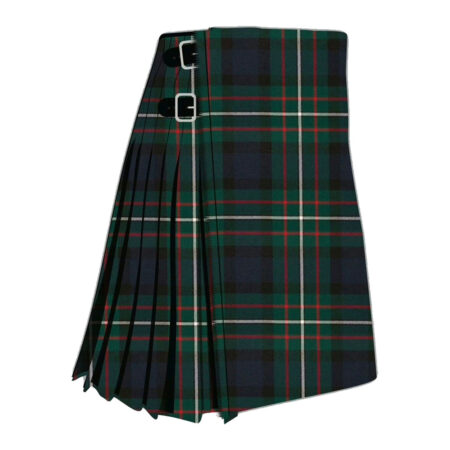 Made to order
Ferguson Modern Tartan Kilt
Original price was: £189.00.£95.00Current price is: £95.00.View →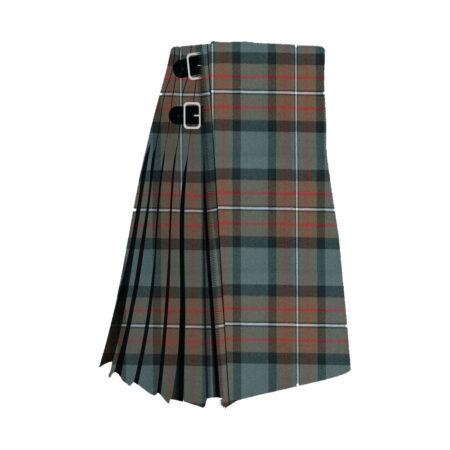 Made to order
Ferguson Weathered Tartan Kilt
Original price was: £241.80.£159.00Current price is: £159.00.View →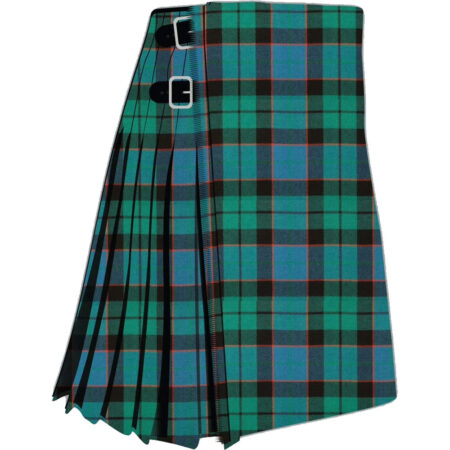 Made to order
Ferguson Of Balquhidder Ancient Tartan Kilt
Original price was: £241.80.£159.00Current price is: £159.00.View →
Not the sett you were after?
All 2,107 tartans are available to order, and any of them can be cut into any style on this page.