
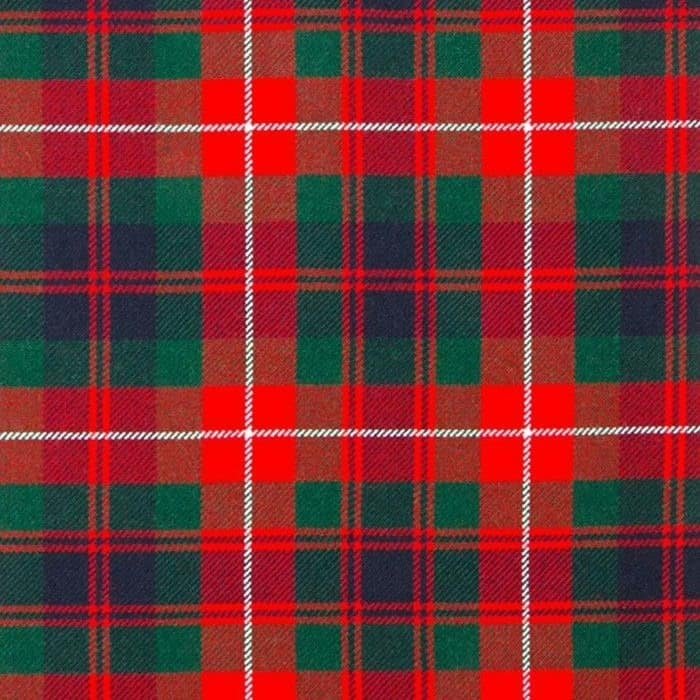
 Fraser of Lovat
Lovat is the Highland half of a surname that arrived in Scotland looking French, and its chiefs went from a scaffold on Tower Hill to raising the first sniper unit in the British Army.
Mac Shimidh
The Lovat line separates from the rest of the Frasers in the early fourteenth century. Sir Alexander Fraser of Touchfraser fought at Bannockburn in 1314 and married a sister of Robert Bruce; his younger brother Simon is the ancestor of the Lovat chiefs, and died at Halidon Hill in 1333. The family established itself in the Aird, the low country west of Inverness around Beauly, by marriage rather than conquest, and the Gaelic style of the chief is Mac Shimidh, son of Simon, because that forename recurs in the line so persistently that it became the patronymic. Lovat is a separate chiefship from that of Fraser of Philorth and Saltoun in the north-east, and the two have never been merged.
The Field of Shirts
In 1544 the Frasers fought Clan Ranald at the head of Loch Lochy in a dispute over the Clanranald chiefship. The encounter is remembered as Blàr na Léine, the Field of Shirts, from the tradition that the heat drove both sides to fight stripped to their shirts. Hugh Fraser, third Lord Lovat, and his son were killed and buried at Beauly Priory. The often-quoted figure of five surviving Frasers and eight surviving MacDonalds is clan tradition rather than a casualty return; what is not in doubt is that the battle cost the clan its chief and his heir in one afternoon.
1747, and the recovery
The eighteenth century turned on one man. Simon Fraser, eleventh Lord Lovat, known as the Old Fox, stood with the government in 1715, lost his Independent Highland Company in 1740, and brought the clan out for Prince Charles Edward in 1745; the Frasers fought at Culloden. Castle Dounie was burned that year while Lovat was a fugitive. He was taken, tried by his peers and beheaded in London on 9 April 1747, the last nobleman executed in Britain, and the estates and titles were forfeited to the Crown, whose revenues from them helped pay for the occupation of the Highlands.
His son Simon recovered the position by military service. He raised the 78th Fraser Highlanders in 1757, some fourteen hundred men, who served under Wolfe at Louisbourg and on the Heights of Abraham and at the taking of Montreal. In 1774 an Act of Parliament returned part of the forfeited Lovat estates to him, on payment of twenty thousand pounds, and he was a founding member of the Highland Society in 1778 — the body that did more than any other to gather and certify tartan patterns in the following generation. The pattern repeats in 1900, when Simon Fraser, fourteenth Lord Lovat, raised the Lovat Scouts in January of that year for the Second Boer War from stalkers and gamekeepers on Highland estates. They were the first unit to use a ghillie suit, and their sharpshooter detachments, formed in 1916 on the Western Front, are the origin of British Army sniping. The sixteenth Lord Lovat is chief today, with Beaufort Castle as the historic seat.
The sett, and its green twin
The red Fraser pattern used by the Lovat chiefs and their family was first published in the Vestiarium Scoticum in 1842. That book claimed to reproduce a much older manuscript and is now accepted as a forgery, so it cannot be treated as evidence that the sett predates the nineteenth century. The clan society is straightforward about this and states on its own pages that there is no clear reference to tartan used in a clan sense before the rising of 1745. Anyone who tells you the Lovat sett was worn at the Field of Shirts is guessing.
The hunting version in green and brown is derived from the red sett by reassigning the colours rather than by changing the thread arrangement: red moves into the position white occupies in the clan pattern, and brown takes the place of the red. It is the quieter option for daytime wear, and the Lovat Scouts adopted it. Names such as Modern, Ancient, Weathered and Muted attached to either describe the dye recipe: an Ancient rendering lightens and warms the shades to imitate vegetable dyeing, a Weathered one browns them, and the sett is identical in each.
Open to the name
Lovat has a living chief and has imposed no restriction, so anyone of the name Fraser, in any of its spellings, and anyone descended from it, may wear this sett. The distinction worth observing is between the two Fraser clans rather than within one: families traceable to the Aird, Stratherrick or Strathfarrar belong with Lovat, while Buchan and Aberdeenshire Frasers belong with Philorth and Saltoun.
Sources: Wikipedia, Clan Fraser of Lovat; Clan Fraser Society, Timeline 1700s and Tartans; Wikipedia, Lovat Scouts; Wikipedia, Vestiarium Scoticum; Scottish Register of Tartans.