
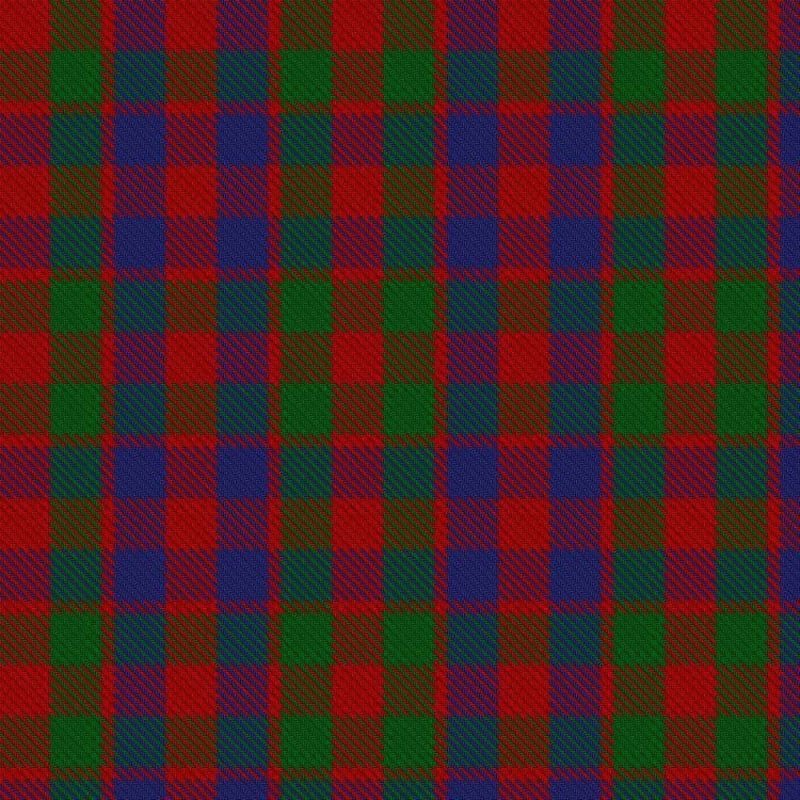
A name that means “son of the smith” — which is why the MacGowans are in the records everywhere and nowhere.
The name before the clan
MacGowan is occupational before it is territorial. The Gaelic gobha, smith, gives Mac a’ Ghobhainn, son of the smith, and it anglicised into MacGowan, McGowan, MacCowan, McOwen and a dozen more spellings that were not fixed until comparatively late.
Every settlement needed a smith. So the name arose independently in many places, and MacGowans in Dumfriesshire need have no connection to MacGowans in Perthshire beyond a shared trade. This is the opposite of how most clan names work, and it is why the MacGowan record looks scattered rather than descended.
The Nithsdale MacGowans
The clearest Scottish record places a MacGowan kindred around the River Nith, in what is now Dumfries and Galloway, documented in the 1300s. Donald Edzear received the captainship from David II in the middle of that century, and McCowans are recorded in the upper Nith district in Robert the Bruce’s service.
Two rival ancestries are offered for this group. One traces it to an Irish McGowan sept and back to Aonghus Goighne, a legendary king of Ulster. The other connects it to Owen the Bald, king of the Strathclyde Britons, who died in 1018. Neither is established. They are reconstructions built backwards from a name, and a page that picked one would be inventing certainty.
Smiths, Gows and Clan Chattan
Further north the same trade produced Gow, and the Gows attach to the Clan Chattan confederation. The story told is of Henry Wynd, the Crooked Smith, who fought for Clan Chattan at the Battle of the North Inch in 1396 and from whom the Gows are said to descend — Sliochd a’ Ghobha Chruim, the race of the crooked smith.
After that the documentary trail is ordinary and therefore trustworthy: the Gows took Mackintosh protection in 1399; Thomas Gow signed a bond at Dunkeld in 1589; James Gow was a Mackintosh tenant in 1635; William and Ewen Gow appear at Crathiecoy and Laggan in 1679; Alexander Gow served in the Jacobite army in 1745. The fiddler and composer Niel Gow (1727–1807) is the best-known bearer of the name.
Clan Macpherson lists both Gow and MacGowan among its septs, which is the usual route by which a MacGowan today finds a clan tartan to wear.
Wearing it
There is no chief of MacGowan and no ancient territorial sett, so there is no single correct answer. Three are defensible: the MacGowan tartan shown here, worn by the name; a Macpherson tartan, on the sept connection; or Black Watch, which needs no claim at all. None of these is wrong, and anyone who tells you otherwise is selling certainty that the record does not support.
References
Clan MacGowan; Gow (sept); George F. Black, The Surnames of Scotland; Scottish Register of Tartans.