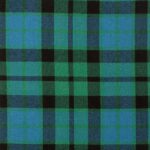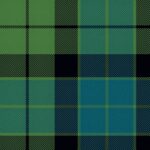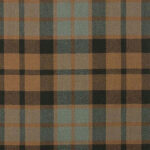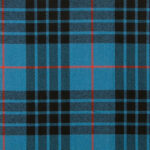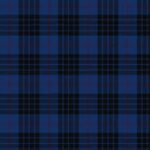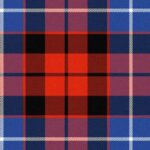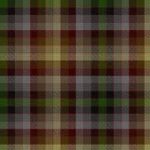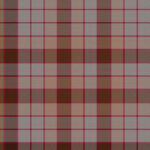
 Mackay Modern
Clan Mackay
Clan Mackay, in Gaelic Clann Mhic Aoidh, held Strathnaver in north-west Sutherland: the parishes of Farr, Tongue, Durness and Eddrachillis, with the Caithness parish of Reay added in the seventeenth century. The district is still called Dùthaich MhicAoidh, Mackay Country, and the early seat was Castle Varrich above the Kyle of Tongue. The descent is disputed. The Blackcastle Manuscript makes Iye Mackay, born about 1210, the first chief and carries the line back to Malcolm MacHeth, Earl of Ross, who died about 1168; the MacHeths are recorded going north into Strathnaver in the 1160s after their quarrel with Malcolm IV, sheltered by Harald Maddadsson, the Norse ruler of Caithness. Sir Robert Gordon and the clan’s own historian Angus Mackay set out competing genealogies, and Angus Mackay judged the Blackcastle version the sounder: the question was still open when the standard clan history was written.
Mackay fighting strength was largely exported. In 1626 Sir Donald Mackay shipped three thousand men out of Cromarty under Count Mansfeld into the service of Christian IV of Denmark. Mackay’s Regiment went on into Germany in 1630 for the taking of Stettin and Colberg, and in 1631 Charles I empowered him to raise further men for Gustavus Adolphus of Sweden; when Gustavus was killed at Lützen in 1632 the sums owed went unpaid. He was made a Baronet of Nova Scotia in March 1627 and Lord Reay in 1628. The end of the clan lands was economic rather than military. The Sutherland estate cleared Strathnaver in two waves: in 1814 twenty-eight families, about a hundred and forty people, under the factor Patrick Sellar, who had taken for himself the lease of the sheep farm the clearance would create and was tried for culpable homicide and fire-raising before his acquittal in 1816; and in 1819 two hundred and thirty-six families, some eleven hundred and eighty people, the year of the burnings, when roof timbers were fired so the houses could not be reoccupied. In 1829 Eric, seventh Lord Reay, sold the last of the estate to the Sutherland family.
The Mackay tartan
There is no single Mackay tartan. The Scottish Register of Tartans returns nine entries for the name. MacKay #1 is credited to Wilsons of Bannockburn, the Stirlingshire firm whose pattern books supplied most of the trade. Mackay (Blue) is credited to the Sobieski Stewarts. MacKay of Strathnaver is credited jointly to Lord Reay and William Anderson. MacKay (Blue) #2 and MacKay (Yellow stripe) carry no designer at all.
The rest are modern and filed as such: MacKay #2 to Bolingbroke and Jones under Name, not Clan/Family; MacKay Dress to the Rev. John B. Pahls under Corporate, not as a clan tartan; a personal tartan by D. C. Dalgliesh of Selkirk; and MacKay Marled by ACS Clothing of Glasgow, under Fashion.
A note on honesty: the one Mackay sett with a firmly dated origin has the worst one. The Sobieski Stuart brothers published the Vestiarium Scoticum in Edinburgh in 1842, seventy-five plates of clan setts passed off as a fifteenth-century manuscript. They claimed Stuart descent, were denounced as impostors, and in 1895 chemical testing showed the manuscript had been treated to age the writing. It is a forgery, and Mackay (Blue) comes from it. The Register puts no date on the Wilsons sett, the second blue sett or the yellow-stripe variant, so nothing on record connects the cloth to the men who sailed from Cromarty in 1626 or the families burned out in 1819. Mackay Ancient, Modern and Weathered are not separate tartans either: the Register defines a tartan by its threadcount, which it calls the DNA of a tartan, and holds no entry under any of those names. They are one sett in lighter, standard or muted dyes.
Clan facts
| Chief | Aeneas Simon Mackay, 15th Lord Reay, twenty-ninth Chief of Clan Mackay; succeeded his father Hugh, 14th Lord Reay, in 2013 and inaugurated at the Farr Stone, Strathnaver, on 19 August 2023 |
|---|---|
| Motto | Manu forti — “With a strong hand” |
| Slogan | Bratach gheal Chlann Mhic Aoidh — “The white banner of Mackay”, also the clan’s pipe tune |
| Plant badge | Bulrush |
| Lands | Strathnaver and the Reay Country, north-west Sutherland and west Caithness; seat at Castle Varrich, Tongue; estate sold 1829 |