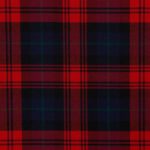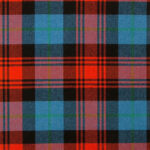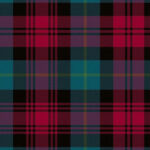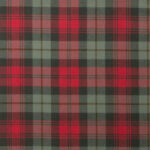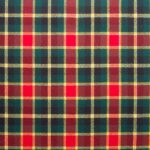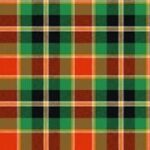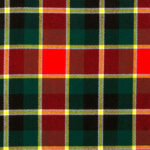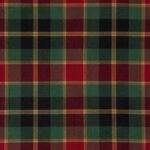
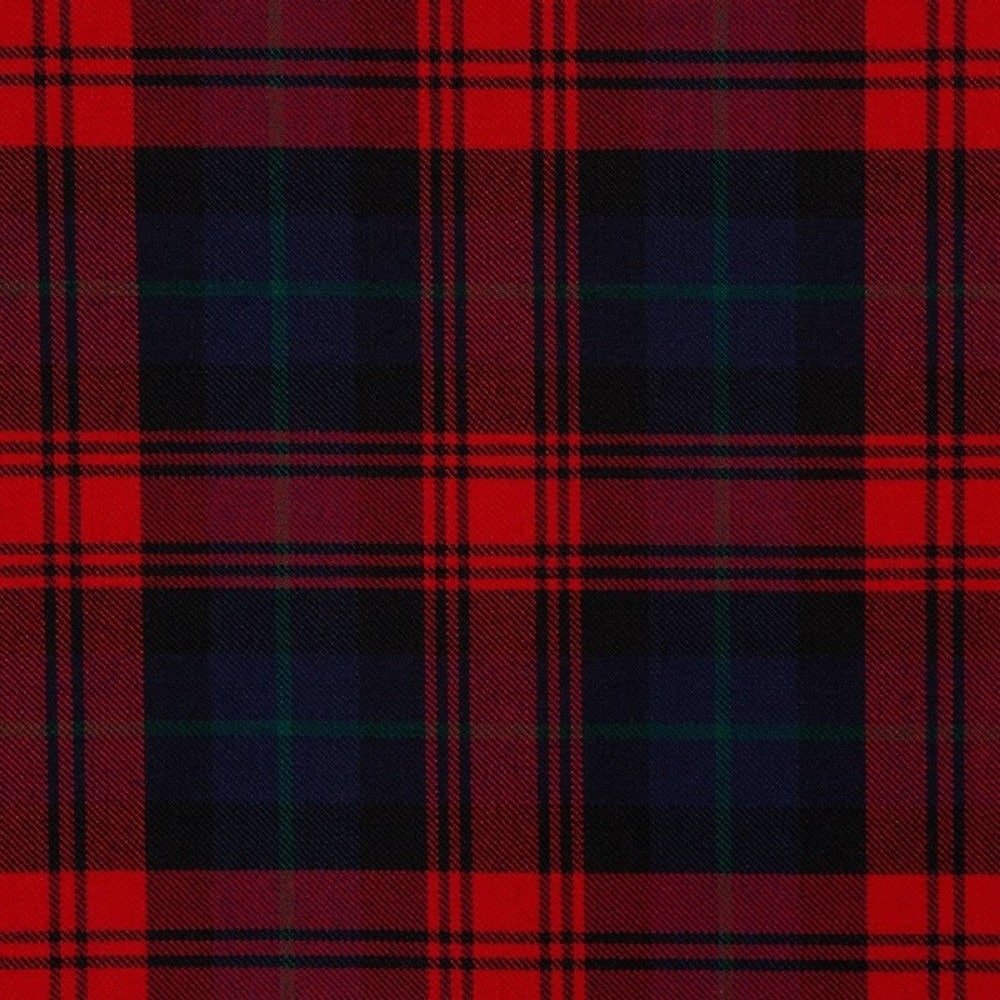
 MacLachlan Modern
Clan MacLachlan
Clan MacLachlan, whose Gaelic form is Mac Lachlainn, held Strathlachlan on the east shore of Loch Fyne in Cowal, Argyll, and gave its name to the Lachlan Water, Lachlan Bay, the village of Strathlachlan and Castle Lachlan itself. The clan takes its name from Lachlan Mor, a chieftain living on Loch Fyne in the thirteenth century. Beyond him the descent claimed is traditional rather than documented: from Anrothan Ua Néill, an Irish prince said to have crossed to Kintyre in the eleventh century, and behind him Niall Noígíallach, High King of Ireland. The documentary record begins in 1292, when Gilleskel Maclauchlan received a charter of his lands in Ergadia from John, King of Scots. Gillespie Maclachlan appears on the Ragman Rolls of 1296, and a further charter for Strathlachlan came from Robert I between 1306 and 1322.
The clan’s later history is Jacobite almost without interruption. MacLachlans were at Killiecrankie in 1689. In 1715 the chief signed the address of welcome to the exiled James VIII, and in 1720 a chief was reportedly killed by Campbell of Ardkinglas. In the rising of 1745 Lachlan MacLachlan, seventeenth chief, was appointed commissary-general on the staff of Charles Edward Stuart and led some three hundred of his clansmen to Culloden, where he was killed in 1746. Afterwards a government ship is said to have sailed up Loch Fyne and shelled the clan seat on the Duke of Cumberland’s orders, and the family abandoned it. Old Castle Lachlan, a fifteenth- or sixteenth-century tower on a promontory in the loch, has stood empty since; New Castle Lachlan was built in 1790 about half a mile to the north-east. Consolidation work on the old castle has been under way since 2011.
The MacLachlan tartan
A search of the Scottish Register of Tartans for MacLachlan returns eight records. The plain MacLachlan sett and the variants listed as MacLachlan #2 and #3 carry no designer and no date in the Register. MacLachlan #4 is attributed to the Sobieski Stewarts, which places it in the Vestiarium Scoticum of 1842. MacLachlan #5 comes from Kenneth Macleay, whose Highlanders of Scotland was published in 1870 under a commission from Queen Victoria. MacLachlan Dress is credited to D. C. Dalgliesh of Selkirk, and MacLachlan Hunting has no designer recorded. The eighth record is a shared pattern listed as Sinclair Hunting — MacLachlan & Stewart.
Nothing in the MacLachlan group is credited to Wilsons of Bannockburn, the Stirlingshire firm whose pattern books supplied most of the early tartan trade. That absence matters. It removes the one line of evidence that would tie a MacLachlan sett to a named commercial weaver of the later eighteenth century, and leaves the earliest datable MacLachlan pattern in the 1840s.
A note on honesty: not one MacLachlan tartan in the Register can be dated before the nineteenth century, and the two that carry named sources come from a proven forgery and a Victorian picture book. The Vestiarium Scoticum’s claimed fifteenth-century manuscript was never produced for inspection, a supposedly 1721 manuscript was found in 1895 to have been chemically treated to look older, and Walter Scott had doubted the brothers as early as 1829. MacLachlan Ancient and MacLachlan Weathered are not separate tartans and have no separate entries in the Register — they are one threadcount woven in lighter or muted dye shades.
Clan facts
| Chief | Euan John Rome Maclachlan of Maclachlan, 25th Chief and Baron of Strathlachlan; a member of the Standing Council of Scottish Chiefs |
|---|---|
| Motto | Fortis et Fidus — “Strong and faithful” |
| Plant badge | Rowan, or mountain ash |
| Lands | Strathlachlan on Loch Fyne, Cowal, Argyll; Old Castle Lachlan ruinous since 1746, the seat since 1790 at New Castle Lachlan |