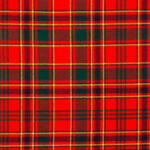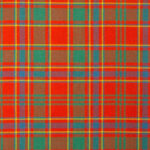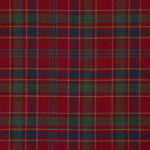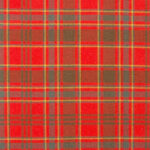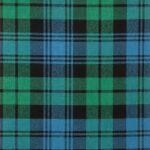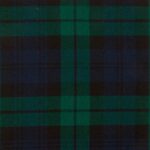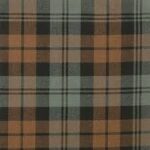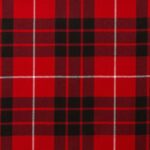
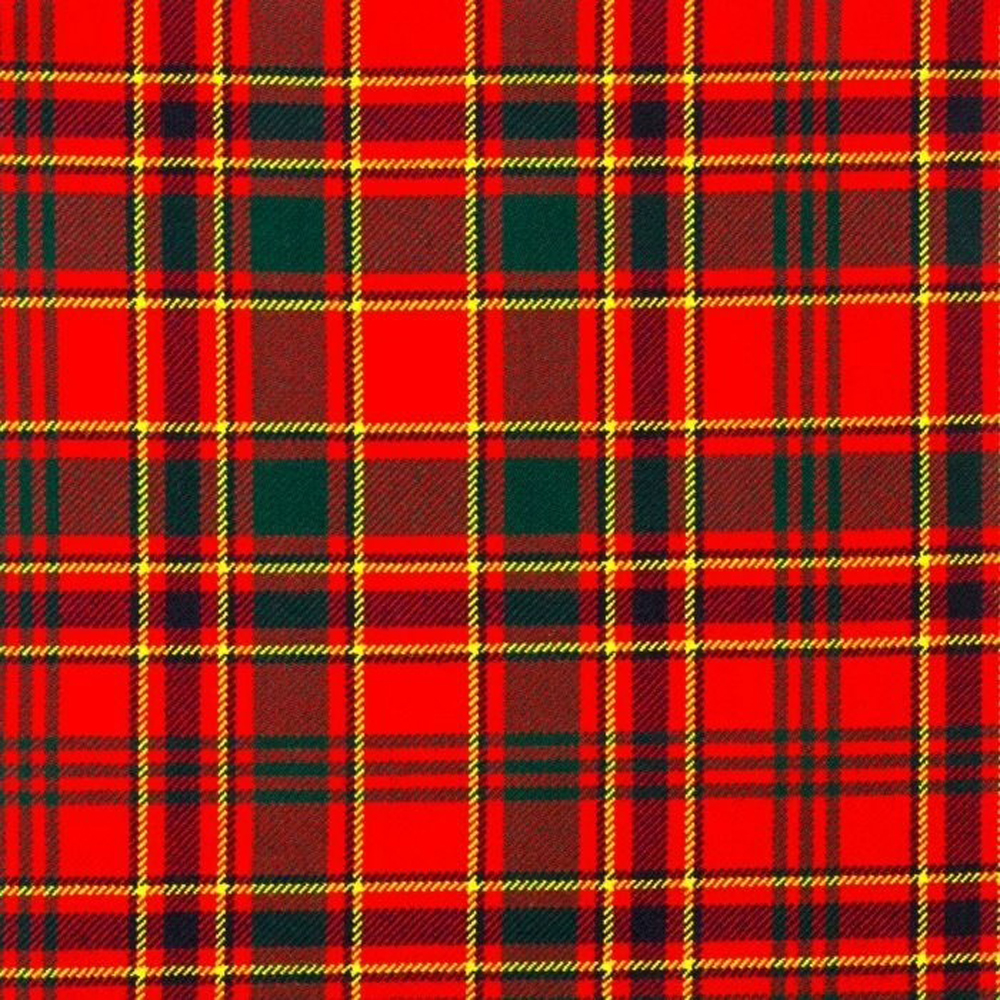
 Munro Modern
Clan Munro
Clan Munro, in Gaelic Clann an Rothaich, from Mac an Rothaich and the byname Rothach, a man from Ro, held a narrow strip of Easter Ross called Ferindonald — Donald’s land, after the clan’s legendary first chief. It runs some eight miles along the north shore of the Cromarty Firth between Dingwall and Alness, covering the modern parishes of Kiltearn and Alness, and from there the clan pushed north-east into wider Easter Ross. Tradition makes the Munros eleventh-century Irish fighting men rewarded with land for helping a Scottish king against Norse invaders, but the evidence does not reach that far back. A charter said to have been granted to Robert de Munro by the Earl of Sutherland in the reign of Alexander II cannot be traced, and the family’s documented charters begin in 1350 with Estirfowlys. The seat, Foulis Castle, stands two miles south-west of Evanton, with an eleventh-century motte still visible in its grounds.
The Munros were a fighting clan whose wars were mostly other people’s. They fought at Bealach nam Broig in 1452, north-west of Ben Wyvis, rescuing a Ross hostage at heavy cost to themselves, and Robert Munro, 14th Baron of Foulis, was killed at Pinkie Cleugh in 1547. The clan’s largest overseas commitment came under Robert Munro, the Black Baron, who took around 700 Munros alongside Mackay’s men into the Thirty Years’ War under Gustavus Adolphus; he died of an infected wound at Ulm in 1633, and General Robert Monro’s regiment earned the name the Invincibles. In the Jacobite risings of 1715 and 1745 the Munros stood with the government, which is the opposite of the usual Highland story and worth saying plainly. Sir Robert Munro, 6th Baronet, introduced a system of alternate firing and taking cover at Fontenoy on 11 May 1745, and was killed the following year at Falkirk Muir, surrounded by seven Cameron Jacobites; they buried him in Sir John de Graham’s grave. Foulis Castle was sacked and burned by the Jacobites the same year, and Sir Harry Munro, 7th Baronet, rebuilt it as a classical mansion between 1754 and 1792.
The Munro tartan
A search of the Scottish Register of Tartans for Munro returns only four records, and just two of them are clan setts. Munro is credited to Wilsons of Bannockburn, the Stirlingshire firm whose pattern books supplied the tartan trade from the late eighteenth century onward. Munro (Black and Red) is credited to the Sobieski Stewarts. The remaining two are modern and have nothing to do with the clan sett: a personal tartan, Lawrie-Munro, designed by Peter Eslea MacDonald and recorded on 16 September 2025, and a corporate one, the Debbie Munro Memorial.
A note on honesty: one of the two Munro clan setts comes from a proven literary fraud. The Sobieski Stewarts were John and Charles Edward Stuart, brothers who presented themselves as grandsons of Prince Charles Edward Stuart and published the Vestiarium Scoticum in Edinburgh in 1842, some seventy-five plates offered as copies of a fifteenth-century manuscript of clan tartans. It was denounced almost at once, Walter Scott among the doubters, and chemical analysis in 1895 found that the 1721 transcript had been treated to look older than it was; the conclusion was that the manuscript cannot be depended on as an ancient document. The other Munro sett is a commercial weaver’s pattern from Bannockburn. The Register holds no record at all under Munro Ancient, Munro Weathered or Munro Hunting: those are dye recipes applied to one of the two threadcounts above, lighter or muted shades of the same cloth, not additional tartans. For a clan documented back to a 1350 charter, that is a thin tartan record, and it is better to say so than to pad it.
Clan facts
| Chief | Hector Munro of Foulis, 35th Chief of Clan Munro, listed as a member of the Standing Council of Scottish Chiefs. His eldest son, Finnian Munro, is Younger of Foulis. The chiefship separated from the Foulis baronetcy in 1935 |
|---|---|
| Motto | Dread God |
| Plant badge | Common club moss |
| Lands | Ferindonald, on the north shore of the Cromarty Firth between Dingwall and Alness, Easter Ross; seat at Foulis Castle near Evanton, still the chief’s home |