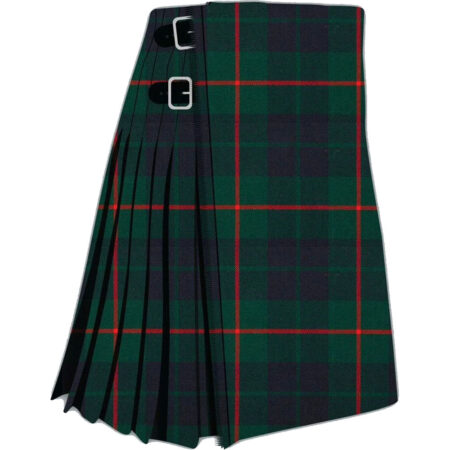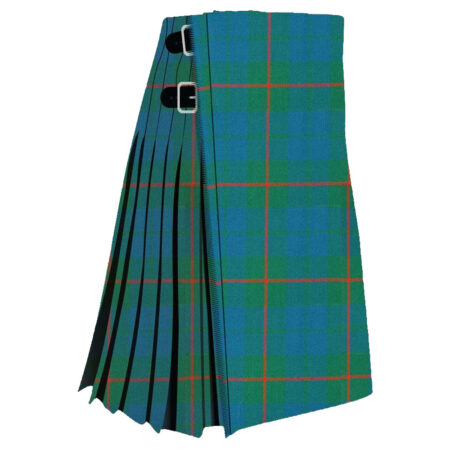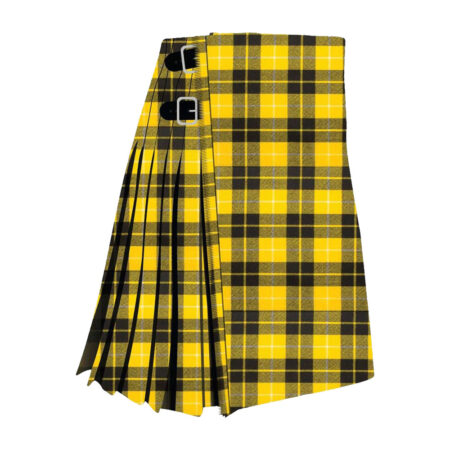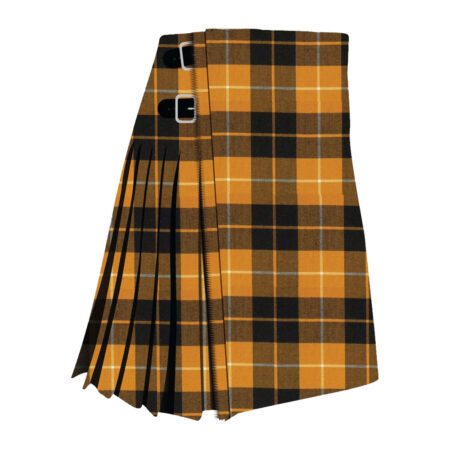
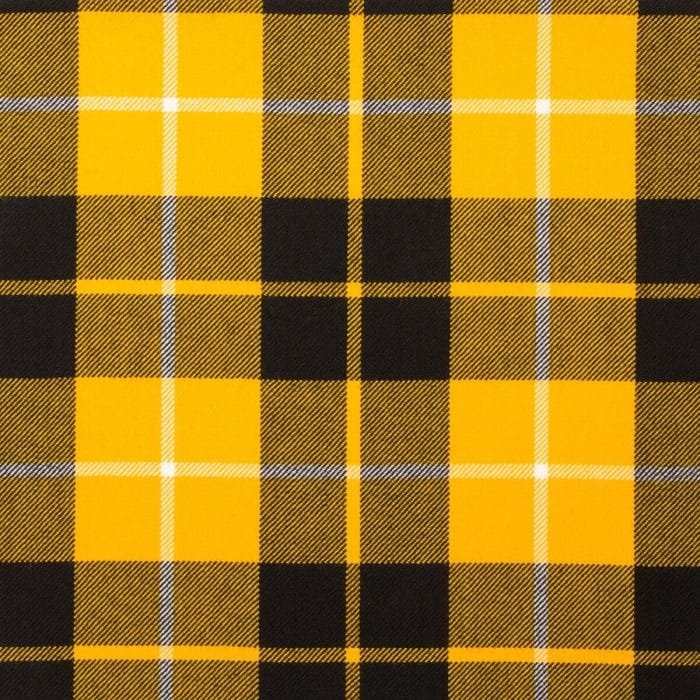
 Barclay Dress Modern
Clan Barclay
Barclay is an Anglo-Norman territorial name rather than a Gaelic one, and the family carried no Gaelic form: in the earliest Scottish charters they appear as de Berchelai, from Berkeley in Gloucestershire, where the family had settled after the Norman Conquest. The traditional account has John de Berchelai coming north about 1076 in the train of Queen Margaret and receiving Towie in Aberdeenshire from Malcolm III. Clan Barclay International’s own history treats that story with caution and points instead to a second migration in the early thirteenth century, with Roger de Berkeley arriving around 1220 in the service of the Earl of Fife. What is firm is earlier and narrower: Richard de Berkeley witnesses the foundation charter of Kilwinning Abbey in Ayrshire in or soon after 1162, and Walter de Berkeley was Chamberlain of Scotland from 1165 under William the Lion. The clan lands lay in the north-east — Towie and Gartly in Aberdeenshire, Mathers and Ury in Kincardineshire — with an earlier Ayrshire footing at Ardrossan and Pierston.
Sir David Barclay fought for Robert the Bruce in the Wars of Independence and was taken prisoner at Methven in 1306. Alexander Barclay acquired Mathers by marriage in 1351. The present Towie Barclay Castle, south-east of Turriff, was built in 1593; the family sold it in 1752, when Charles Maitland Barclay passed it to the Earl of Findlater. The most consequential Barclays left Scotland. Colonel David Barclay served under Gustavus Adolphus of Sweden, returned to fight in the civil wars, became first laird of Ury and turned Quaker; his son Robert Barclay (1648–1690) published his Apologia in Latin at Amsterdam in 1676, translated it himself into English in 1678, and was Governor of East Jersey from 1682 until his death, though he never crossed the Atlantic. A branch that had settled in the Baltic produced Michael Andreas Barclay de Tolly (1761–1818), descended from the Towie or Tolly line, who commanded the Russian 1st Army of the West against Napoleon in 1812 and was made Field Marshal after the taking of Paris in 1814.
The Barclay tartan
The Scottish Register of Tartans holds just two records under the name. The first is Barclay, and the Register gives its designer as the Sobieski Stewarts. The second is Barclay Dress, designer unknown. There is no Wilsons of Bannockburn pattern for Barclay, no eighteenth-century weaver’s record, and no third sett.
That first attribution matters, because it dates the tartan exactly. The Sobieski Stuart brothers published the Vestiarium Scoticum in Edinburgh in 1842, some seventy-five colour plates of tartans they claimed to have copied from a fifteenth-century manuscript held at the Scots College at Douay. The manuscript was never produced for anyone else to examine. The brothers’ own claim to descend from Charles Edward Stuart collapsed under scrutiny, and chemical testing in 1895 of the supposed 1721 copy found it had been treated to make the writing look older than it was. A great many Lowland families acquired their clan tartan from that book. Barclay is one of them.
A note on honesty: there is no record of a Barclay tartan before 1842, and nothing to suggest the Barclays of Towie, Gartly or Ury ever wore one. They were a north-east Lowland family; Sir Walter Scott doubted that Lowlanders wore tartan at all. The sett you buy today is a design from a book that was denounced as a forgery within the lifetime of its authors, and it is none the worse as cloth for that — but it is not an inheritance from the Wars of Independence. Barclay Ancient, Modern and Weathered are not separate tartans either. They are the same threadcount woven in different dye shades, and the Register holds no separate entry for any of them, nor for a Barclay Hunting sett.
Clan facts
| Chief | Vacant. Peter, the Barclay of Towie Barclay and of that Ilk, born in Rome on 26 February 1938, succeeded his second cousin Theodore Bruce de Tollie Barclay as Chief of the Name in 1967 and died on 2 November 2023. No successor has been announced |
|---|---|
| Motto | Aut agere aut mori — “Either to do or die” |
| Plant badge | None recorded |
| Lands | Towie and Gartly, Aberdeenshire; Mathers and Ury, Kincardineshire; earlier Ardrossan and Pierston in Ayrshire |
References
Versions of the Barclay tartan
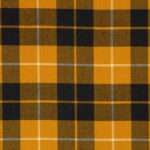
Barclay kilts & outfits
Every piece below is made to measure by Kilt 4 Less in the Barclay tartan. Choose a product, then pick your size and options.
Clan Barclay Hunting Modern Tartan Kilt
Original price was: £241.80.£159.00Current price is: £159.00.View kiltBarclay Hunting Ancient Tartan Kilt
Original price was: £210.00.£122.00Current price is: £122.00.View kiltBarclay Dress Modern Tartan Kilt
Original price was: £241.80.£99.00Current price is: £99.00.View kiltBarclay Dress Muted Tartan Kilt
Original price was: £241.80.£99.00Current price is: £99.00.View kiltMen’s 8 Yard Prince Charlie Kilt Outfit
Original price was: £499.00.£315.00Current price is: £315.00.ConfigureMcCalls Highland Kilt Outfit With Argyll Jacket
Original price was: £510.00.£325.00Current price is: £325.00.ConfigureScottish Wedding Men Kilt Outfit
Original price was: £700.00.£304.00Current price is: £304.00.ConfigureForest Green Tweed Jacket Kilt Outfit
Original price was: £489.00.£249.99Current price is: £249.99.Configure