Clan Dunbar
Dunbar is a territorial name rather than a patronymic. It comes from the burgh and castle on the East Lothian coast, in Gaelic Dùn Barra, “summit fort”, a Gaelicisation of an earlier Brythonic din-bar with the same sense, recorded as Dynbaer in the seventh century. The family took the name from the place, and there is no Gaelic clan-name of the Clann form behind it. The line begins with Gospatric, driven out of Northumbria after the Norman conquest and granted the lands of Dunbar by Malcolm III; his son was recognised as Earl of Dunbar in 1128. This is a Lowland and Border lineage, seated on the East Lothian coast and the Merse, which later reached north when marriage into the Randolph family brought the Earldom of Moray, and whose chiefly house settled at Mochrum in Wigtownshire.
The Earls of Dunbar and March sat close enough to the border to be useful to both sides, and the record reflects it. Patrick of Dunbar married Ada, a natural daughter of William the Lion, about 1184. Patrick called Black Beard was a competitor for the crown in 1291; Dunbar Castle surrendered in 1296; in 1314 the earl sheltered Edward II after Bannockburn. The best-remembered episode is the siege of January to June 1338, when the earl was away with the Scottish army and his wife Agnes Randolph, Black Agnes, held the castle against the Earl of Salisbury for nineteen weeks with a small garrison. Dunbars fought at Otterburn in 1388 and Sir John Dunbar was killed at Flodden in 1513. The earldom did not survive the fifteenth century: George, the eleventh earl, was imprisoned by James I and the title and estates forfeited. The castle was slighted with gunpowder by Act of Parliament in 1567. The Mochrum baronetcy dates from 1694, and the chiefship of the name was settled only in modern times, by a contested case heard first before the Lord Lyon King of Arms and concluded in the House of Lords in 1990.
The Dunbar tartan
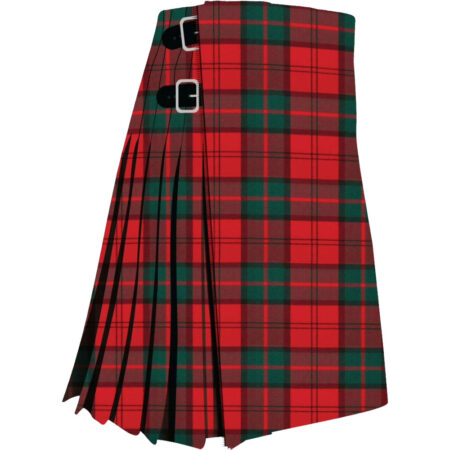
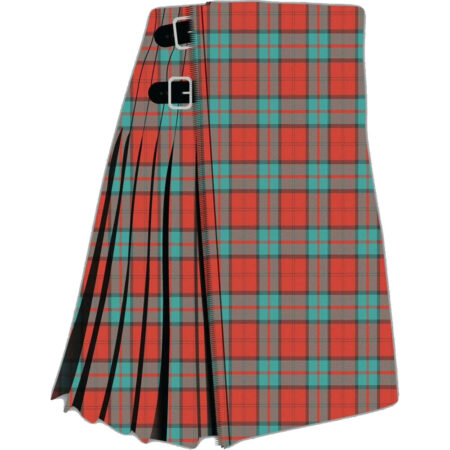
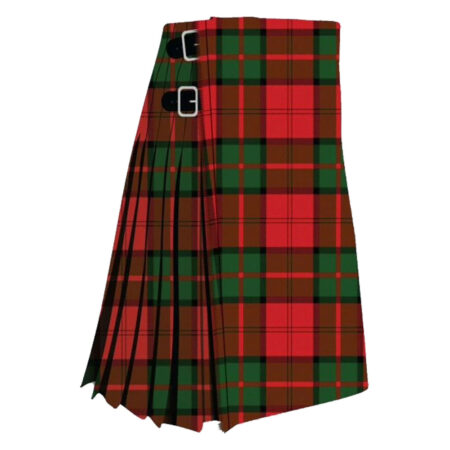
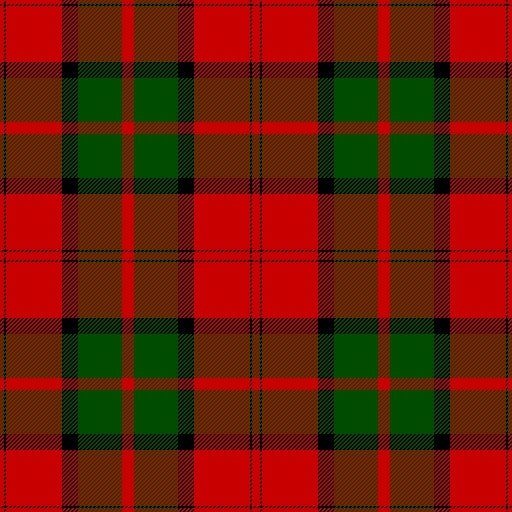
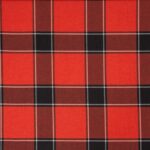
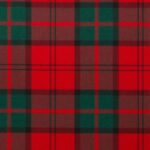
A search of the Scottish Register of Tartans for Dunbar returns eight records, six under the name itself. The clan and family sett called simply Dunbar is credited in the Register to the Sobieski Stewarts, design date 1842. Dunbar — 1840 is recorded separately as a district tartan by Wilsons of Bannockburn, dated 1840. Dunbar Hunting is by Tom Dunbar, dated 1986. There is a Dunbar Plaid in the Other category dated 2002, and two personal setts belonging to John Telfer Dunbar, the tartan historian.
The 1842 date on the clan sett is the whole story of it. That is the year the Sobieski Stuart brothers published the Vestiarium Scoticum, a book of some seventy-five clan tartans which they claimed reproduced a sixteenth-century manuscript once owned by John Lesley, Bishop of Ross. No one but the brothers ever saw that manuscript. Sir Walter Scott rejected its authenticity in 1829, and in 1895 the chemist Stevenson Macadam examined the one copy available and found it had been treated with chemicals to age the writing.
A note on honesty: the Dunbar clan tartan is a Vestiarium design, invented in 1842 by two men who also invented their own descent from the Stuarts. It has no connection to anything a medieval Earl of Dunbar or a seventeenth-century Dunbar of Mochrum wore. That does not make it illegitimate — many accepted clan tartans came out of the same book and have been worn for six generations since — but it should not be called ancient. The older pattern bearing the name is the Wilsons one of 1840, recorded as a district tartan for the burgh, not a family sett. Dunbar Ancient, Modern and Weathered are not separate tartans; they are the 1842 threadcount in different dye depths, and the Register holds no records under those names.
Clan facts
| Chief | Sir James Michael Dunbar, 14th Baronet of Mochrum, Chief of the Name and Arms of Dunbar; listed by the Standing Council of Scottish Chiefs as Sir James Dunbar of Mochrum Bt. Chiefship settled by litigation concluded in 1990 |
|---|---|
| Motto | In Promptu — “In readiness”. The Clan Dunbar International Society uses a different motto, Sub Spe, “Under hope” |
| Plant badge | None recorded |
| Lands | Dunbar and the East Lothian coast; the Merse; Moray through the Randolph marriage; the chiefly house at Mochrum, Wigtownshire |
References
Versions of the Dunbar tartan

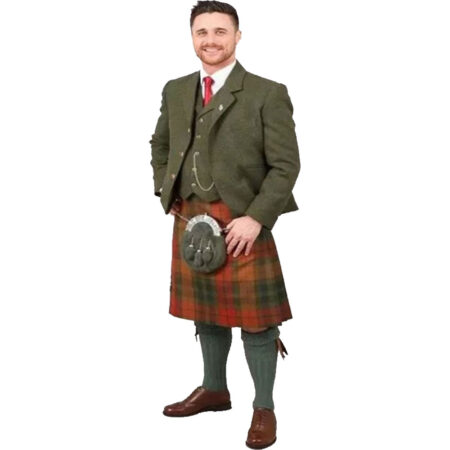
Dunbar kilts & outfits
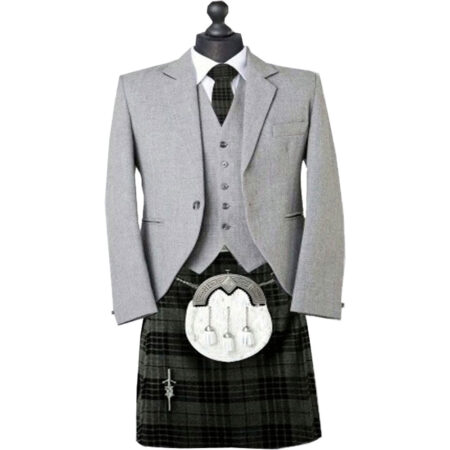
Every piece below is made to measure by Kilt 4 Less in the Dunbar tartan. Choose a product, then pick your size and options.
Dunbar Modern Reiver Tartan Kilt
Original price was: £241.80.£159.00Current price is: £159.00.View kiltMen’s 8 Yard Prince Charlie Kilt Outfit
Original price was: £499.00.£315.00Current price is: £315.00.ConfigureMcCalls Highland Kilt Outfit With Argyll Jacket
Original price was: £510.00.£325.00Current price is: £325.00.ConfigureScottish Wedding Men Kilt Outfit
Original price was: £700.00.£304.00Current price is: £304.00.ConfigureForest Green Tweed Jacket Kilt Outfit
Original price was: £489.00.£249.99Current price is: £249.99.Configure