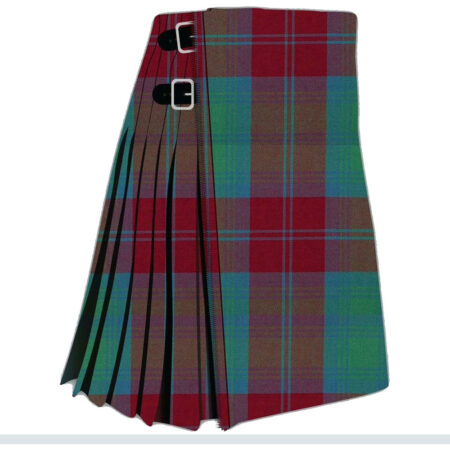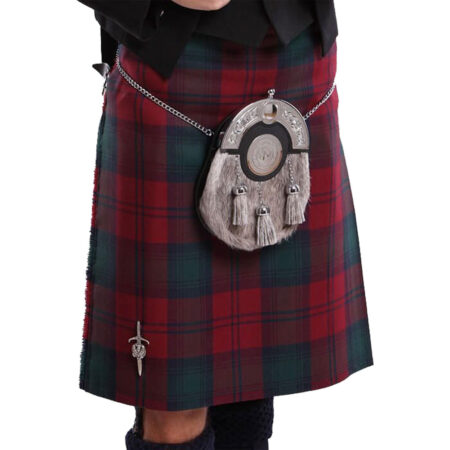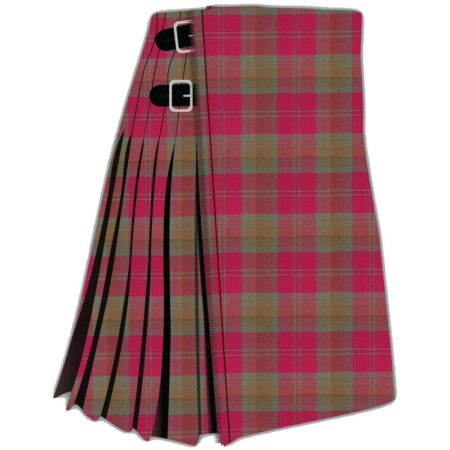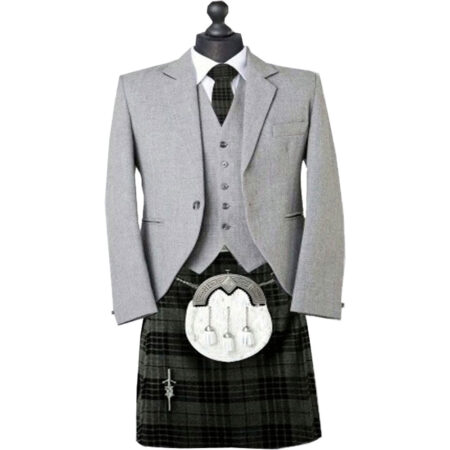
 Lindsay Modern
Clan Lindsay
Lindsay is an Anglo-Norman name with an English root and no Gaelic form. It comes from Lindsey in Lincolnshire, whose own name is Old English for the island of Lincoln, and the family is traceable there before it is traceable in Scotland: Baldric de Lindsey of Hemingby appears in Domesday Book in 1086 holding estates in Lindsey. His sons Sir Walter and William de Lindsay came north with David, Earl of Huntingdon, and the family was established within two generations — a William de Lindsay sat in the Parliament of 1164 and later served as justiciar. The lands accumulated in two clusters: Crawford in Lanarkshire, which gave the earldom its name, and Luffness in East Lothian in the south; and Angus and the Glenesk country in the north-east, where Edzell came to them in 1358 when Sir Alexander de Lindsay married the Stirling heiress Katherine Stirling. Sir David Lindsay was created Earl of Crawford on 21 April 1398, having made his name eight years earlier in a tournament on London Bridge before Richard II.
The clan’s worst day was a private quarrel that got out of hand. The monks of Arbroath Abbey appointed Alexander Lindsay, Master of Crawford, as bailie of their regality, then dismissed him over the conduct of his men and gave the office instead to Alexander Ogilvy of Inverquharity, who had both the electoral right and a hereditary claim to it. Lindsay disputed the appointment and the two sides met at Arbroath on Sunday 24 January 1446, reckoned 1445 by the old style. Lindsay brought over a thousand men, with Hamiltons from Clydesdale; Ogilvy was outnumbered but reinforced by guests including the 1st Earl of Huntly and men of Oliphant, Seton, Gordon and Forbes. David Lindsay, 3rd Earl of Crawford, rode between the two armies to stop the fight and was killed outright by a spear thrown by an Ogilvy footman who took him for an attacker. After that there was no stopping it. The Clydesdale spear wall broke the Ogilvy line and the pursuit ran three miles to Leysmill, where Ogilvy himself and Forbes of Pitsligo fell. The Lindsays won and lost about five hundred men doing it. Six years later, in 1452, Alexander Lindsay, 4th Earl of Crawford, known as Earl Beardie, rebelled against James II and fought at the Battle of Brechin. Edzell stayed Lindsay until 1715, when the last Lindsay lord, a Jacobite in debt, sold it to the 4th Earl of Panmure. The earldoms of Crawford and Balcarres were united in 1848, when the House of Lords allowed the claim James Lindsay, 7th Earl of Balcarres, had lodged in 1843.
The Lindsay tartan
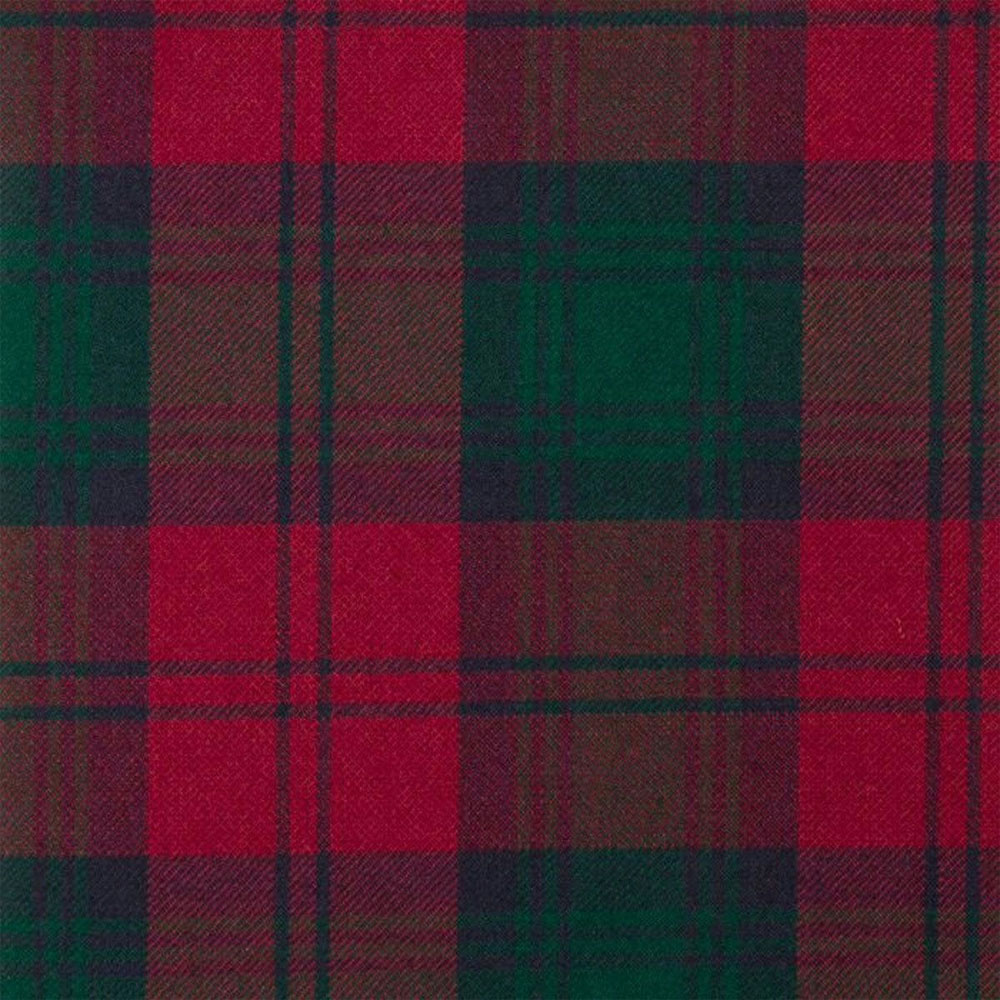
The Scottish Register of Tartans returns eight records for Lindsay. The principal sett, listed simply as Lindsay, is credited to the Sobieski Stewarts. Beside it sit Lindsay #2 and Lindsay #3, Lindsay Dress and Lindsay Dress Red, none of which carries a recorded designer or date, together with two modern personal tartans recorded in 2021 and 2023. Nothing under the name is attributed to Wilsons of Bannockburn.
The Sobieski Stewart credit identifies the source as the Vestiarium Scoticum, published in Edinburgh by William Tait in 1842 in an edition of only a few dozen copies. The two brothers who produced it, John and Charles, claimed to be grandsons of Prince Charles Edward Stuart and presented the book as a faithful reproduction of a fifteenth-century manuscript of clan setts. It contains around seventy-five coloured plates, arranged as Highland clans first and then Lowland Houses and Border Clans.
A note on honesty: the bright red Lindsay is among the most recognisable tartans in the world and among the least anciently attested. The Vestiarium was denounced as a forgery almost immediately on publication. Walter Scott had doubted the brothers in letters as early as 1829, noting the false Latin of the title; the Douay manuscript of 1571 they cited as their original was never shown to anybody outside the family; and Stevenson Macadam’s chemical analysis later established that their 1721 transcript had been treated to make the writing appear aged. The designs passed into use as official clan tartans anyway, and Lindsay is one of them — a design of 1842 wearing a fifteenth-century costume. Lindsay Ancient, Modern and Weathered are not distinct tartans; the Register records none of them separately, because they are one threadcount in different dye shades.
Clan facts
| Chief | Anthony Robert Lindsay, 30th Earl of Crawford and 13th Earl of Balcarres, Chief of Clan Lindsay; born 24 November 1958, succeeded on the death of his father the 29th Earl on 18 March 2023 |
|---|---|
| Motto | Endure Fort — “Endure bravely” |
| Plant badge | Lime tree |
| Lands | Crawford in Lanarkshire and Luffness in East Lothian; Angus and Glenesk, with Edzell Castle from 1358 to 1715; the present seat is Balcarres House in Fife |
References
Versions of the Lindsay tartan

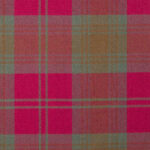
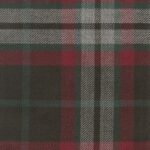
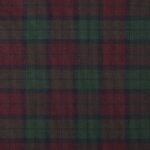
Lindsay kilts & outfits
Every piece below is made to measure by Kilt 4 Less in the Lindsay tartan. Choose a product, then pick your size and options.
Clan Lindsay Ancient Tartan Kilt
Original price was: £241.80.£159.00Current price is: £159.00.View kiltLindsay Weathered Tartan Kilt
Original price was: £241.80.£159.00Current price is: £159.00.View kiltMen’s 8 Yard Prince Charlie Kilt Outfit
Original price was: £499.00.£315.00Current price is: £315.00.ConfigureMcCalls Highland Kilt Outfit With Argyll Jacket
Original price was: £510.00.£325.00Current price is: £325.00.ConfigureScottish Wedding Men Kilt Outfit
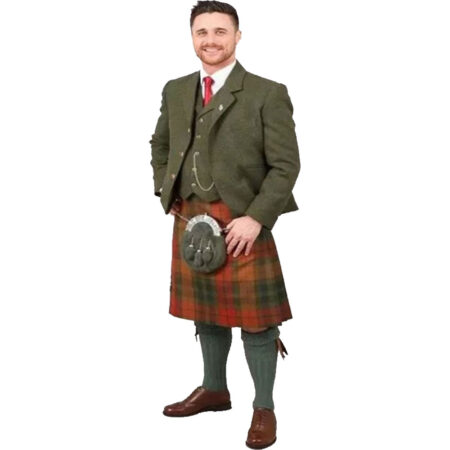
Original price was: £700.00.£304.00Current price is: £304.00.ConfigureForest Green Tweed Jacket Kilt Outfit
Original price was: £489.00.£249.99Current price is: £249.99.Configure