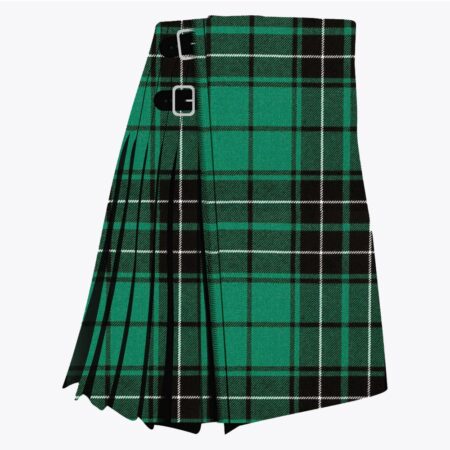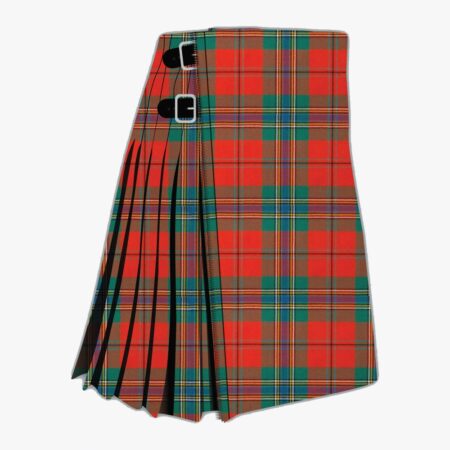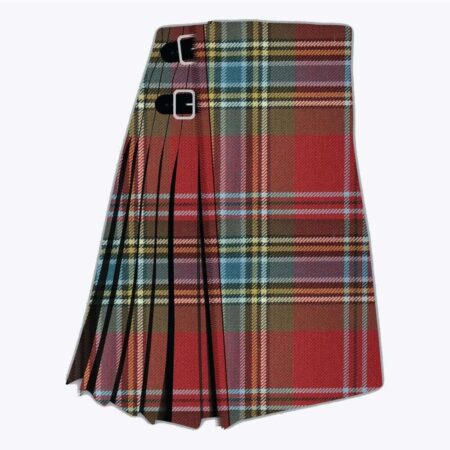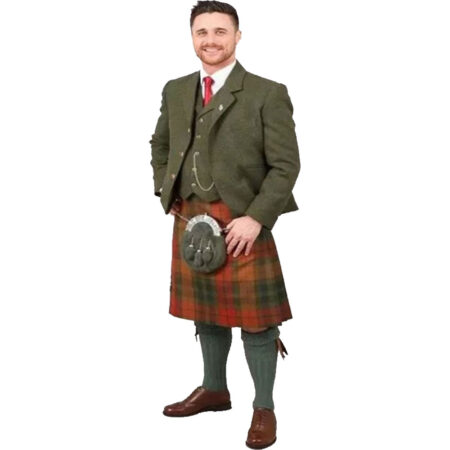
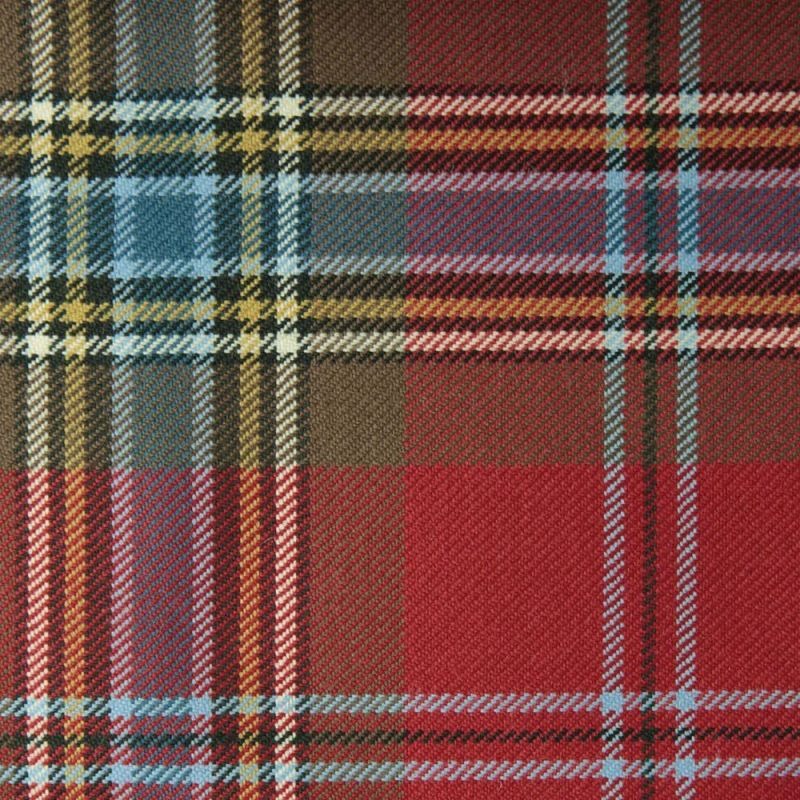
 MacLean Weathered
Clan MacLean
Clan MacLean, in Gaelic Clann ’IllEathain, is a Hebridean clan whose lands were the island of Mull with Tiree, Islay and Jura, and on the mainland Morvern, Knapdale and parts of Lochaber in Argyll. The name means the son of the servant of Saint John, and the clan takes its descent from Gillean of the Battle Axe, a thirteenth-century warrior who lived roughly between 1210 and 1263 and whose line was reckoned kin to the kings of Dalriada. The spellings MacLean, Maclean, McLean and MacLaine are variants of one name rather than separate families. The clan’s fortunes were made by marriage into the Lordship of the Isles: Duart Castle on its headland at the eastern point of Mull first appears in the record in a papal dispensation of 1367 permitting Lachlan Lubanach Maclean to marry Mary Macdonald, daughter of John of Islay, Lord of the Isles. Tradition says he abducted her first and negotiated afterwards, and the settlement brought Mackinnon lands with it.
MacLeans fought at Harlaw in 1411, where Hector Roy Maclean was killed in single combat with Sir Alexander Irvine of Drum. In 1527 Hector Mor became chief and was later seized by representatives of James V and made to destroy his galleys. Sir Lachlan, sixteenth chief, was created a baronet by Charles I in 1631, beginning a century of Stewart loyalty that cost the clan its lands: Sir Hector Maclean, eighteenth chief, was killed at Inverkeithing in 1651, and Duart was taken by General Leslie, lost, recovered and lost again to the Earl of Argyll between 1647 and 1674. The end came in 1691, when Sir John Maclean, fourth baronet, surrendered Duart to the tenth Earl of Argyll, who demolished it. By 1751 the place was abandoned, and it stood ruined for a hundred and sixty years. In 1911 Sir Fitzroy Donald Maclean, twenty-sixth chief, bought the ruin back and set about restoring it; the clan’s own history dates his purchase to 1910, the castle’s record to 11 September 1911. It is again the seat of the chief and open to visitors in summer, though it has needed continuing work: four ceilings were lost in 2013 and 2014, a restoration appeal was launched in July 2014, and the seventh phase of repair was under way in 2020.
The MacLean tartan
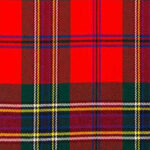
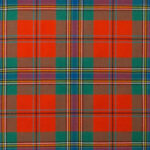
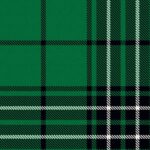
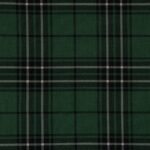
The Scottish Register of Tartans holds fourteen entries under MacLean, and the attributions are unusually clear. Four of them — MacLean, MacLean #2, MacLean #3 and MacLean of Duart — are recorded as patterns of Wilsons of Bannockburn, the Stirlingshire firm whose pattern books supplied most of the tartan trade from the late eighteenth century onwards. MacLean of Duart Hunting is credited in the Register to the Sobieski Stewarts. MacLean of Duart Dress #2 is a design by D. C. Dalgliesh of Selkirk; the entry catalogued as MacLean (Dress) is credited to the Edinburgh Woollen Mill; MacLean of Duart Dress #5 is filed under Fashion rather than as a clan tartan at all. There is also a black-and-white MacLean and a personal sett for MacLean of Kingairloch.
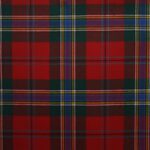
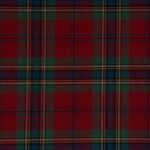
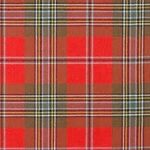
A note on honesty: the MacLean of Duart Hunting sett is not a hunting plaid and is not old. The Register names its source as the Sobieski Stewarts, the two brothers who in 1842 published the Vestiarium Scoticum, a book claiming to reproduce a fifteenth-century manuscript of clan tartans said to have belonged to Bishop John Lesley and later to Charles Edward Stuart. The manuscript was never produced, the copy the brothers showed was found to have been chemically treated to make the writing look older than it was, and the work is now accepted as a fabrication. It invented around seventy-five patterns, a great many of which are now worn as official clan tartans. The Wilsons setts are better documented but no more ancient: they are weaving-trade designs from the decades after the 1745 rising, sold to a market that had only just been allowed Highland dress again. And a MacLean sett labelled Ancient, Modern or Weathered is one threadcount in three dye palettes, not three separate tartans; the Register holds no distinct entry for any of them.
Clan facts
| Chief | Major the Hon. Sir Lachlan Hector Charles Maclean of Duart and Morvern, 12th Baronet, CVO, 28th Chief of Clan Maclean; succeeded his father in 1990 |
|---|---|
| Motto | Virtue Mine Honour |
| Slogan | Bàs no Beatha — “Death or life” |
| Plant badge | Crowberry |
| Lands | Mull, Tiree, Islay and Jura; Morvern, Knapdale and Lochaber in Argyll. Seat at Duart Castle, Mull, held from the fourteenth century, lost to Argyll in 1691 and bought back in 1911 |
References
Versions of the MacLean tartan

MacLean kilts & outfits
Every piece below is made to measure by Kilt 4 Less in the MacLean tartan. Choose a product, then pick your size and options.
MacLean Hunting Ancient Tartan Kilt
Original price was: £241.80.£159.00Current price is: £159.00.View kiltMacLean of Duart Ancient Tartan Kilt
Original price was: £241.80.£159.00Current price is: £159.00.View kiltClan MacLean Weathered Tartan Kilt
Original price was: £241.80.£159.00Current price is: £159.00.View kiltMen’s 8 Yard Prince Charlie Kilt Outfit
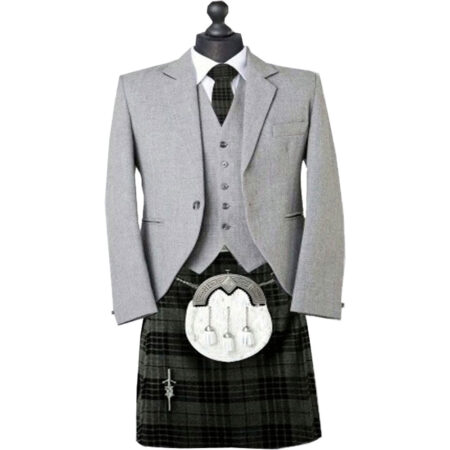
Original price was: £499.00.£315.00Current price is: £315.00.ConfigureMcCalls Highland Kilt Outfit With Argyll Jacket
Original price was: £510.00.£325.00Current price is: £325.00.ConfigureScottish Wedding Men Kilt Outfit
Original price was: £700.00.£304.00Current price is: £304.00.ConfigureForest Green Tweed Jacket Kilt Outfit
Original price was: £489.00.£249.99Current price is: £249.99.Configure