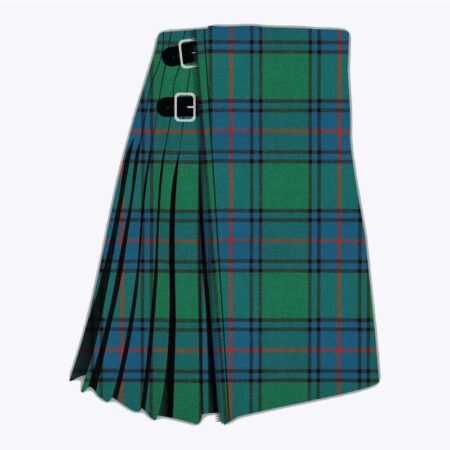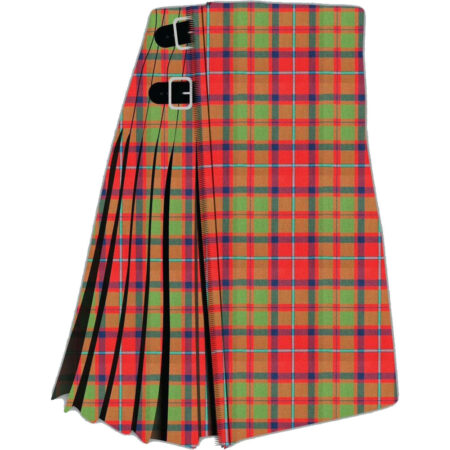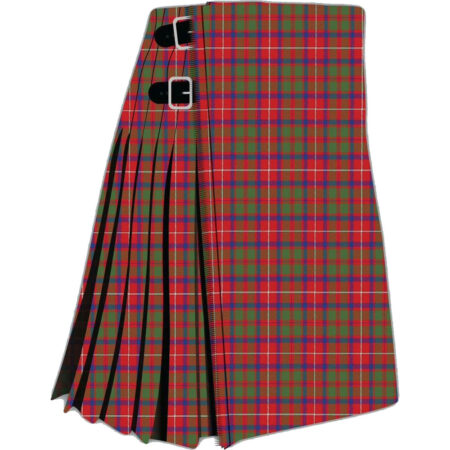
 Shaw Ancient
Clan Shaw
Clan Shaw of Tordarroch, in Gaelic Clann Ay after Aedh, is a Strathnairn and Strathspey clan and a member clan of the Clan Chattan confederation rather than a sept of Mackintosh: it has its own chief, recognised in his own right, while Clan Chattan has a separate chief over the confederation. The two houses share a stem. The Shaws trace to Shaw MacDuff, a younger son of the Earl of Fife, and a Shaw was Constable of Inverness Castle in 1163; three of the first four Mackintosh chiefs were Shaws. The first chief of the Shaws proper was a younger son of Angus Mackintosh, sixth of Mackintosh, and of Eva, heiress of Clan Chattan, whose marriage in 1291 bound the two lines together. The clan’s first lands were at Rothiemurchus in Strathspey, taken in the thirteenth century — the date is given variously as 1236 and 1263 — where the Doune of Rothiemurchus remained the seat until the ground passed to the Grants in 1567. From 1468 the chiefly line was at Tordarroch, above the River Nairn some seven miles south of Inverness.
The clan’s best-known day was a judicial one. In 1396 Shaw Mor, called Sgorfhiachlach or Bucktooth, led thirty Clan Chattan champions in the trial by combat on the North Inch of Perth, fought before Robert III and the Dauphin of France; Rothiemurchus is traditionally the reward. His grave at the Doune is marked by five stones, and an iron cage was fitted over it in 1983. James Shaw of Rothiemurchus was killed at Harlaw in 1411. Shaws were at Invernahavon against the Camerons about 1370, and Robert and Angus Shaw of Tordarroch led the clan contingent in the rising of 1715; in 1745 James Shaw of Crathienaird and John Shaw of Kinrara were out with Lady Anne Farquharson-Mackintosh. In May 1743 a hundred and thirty-nine men of the Black Watch marched for home rather than be shipped to the West Indies; three were shot at the Tower of London on 18 July, one of them Private Farquhar Shaw, whose figure stands on the Black Watch monument raised at Aberfeldy in 1887. The chiefship was put on a formal footing only in 1970, when Major Charles John Shaw of Tordarroch was recognised by the Lord Lyon as twenty-first chief.
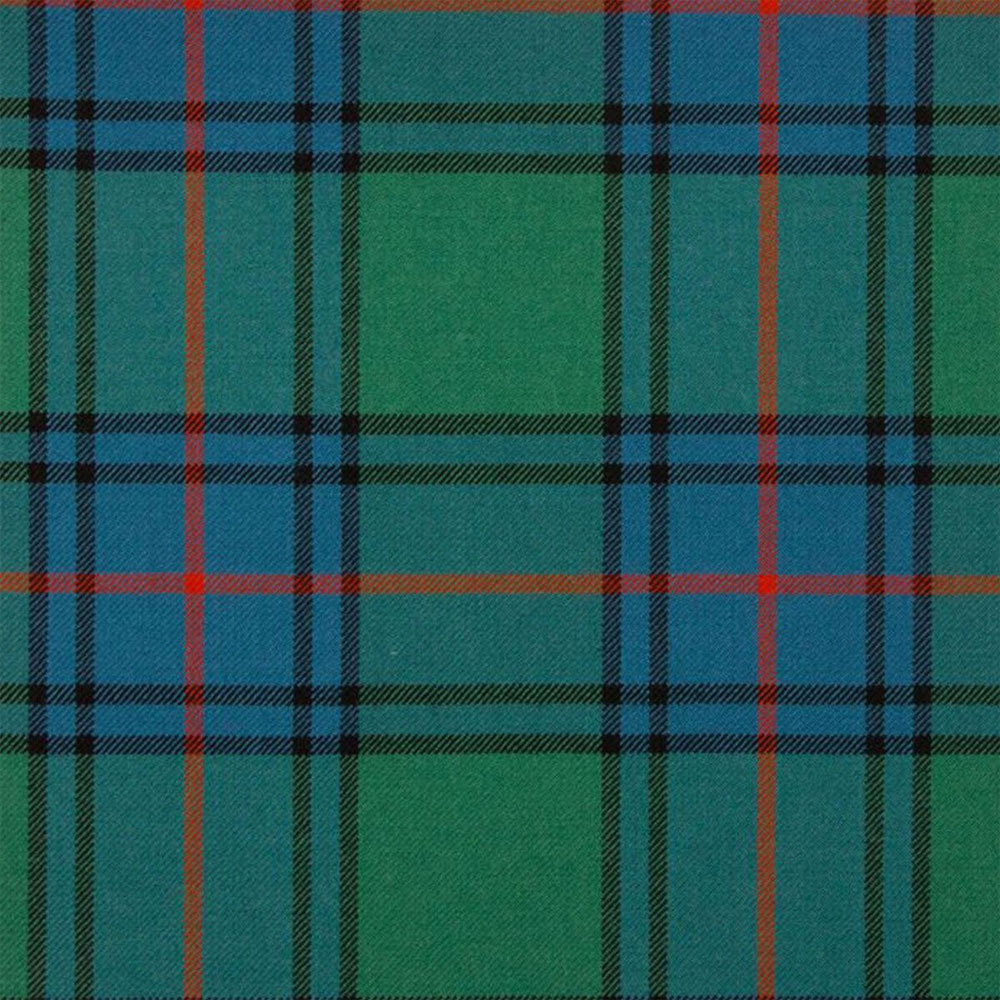
The Shaw tartan
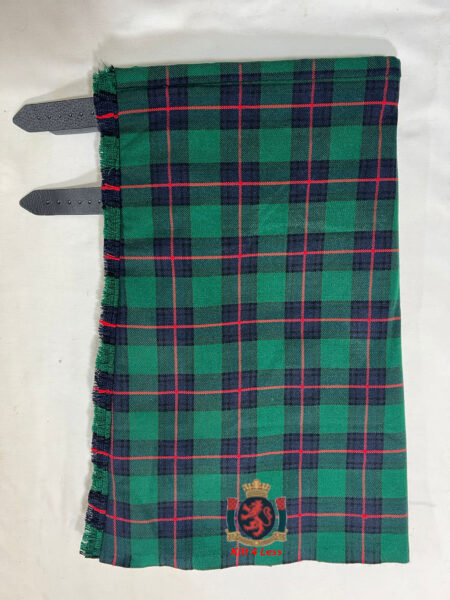
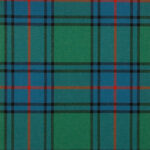
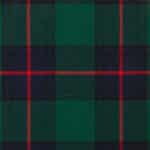
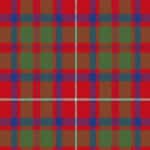
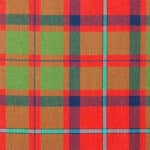
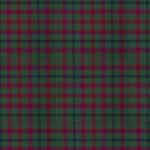
The Register holds a short and recent list. Under Shaw as a clan name there is Shaw, attributed to McIan — that is, to the plates of R. R. McIan and James Logan’s The Clans of the Scottish Highlands of 1845–47 — and a Shaw Dress by the tartan historian James Scarlett MBE. The two setts worn by the chief’s house, Shaw of Tordarroch Green (Hunting) and Shaw of Tordarroch Red (Dress), are both credited to D. C. Stewart. They were designed in 1969 to replace an earlier and incorrect pattern the family had been wearing, and registered in 1971. By permission of the Colonel of the Black Watch a portion of the older sett was kept in the design as a reference to Farquhar Shaw. There is also a Shaw of Carolina, recorded for an American branch. No Shaw record in the Register carries a Wilsons of Bannockburn attribution.
A note on honesty: the Shaw chief’s own tartans are twentieth-century designs, and they were drawn by the man best placed to know how modern most clan tartans are. D. C. Stewart wrote The Setts of the Scottish Tartans (1974) and, with J. C. Thompson, Scotland’s Forged Tartans (1980), the study that demolished the Vestiarium Scoticum of 1842. He designed the Tordarroch setts in 1969. The older plain Shaw sett is a Victorian book plate, not a survival from Strathnairn. Ancient, Modern and Weathered Shaw are the same threadcounts in different dye shades, not separate tartans, and no Shaw sett can be shown to have been worn before the nineteenth century.
Clan facts
| Chief | Iain Shaw of Tordarroch, 23rd Chief of Clan Shaw and Chieftain of Clan Ay, who succeeded his father John in 2017. The chiefship was recognised by the Court of the Lord Lyon in 1970 in the person of Major Charles John Shaw of Tordarroch |
|---|---|
| Motto | Fide et Fortitudine — “By fidelity and fortitude” |
| Plant badge | Red whortleberry |
| Lands | Rothiemurchus in Strathspey until 1567; Tordarroch in Strathnairn, south of Inverness, from 1468 |
References
Versions of the Shaw tartan
Shaw kilts & outfits
Every piece below is made to measure by Kilt 4 Less in the Shaw tartan. Choose a product, then pick your size and options.
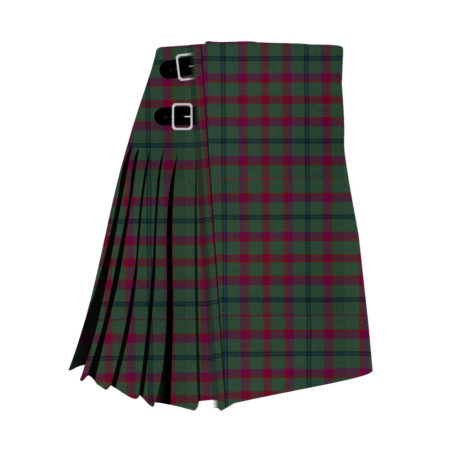
Shaw OF Tordarroch Ancient Tartan Kilt
Original price was: £241.80.£159.00Current price is: £159.00.View kiltShaw Of Tordarroch Hunting Ancient Tartan Kilt
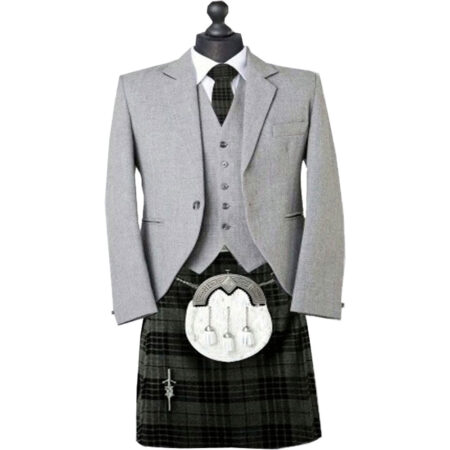
Original price was: £241.80.£159.00Current price is: £159.00.View kiltMen’s 8 Yard Prince Charlie Kilt Outfit
Original price was: £499.00.£315.00Current price is: £315.00.ConfigureMcCalls Highland Kilt Outfit With Argyll Jacket
Original price was: £510.00.£325.00Current price is: £325.00.ConfigureScottish Wedding Men Kilt Outfit
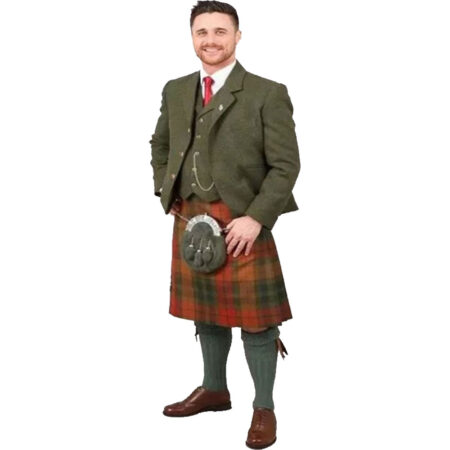
Original price was: £700.00.£304.00Current price is: £304.00.ConfigureForest Green Tweed Jacket Kilt Outfit
Original price was: £489.00.£249.99Current price is: £249.99.Configure