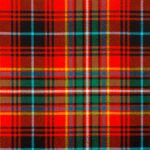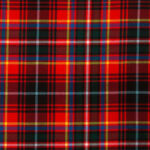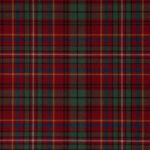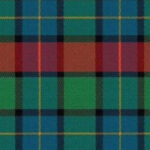
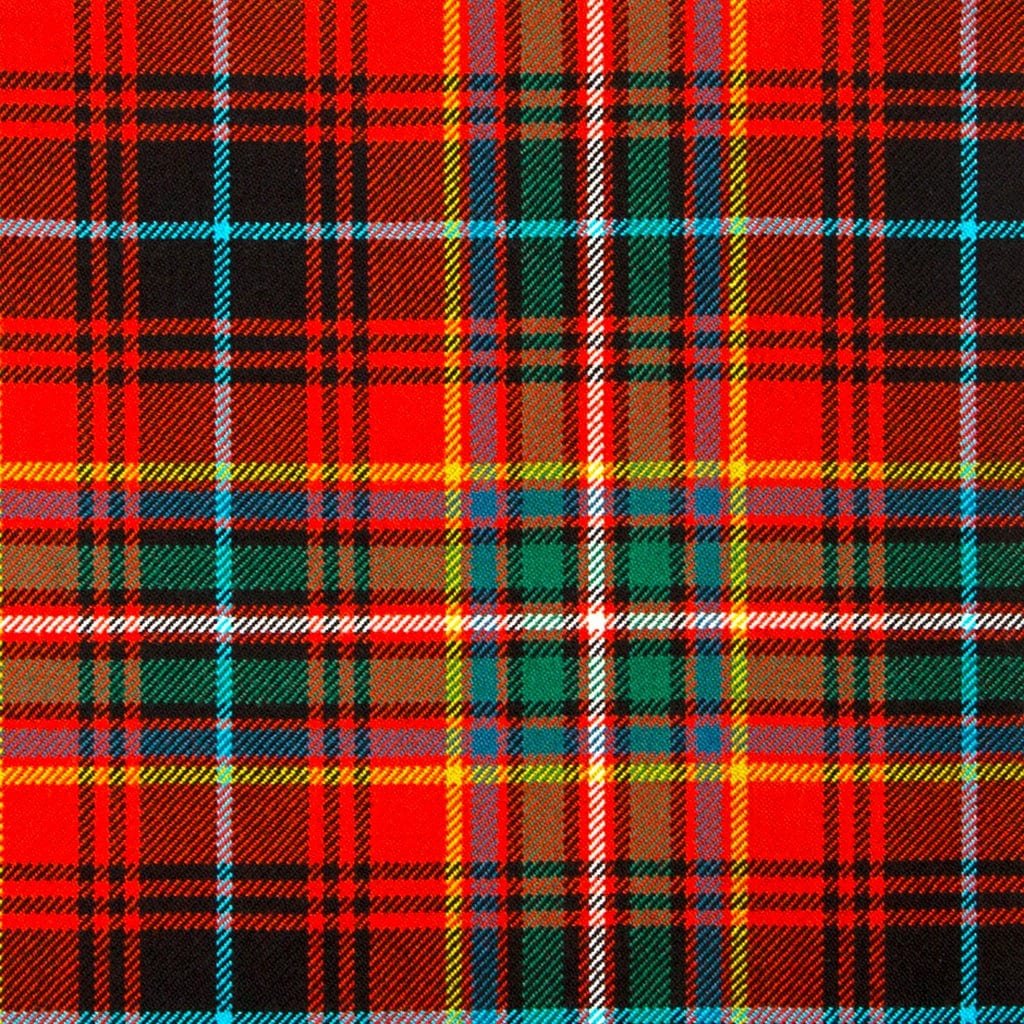
 Innes Red Ancient
Clan Innes
Clan Innes has one of the better documented origins of any Scottish family. Malcolm IV granted the lands of Innes, between the Spey and the Lossie in Moray, to Berowald the Fleming by charter in 1160, the tenure being the service of one knight in the king’s castle of Elgin. A notarial copy survives and is catalogued in the National Register of Archives for Scotland, and the text was printed in Lachlan Shaw’s History of the Province of Moray. Berowald’s great-grandson Walter was the first to take the surname, as de Ineys, confirmed by a charter of Alexander II in January 1226. The family seat was Innes House in Moray, built between 1640 and 1653 and held by the family until 1767.
The Innes of Innes line held a Nova Scotia baronetcy created in 1625. Its sixth and last baronet, Sir James Innes, succeeded to the Dukedom of Roxburghe after a claim begun in 1805 and resolved in 1812, and the baronetcy merged in the dukedom. That is why Clan Innes has no chief today: the heir to the chiefship is the Duke of Roxburghe, but because he bears the surname Innes-Ker the Lord Lyon will not recognise him as Chief of the Name of Innes. Innes accordingly does not appear on the roll of the Standing Council of Scottish Chiefs, and the clan is armigerous. The separate Innes of Balvenie baronetcy of 1628 is a baronetcy and nothing more; we could find no sourced claim that it carries the chiefship.
The Innes tartan
Setting aside the MacInnes and Minnesota matches that the search also throws up, the register’s Innes entries are Innes, Innes (of Moray), Innes Hunting, Innes of Cowie, Innes Dress, Innes (Miniature), Innes Red Dress (Dance), and Innes of Learney Hunting. Of these, the plausibly distinct base setts are Innes, Innes Hunting, Innes of Cowie and Innes (of Moray). Innes (Miniature) is filed under Other and is a reduced-scale rendering rather than a new design; Innes Red Dress (Dance) is a fashion entry credited to the Selkirk weavers D. C. Dalgliesh; and Innes of Learney Hunting is a personal tartan. Glen Innes (Australia) is a district tartan for a town in New South Wales and is not clan wear. Because the register’s detail pages do not load, these judgements rest on the register’s own categories and reference numbers rather than on a comparison of threadcounts.
The register lists the designer as unknown for every historic Innes entry, so it establishes nothing about origin. A 1931 article by Thomas Innes traces the tartan’s first documented appearance to Thomas Smibert’s The Clans of the Highlands of Scotland of 1850, where a seven-colour pattern dominated by red and black is assigned to the Morayshire Innes. The green MacInnes tartan is a derivative of it, with the red ground replaced by green, and the two clans are unconnected — a point Sir Thomas Innes of Learney, as Lord Lyon, was at pains to make. Innes is not in the Vestiarium Scoticum, so the sett carries none of that forgery’s baggage, and no Innes sett is attributed to Wilsons of Bannockburn.
A note on honesty: the earliest an Innes sett can be documented is 1850, and no Innes sett predates the commercial era — the charter of 1160 dates the lands, not the cloth. There are no Ancient, Modern, Weathered or Muted Innes entries in the register at all; those names describe dye palettes applied to the same registered threadcount, not separate tartans.
Clan facts
| Chief | None. Clan Innes is armigerous and the Lord Lyon recognises no Chief of the Name of Innes. The heir to the chiefship is the Duke of Roxburghe, who cannot be recognised as chief because he bears the surname Innes-Ker |
|---|---|
| Motto | Be traist — “Be faithful” |
| Plant badge | Great bulrush |
| Lands | Moray, between the Spey and the Lossie; the barony of Innes near Elgin; Innes House, the seat until 1767. No Gaelic patronymic is recorded — the Gaelic innis, a meadow or island, is an etymology of the place name, not a patronymic |