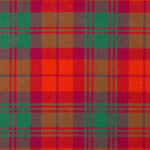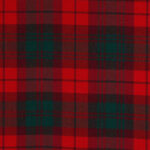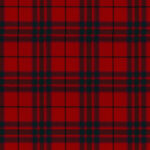
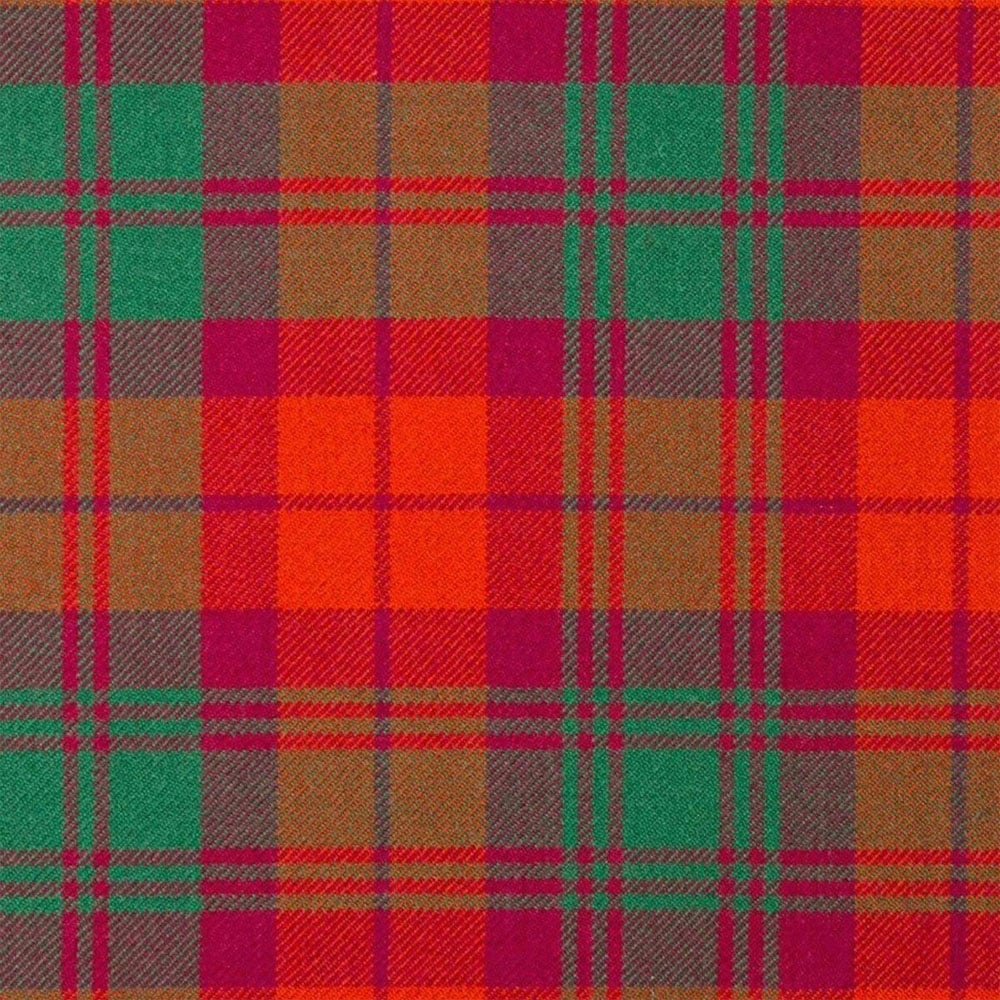
 MacNab Ancient
Clan Macnab
The name is Mac an Aba, child of the abbot, and the family held the lay abbacy of Strathfillan in Glen Dochart. Tradition takes the line back to a son of Kenneth MacAlpin and the clan society dates its early chiefs to 1124, but the first solid documentary record is 1296, when Malcolm de Glendochart appears in the Ragman Rolls swearing fealty to Edward I. The clan lands ran from Tyndrum through Killin and along Loch Tay, with the stronghold on an island in the river.
The Macnabs sided with the MacDougalls against Robert the Bruce and lost their lands after Bannockburn in 1314; Gilbert Macnab received a restoration charter from David II in 1336. Later generations fought at Kilsyth in 1645 and Altimarlach in 1680. Debt, not war, finally broke the estate: it was foreclosed in 1823, the chief emigrated to Canada and took an eighty-thousand-acre grant on the Ottawa River, and in 1828 the Scottish lands were sold to the 4th Earl of Breadalbane, burial ground and all. In 1949 Archibald Corrie Macnab, 22nd chief, bought back Kinnell House and some seven thousand acres.
The Macnab tartan
The Scottish Register of Tartans holds five Macnab records: Macnab (Old), dated 1810; Macnab (Clan), 1815; Macnab (No 199), 1819; Macnab (VS), 1842; and Macnab, Ancient, with no date specified. The dated entries are separate records rather than one sett under different names.
Two of these have traceable origins. Macnab (VS) is from the Vestiarium Scoticum of 1842 — the contents list of that book includes “Maknabbis” — and the Vestiarium was the work of two brothers calling themselves Sobieski Stuart whose supposed ancient manuscript was shown in 1895 to have been chemically aged. The “No 199” in the 1819 entry is a Wilsons of Bannockburn pattern number, and the date falls squarely in the Wilsons period, so a Wilsons origin is very likely; we have not been able to confirm the attribution from the register record itself and will not state it as fact.
A note on honesty: Macnab Ancient, Modern, Weathered and Reproduction as sold by retailers are dye colourways of the clan sett, not separate tartans. No Macnab sett predates the commercial era — the earliest register date is 1810, more than five centuries after the clan first appears in record. Retail pages that number Francis Macnab (1734–1816) as the 12th chief conflict with the published chief lists, which make him the 16th; the 22nd, 23rd and 24th at the modern end are well attested.
Clan facts
| Chief | James William Archibald Macnab of Macnab, 24th Chief, since 2013 |
|---|---|
| Motto | Timor omnis abesto — “Let fear be far from all” |
| Plant badge | Stone bramble; common heath is also recorded |
| Lands | Glen Dochart and Killin, Perthshire, along Loch Tay; Kinnell House is the modern seat |