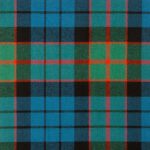
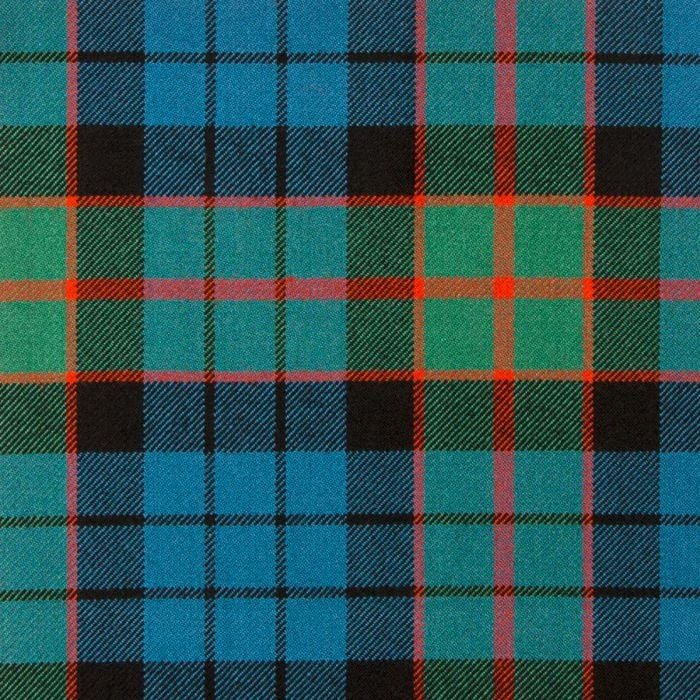
 Fletcher of Dunans Ancient
This is a trade name rather than a bloodline, which is why the Fletchers of Argyll and the Fletchers of the Lothians have nothing to do with one another and why the name has no chief.
A trade, not a kindred
A fletcher made arrows. The Scots and English word comes through Old French flechier, and the Gaelic equivalent is leisdear, giving the surname form Mac an Leisdeir, son of the arrow-maker. Both words were in use in Scotland at the same time, in different languages and different districts, and both produced surnames. By the eighteenth century Gaelic-speaking families were rendering Mac an Leisdeir back into English as Fletcher, so two separate naming traditions converged on one spelling. Any account that traces all Fletchers to a single ancestor is therefore working against the grain of the evidence.
One such account is worth flagging because it circulates widely: that the name descends from a Norman, Jean de la Flèche, granted land by William the Conqueror, whose descendants later came north. The claim has the shape of a nineteenth-century pedigree rather than a documented descent, and an occupational surname needs no founder to explain it. The record does not support the Norman line, and it is not needed.
Glen Orchy and the deed of 1587
The Gaelic Fletchers who matter to the clan story were settled in Glen Orchy in Argyll, where tradition makes them arrow-makers to the MacGregors. The first chief named in the genealogies is Angus Mac an Leisdeir, born about 1450. In 1497 the kindred is said to have fought beside the Stewarts of Appin and the MacLarens against the MacDonalds, and the friendship sworn on that occasion — the oath is remembered as having been taken on the dirk — is the basis of the long association with Clan Gregor. Both of those are tradition rather than charter.
What is documented is the loss. Duncan Campbell of Glenorchy, in high favour with James VI and in command of armed men under royal warrant, brought a charge of murder against the Mac an Leisdeir chief; the accusation is generally reckoned to have been manufactured. The outcome was a deed by which the family ceded its lands, and from 1587 the Fletchers of Glen Orchy held their ground as tenants of Campbell of Glenorchy rather than in their own right. That change of status, not any battle, is what dissolved them as an independent kindred, and it is the reason Fletchers of that line are counted among the Breadalbane Campbell following in later musters. The MacGregor connection then became awkward: in 1715 and again in 1745 the two names were not reliably on the same side.
Saltoun and the other Fletchers
The Lowland Fletchers produced the more prominent men. Andrew Fletcher, Lord Innerpeffer, a judge, bought the Saltoun estates in East Lothian in 1643. His descendant Andrew Fletcher of Saltoun, member for Haddington from 1678, became the most articulate opponent of incorporating union with England, and fled to Holland after backing the Monmouth rising. A later Andrew Fletcher, Lord Milton, sat as Lord Justice Clerk. None of this connects to Glen Orchy; the coincidence is the surname.
No chief, and what follows for the sett
Fletcher is an armigerous name, meaning that no chief of the name is at present recognised by the Court of the Lord Lyon. In strict terms that also means there is nobody with authority to declare any pattern the official Fletcher tartan, because it is a chief, not a clan, who makes a sett official and then has it entered in the Lyon Court books. Patterns are woven and sold under the name, and they are perfectly legitimate to wear; what they are not is a sett sanctioned by a living chief, and no early Fletcher specimen of the kind collected for the Highland clans in the early nineteenth century is on record. Modern, Ancient, Weathered and Muted, where offered, are dye treatments of one thread arrangement.
On who may wear it: there is no restriction in Scots law on any clan or family tartan, and with no chief there is not even a courtesy to observe. Bearers of the name in any spelling, and their descendants, have as good a claim as anyone can have. A Fletcher who can trace a Glen Orchy descent may reasonably prefer a Campbell of Breadalbane sett on the historical grounds set out above, but that is a choice, not a rule.
References
Wikipedia, Clan Fletcher, Armigerous clan and Scottish clan.