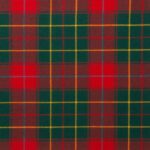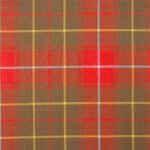
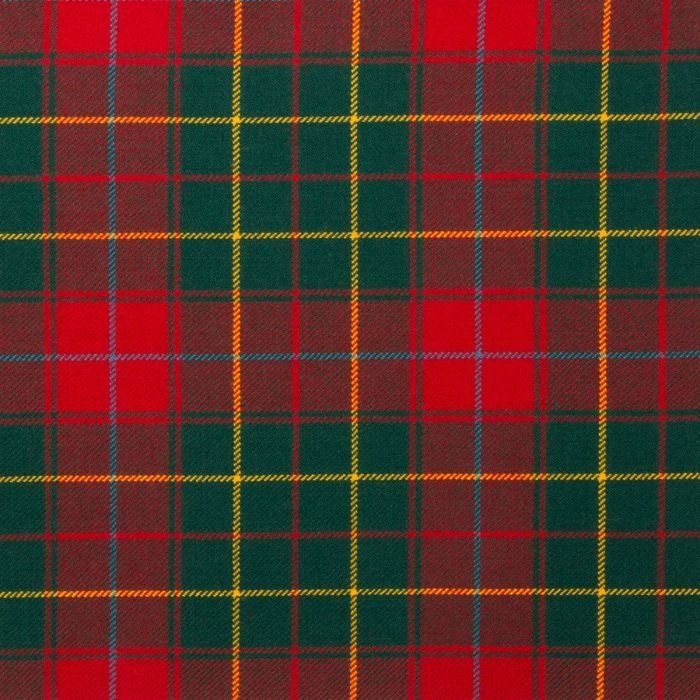
 Burnett Modern
In 1838 Sir Thomas Burnett asked the Lord Lyon to replace the huntsman in the family arms with a kilted Highlander, which is about as clear a record as exists of a Deeside house of Anglo-Norman descent deciding to be Highland.
Burnard, Bernard, Burnet
The name is unresolved in the usual way. One derivation takes it from Old French burnete, a diminutive of brun, brown, which may refer to hair or to the good dark woollen cloth of that name. The other works from the Anglo-Saxon personal name Beornheard, through the English surname Burnard. Early Scottish documents do not help, because scribes used Burnet and Burnard, and sometimes Bernard, for the same families and the same men. In England the name is documented soon after 1066: a Roger Burnard holds manors in Hampshire and Wiltshire in Domesday Book.
Roxburghshire before Deeside
The Scottish family appears first in the Borders, probably arriving in the reign of David I, and the sequence of records is unusually tidy. About 1200 Roger Burnard of Faringdoun granted lands, his sons Geoffrey, Walter, Ralph and Richard witnessing. In 1208 Ralph appears in the episcopal records of Glasgow. In 1252 Richard Burnard sold the Eastmeadow of Faringdoun to Melrose Abbey, a sale confirmed by Alexander III. The move north came in 1323, when Alexander Burnard was rewarded by Robert I with lands at Banchory and the office of royal forester of Drum. Every later Burnett of consequence descends from that grant, and the family spelling drifted from Burnard to Burnett over the following two centuries.
Crathes, and three and a half centuries in one house
Crathes Castle was begun in 1553 by Alexander Burnet, ninth of Leys, and finished in 1596 by his great-grandson Alexander, the twelfth. John Burnet, fifth laird, had been the first to use the designation of Leys, and his son Alexander became the first baron of Leys under the earlier James kings. The family held Crathes for more than 350 years, until Sir James Burnett, thirteenth Baronet, gave it to the National Trust for Scotland in 1952. The present Chief of the Name and Arms is James Comyn Amherst Burnett of Leys, Baron of Kilduthie.
A tartan that arrives through the Lyon Court
The Burnett sett is a good illustration of how most family tartans actually came about, because the family was never Highland and the paperwork admits it. Commercial tartan took off around the visit of George IV to Scotland in 1822. Most chiefs at that point had no established pattern of their own, and the Bannockburn weaving trade obligingly produced designs to meet the demand. The 1838 petition fits exactly into that decade: replacing a huntsman supporter with a kilted Highlander in the arms of a Deeside laird is a heraldic decision about identity, not an antiquarian one. The recognised Burnet of Leys tartan appears in the current heraldic record in consequence of the matriculation of the present chief’s arms in 1967, which is the point at which the pattern becomes officially attached to the name rather than merely sold under it.
Two things follow. The first is that no great age should be claimed for the sett; the sources consulted here give no earlier documentation than the nineteenth-century commercial period and the twentieth-century matriculation. The second is that this is entirely normal. Almost every named family pattern in circulation dates from after about 1765, and the ones that claim more usually rest on the Vestiarium Scoticum of 1842, whose medieval manuscript source has never been produced.
Who it is for
Burnett has a chief, and a chief with matriculated arms, but the tartan carries no restriction. Anyone of the surname, in any of its spellings, and anyone descended from a Burnett or Burnet line may wear it. The heraldry is the chief’s personal property; the sett is the family’s common one. Where it is offered as Ancient, Weathered or Muted, the threading is the same and only the dye strengths change.
References
House of Burnett, Wikipedia, citing Domesday Book, the episcopal records of Glasgow and the Melrose charters; Tartan, Wikipedia; Vestiarium Scoticum, Wikipedia; Peter Eslea MacDonald, tartan history papers, scottishtartans.co.uk.