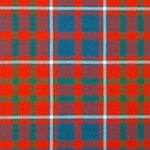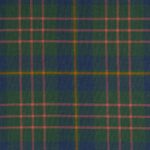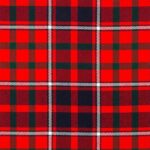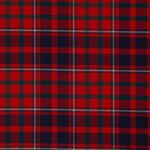
 Cameron of Lochiel Ancient
The pedigree usually claimed for this sett rests on a portrait painted sixteen years after the man in it had died.
A portrait painted after the sitter was dead
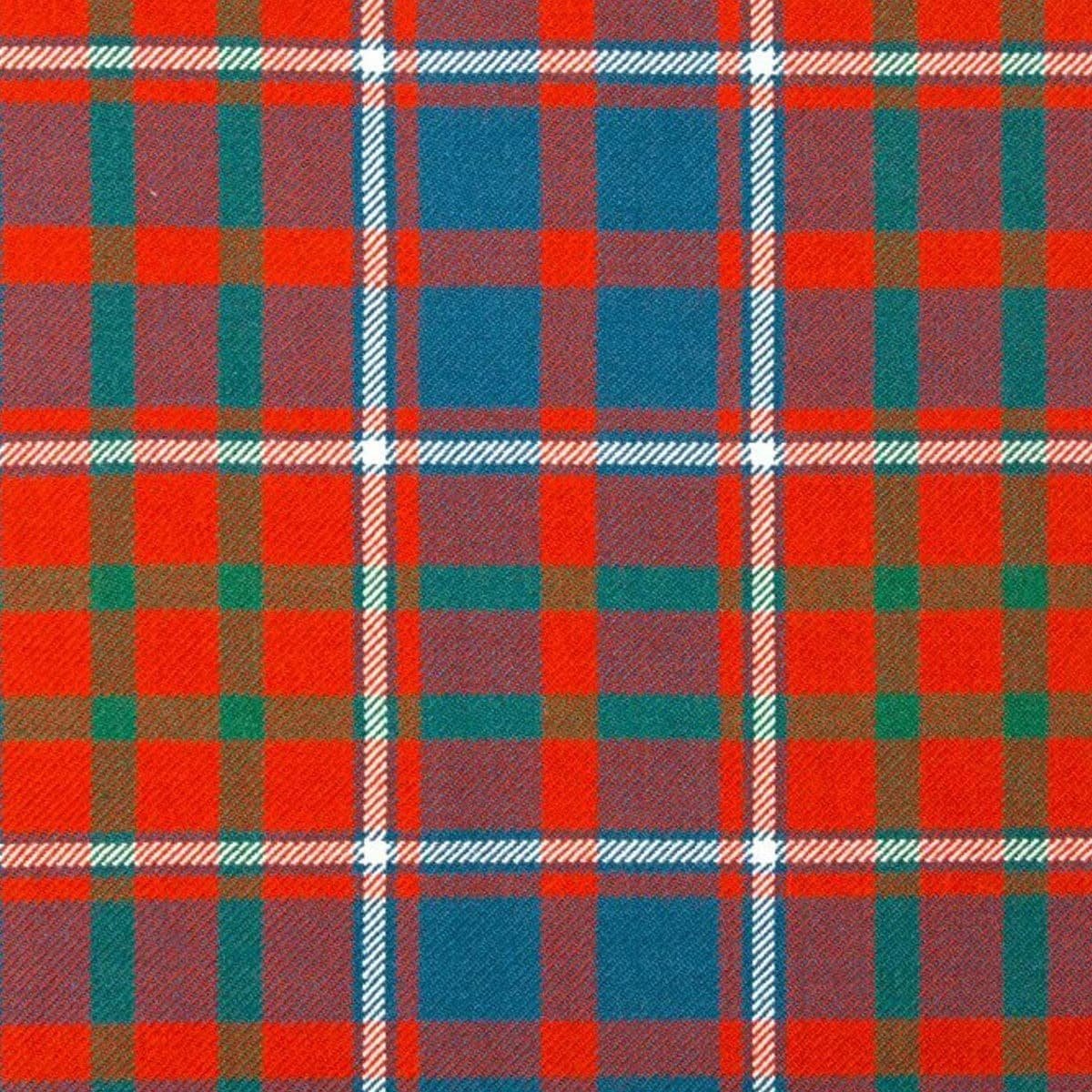
The story attached to the pattern runs through a portrait of Donald Cameron of Lochiel, the Gentle Lochiel, by Sir George Chalmers, dated 1764. Lochiel died in exile in 1748. Whatever the painter worked from, it was not the living man. Nor is the sett in the picture quite the sett sold today: the canvas shows a large arrangement of red and black, without the fine white lines the modern version carries. Research published by the Scottish Tartans Authority treats the portrait as a point of departure for the pattern rather than as evidence of what the chief actually wore in the 1740s. That distinction is the whole of the matter, and it is usually left out.
Wilsons of Bannockburn and a plaid in the family
On the surviving physical evidence the tartan as now woven belongs to the early nineteenth century. Wilsons of Bannockburn, by far the largest commercial weavers of the period, are the likeliest source, and the visit of George IV to Scotland in 1822 is the occasion most often suggested for its appearance. A joined plaid in the sett, inherited by the chief, has been dated to somewhere between about 1820 and 1840 and is presumed to be Wilsons work. By the late 1840s the chief of the day regarded it as the authentic clan pattern, and it was on that basis that he supplied specimens to the Smith brothers for their published collection of clan tartans.
A caution goes with all of this. Wilsons had earlier sold a pattern of their own called Lochiel, in production somewhere between roughly 1780 and 1820, which bore no relation to this one and which the firm later renamed and sold as Munro. Names attached loosely to setts in the trade of that period, and a name in a weaver’s book is not by itself proof of family use.
A chief’s pattern rather than a clan one
By origin this is the personal tartan of Lochiel and his immediate family, and it is a different thing from the sett published as Cameron in the Vestiarium Scoticum of 1842. The Scottish Register of Tartans holds more than one version of it: an original, reference 498, and a second dated 1930, reference 500, both under the register’s own spelling Locheil, together with a hunting version, reference 501, credited to J. G. MacKay. That spread of entries is a fair sign of how the pattern was handled once it left the chief’s household and went into general sale.
Choosing between the Cameron setts
Camerons have more than one pattern available, and they differ in kind rather than in shade. Cameron of Erracht belongs to a cadet branch and to the 79th Regiment, which gives it an occasion and a year. The plain Cameron sett comes out of a discredited book. This one comes out of the chief’s own wardrobe, by way of a commercial weaver. Nobody is turned away from it: any Cameron may wear it, and in practice it is one of the two patterns most Camerons actually choose. If strict entitlement matters to you, the honest position is that a sett first recorded as the chief’s own is now worn far more widely than its origin implies, and the clan has never objected. The settings offered by weavers vary the dyes; the arrangement of the threads is the same throughout.
References
Scottish Tartans Authority, research note on the Cameron of Lochiel tartan; Scottish Register of Tartans (entries 498, 500 and 501); ScotClans, survey of the Cameron tartans; Wikipedia, Clan Cameron and Vestiarium Scoticum.