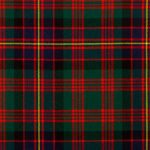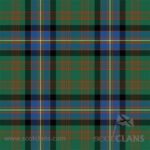
 Cochrane Modern
Clan Cochrane
Cochrane is a Lowland territorial name from the lands of Cochrane near Paisley in Renfrewshire. The first record of it occurs in 1262, when a certain Waldeve de Coueran witnessed a charter concerning a transfer of lands — a firm, specific early date. The two etymologies usually offered, that the name comes from Gaelic words meaning the roar of battle or from coch ran, a brave fellow, contradict each other and sit oddly with a territorial name; both should be read as folk etymology rather than origin.
Sir William Cochrane was created Lord Cochrane of Dundonald in the Peerage of Scotland in 1647 and raised to Earl of Dundonald in 1669, with the subsidiary title Lord Cochrane of Paisley and Ochiltree. The family’s most remarkable figure is Thomas Cochrane (14 December 1775 – 31 October 1860), who served in the Royal Navy from 1793, was dismissed in 1814 after a conviction for the Stock Exchange fraud, and then commanded the Chilean navy from 1818 to 1822, the Imperial Brazilian navy from 1823 to 1825 — which brought him the title Marquess of Maranão — and the Greek navy from 1825 to 1828. He succeeded as 10th Earl only on 1 July 1831, after all of that, and was reinstated as Rear-Admiral of the Blue on 2 May 1832. He is buried in the nave of Westminster Abbey.
The clan has a chief today: Iain Alexander Douglas Blair Cochrane, 15th Earl of Dundonald, born 1961 and succeeded in 1986, who is recorded as a member of the Standing Council of Scottish Chiefs. We did not find a page stating a specific date of recognition by the Lord Lyon, so we put it no more strongly than that.
The Cochrane tartan
Cochrane is often lumped in with the Vestiarium Scoticum clans, and it does not belong there: the name appears nowhere among the seventy-five plates of that 1842 forgery. The documented provenance is quite different and rather more interesting. The register’s own note is that the Clan Cochrane tartan is based on the old Lochaber district sett, with the red and green stripes restored in a version approved in 1984.
There are two documented versions of one tartan, not two tartans. The earliest record dates from 1934. The 1984 version is not simply the same design woven larger: most bands roughly double, but the dark blue band moves the other way, from sixteen threads to eight, which is a real structural revision consistent with the note about restoring the stripes. The two 1984 records differ from each other only in one band width and a shade of yellow, and are best read as two recordings of the same revised sett. Neither the designer of either version nor the body that approved the 1984 revision is recorded.
A note on honesty: Cochrane Modern, Ancient, Weathered and Dress are colourways, and we found no separate Cochrane Dress or Hunting sett with a threadcount of its own. No Cochrane sett predates the commercial era — the earliest record is 1934, nearly seven centuries after Waldeve de Coueran, and the pattern is a district sett adapted for a family rather than an ancient clan cloth. One further caution: the historic seat given as Auchindoun on some reference pages looks like an error, Auchindoun being a Moray castle associated with the Gordons; we have left the historic seat out rather than repeat it.
Clan facts
| Chief | Iain Alexander Douglas Blair Cochrane, 15th Earl of Dundonald (born 1961, succeeded 1986), a member of the Standing Council of Scottish Chiefs |
|---|---|
| Motto | Virtute et labore — “by valour and exertion” |
| Plant badge | Sea holly |
| Lands | Cochrane, near Paisley, Renfrewshire; the present seat is Lochnell Castle, near Benderloch in Argyll and Bute |