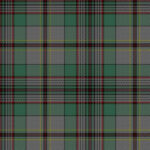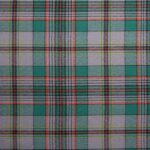
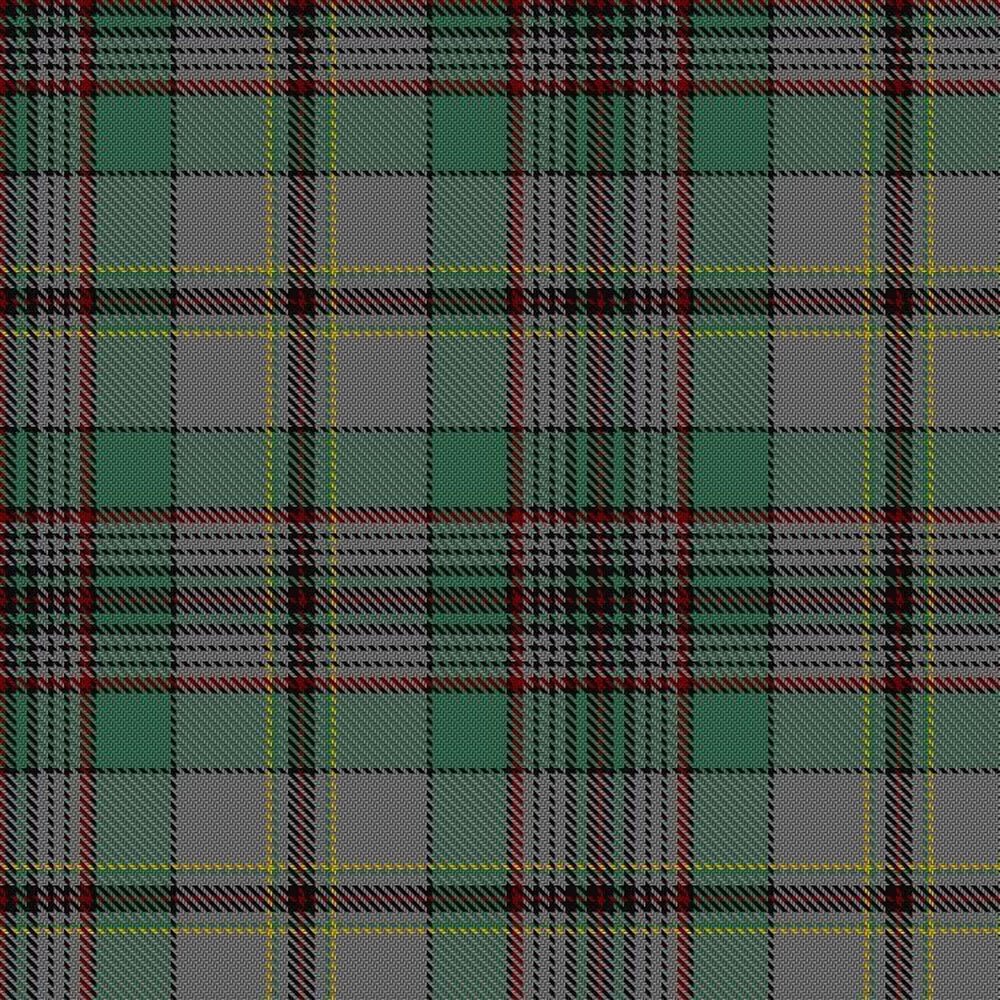
 Craig Modern
Clan Craig
Craig is a topographic name, from the Scots and Gaelic word for a steep rock — creag, the same root as the English “crag” — and it arose wherever families lived by one. The earliest record we can date is 1335, when John of the Craig, Johannes del Crag, led three hundred men at the Battle of Culblean. The family’s Aberdeenshire origin lies at Craigfintry in Kildrummy; a later line held Riccarton, and Craigston Castle is associated with the name. Three separate Craig families styled themselves “of that Ilk” in the fifteenth century, which tells you how independently the name arose.
William Craig of Craigfintry was killed at Flodden in 1513. Thomas Craig of Riccarton (1538–1608) was one of the leading Scottish jurists of his age, and Sir James Craig of Craigston was an undertaker of the Ulster Plantation in 1610. The chiefship, however, is long gone: Craig is an armigerous clan with no chief recognised by the Lord Lyon, and therefore no standing under Scots law. The last chief was Craig of Riccarton, who died on 13 March 1823 — sources give his forename as both Thomas and Robert, and we cannot resolve which is right. There has been no restoration since.
The Craig tartan
The Scottish Register of Tartans holds one entry under the plain name classed as a Clan/Family tartan, and that is the Craig tartan sold today. It is a twentieth-century design. Two independent sources agree it was designed around 1957 by MacGregor Hastie for what one of them calls “the clanless Craig family”, drawing its grey, green, black, yellow and orange from the colours of rock. We could not read the register’s own designer field to confirm the attribution, so we give it as reported rather than as established.
Two other entries are routinely muddled with it. Craig (Paisley) is a genuinely different sett — a large blue, white, black and yellow design — registered under the category Other rather than Clan/Family. Ailsa Craig is a Fashion tartan named for the granite island in the Firth of Clyde and has nothing to do with the surname. A separate MacCraig entry should not be conflated with Craig either.
A note on honesty: Craig Modern, Ancient, Weathered and Muted are colourways of the single 1957 sett, not separate tartans, and there is no registered Craig Hunting or Craig Dress. No Craig sett predates the commercial era, let alone the medieval period — this one postdates the Second World War. The tale that the Earl of Mar allowed the Craigs to add red to his own black and white tartan is tradition, it is unsourced, and it contradicts the 1957 account. The motto is also given in several wordings, as noted below.
Clan facts
| Chief | None. An armigerous clan; the last chief, Craig of Riccarton, died 13 March 1823 |
|---|---|
| Motto | Vive Deo et vives — “live for God and you shall have life”. The wording is variously given, including Vive Deo ut vivas, and a second motto, J’ai bonne espérance, also circulates |
| Plant badge | Not recorded |
| Lands | Craigfintry in Kildrummy, Aberdeenshire; later Riccarton; Craigston Castle |