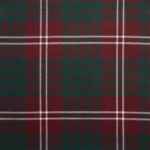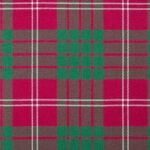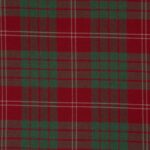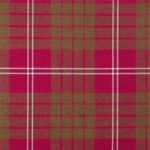
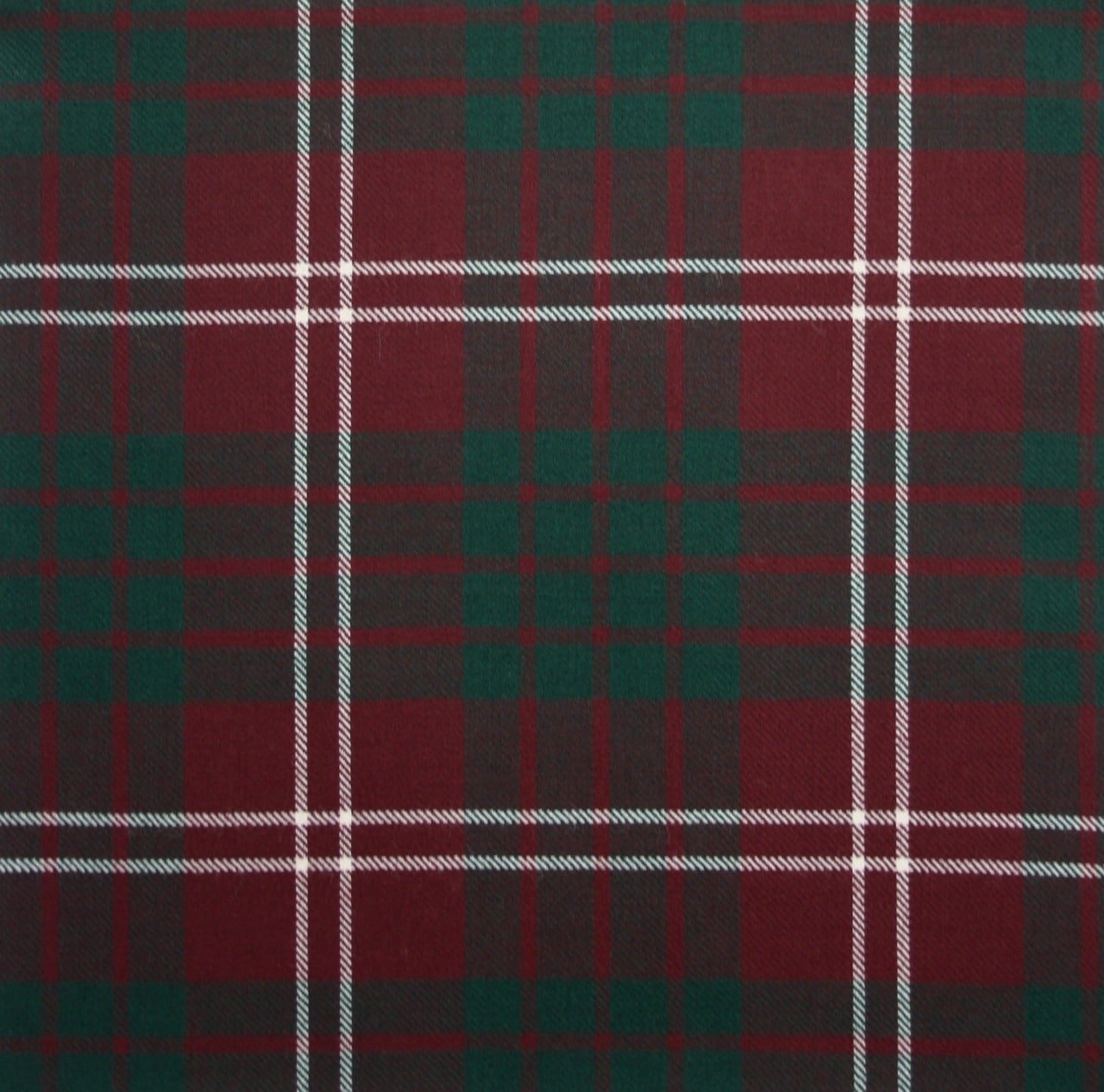
 Crawford Modern
Clan Crawford
Crawford is a territorial name from the barony of Crawford in Upper Clydesdale, from the Old English for a crow ford. The earliest recorded forms of the name in Scotland are John de Crauford, between 1147 and 1160, and Galfridus de Crauford, between 1188 and 1202; these come to us through reference works rather than from the charters themselves, so they are best read as the earliest recorded form of the name rather than as a clan founding. One point needs stating plainly at the outset: the barony of Crawford itself passed to the Lindsays about 1154 by marriage, and the Earldom of Crawford, created in 1398, is a Lindsay title. The Earls of Crawford are not, and never have been, chiefs of Clan Crawford.
The chiefly line was Craufurd of Auchenames in Renfrewshire, said to hold by a grant from Robert the Bruce in 1320, though we have that from a single source. Cadet branches held Craufurdland in Ayrshire, Kilbirnie, Loudoun and Crawfordjohn. Sir Reginald Crawford was sheriff of Ayr in 1296, and John Crauford of Craufurdland was killed at Flodden in 1513. Craufurdland passed out of Crawford hands to the Howiesons in 1793, and its present holder is an armigerous laird, not the clan chief.
The Crawford tartan
The register holds three Crawford entries and only one is a clan sett: Crawford, with the designer field reading “Sobieski Stewarts, The”. That is the register saying in plain terms that the pattern comes from the Vestiarium Scoticum, published in Edinburgh by William Tait in 1842, where it appears as plate 39, spelled “Crawfovrd”. The Vestiarium is a proven forgery: it was attacked in the Quarterly Review in 1847, and in 1895 the chemist Stevenson Macadam examined the manuscript and reported that it could not be depended on as an ancient document.
The other two entries are not clan tartans. Crawford Arisaid (Dance) is filed as a fashion tartan with no designer and no date recorded, and we could not establish its origin. Svensson, Baron of Crawfordjohn is a personal tartan registered by an individual holding the Crawfordjohn barony title, and is unconnected to the family. No Crawford sett is attributed to Wilsons of Bannockburn.
A note on honesty: there is exactly one Crawford clan sett, it dates from 1842, and it comes from a forged manuscript. It does not predate the commercial era, and it is reasonably certain that no Crawford tartan existed at all in the 1730s. “Crawford Modern”, “Crawford Ancient”, “Crawford Weathered”, “Crawford Muted” and “Crawford Dress” are not separate registered tartans but shade renderings of that one threadcount. Boxwood is widely printed as the Crawford plant badge; we could not source it to the Lyon Court, to COSCA or to any other authority, and so record it as not known.
Clan facts
| Chief | None. Crawford is an armigerous clan and the chiefship has been dormant since 1942, when the last chief, Hugh Craufurd of Auchenames, died in Calgary having sold the chiefly estates in 1904. No chief and no commander is currently recognised by the Court of the Lord Lyon, and Crawford appears on neither the Standing Council roll nor the list of commanders. The grant of arms to the Clan Crawford Association in 2012 was a grant to an association and is not a chiefship |
|---|---|
| Motto | Tutum te robore reddam — “I will give you safety by strength” |
| Plant badge | Not recorded. Boxwood is circulated by retailers but we could not source it |
| Lands | The barony of Crawford in Lanarkshire, lost to the Lindsays about 1154; Auchenames in Renfrewshire, the chiefly seat, sold in 1904; Craufurdland, Kilbirnie and Crawfordjohn. There is no chiefly seat today |