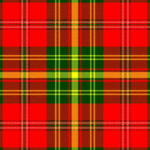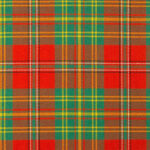
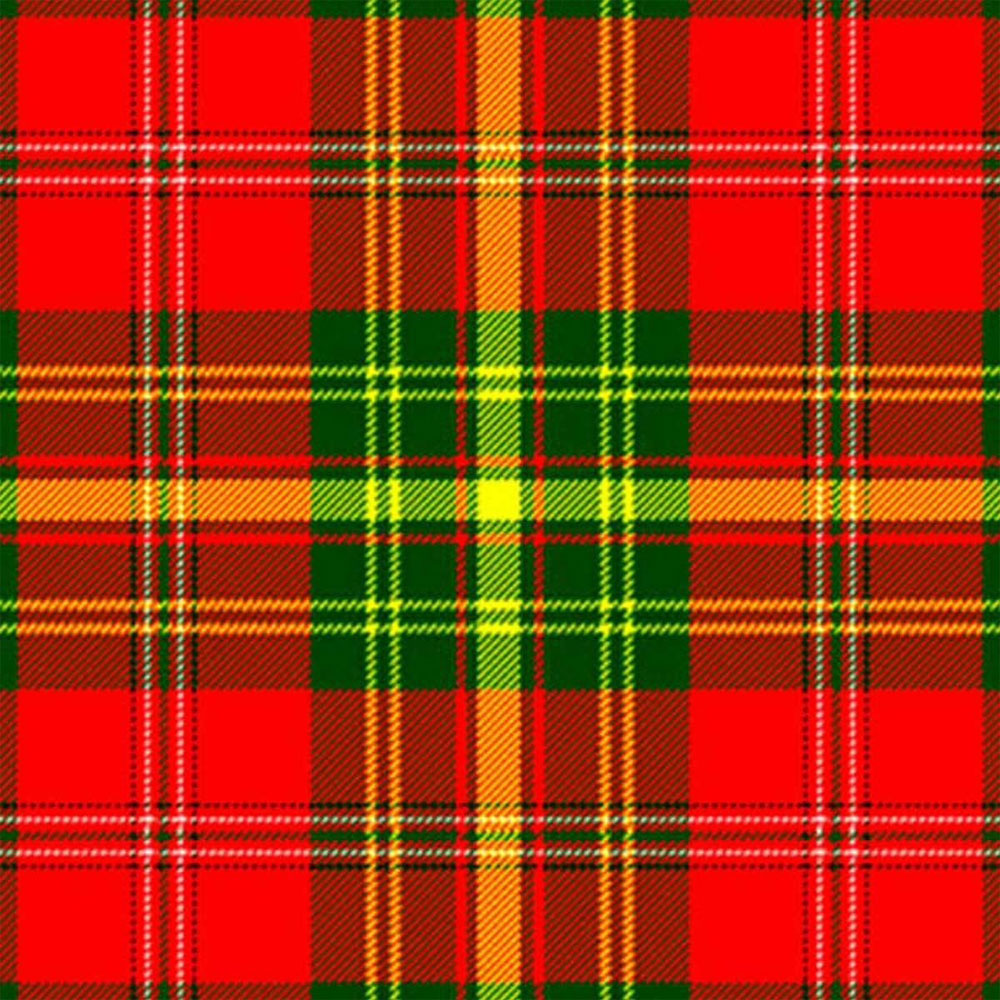
 Leask Modern
Clan Leask
William de Laskereske appears on the Ragman Rolls in 1296, submitting to Edward I, and William Lesk received a charter of confirmation from David II for the Leask lands of Leskgoroune in Aberdeenshire in the 1340s. The lands lay in the Ellon and Slains district, and the chapel of Laske hosted the 1499 bond between the Cheynes and the Hays. Wilfred, 3rd chief, signed a bond of manrent to William Hay, Earl of Erroll, in 1456; the 5th chief, William Lask, and his son Alexander were both killed at Flodden in 1513; William, 7th chief, swore allegiance to the infant James VI in 1574; and Alexander Leask registered arms in 1672.
The estate was not simply sold. In 1698 Alexander Leask and his son Gilbert mortgaged it to Robert Cumming to finance the Darien Scheme, and lost it when that venture collapsed. Alexander Leisk, 13th chief, died without a direct heir in 1730 and the chiefship went dormant for 238 years. Part of the estate was bought back in 1963, and in 1968 the Lord Lyon restored the chiefship. Three sources give three different accounts of who was recognised that year, and because they contradict each other we name nobody: the restoration date is firm, the grantee is not. The present chief is Dr Jonathan Leask of that Ilk, 23rd chief, who succeeded in 2008 — note the designation is “of that Ilk”, not “of Leask”.
The Leask tartan
There is one Leask tartan and its provenance is unusually well documented. It was designed in 1981 by Madam Leask together with the Scottish Tartans Society, and woven by Scott Brothers of Wilton Mills, Hawick, in 1982. The design is recorded in Lyon Court Book 44, and a sample is preserved in the Scottish Tartans Authority’s Dalgety Collection. A second register record differs from the first only as one cloth differs from another; it is the same design, not a second sett.
It is not a Wilsons of Bannockburn pattern and it cannot be from the Vestiarium Scoticum of 1842 — a 1981 design postdates that forgery by well over a century. As with Kincaid, the tartan follows the chiefship: the sett was drawn thirteen years after the chiefship came back, not centuries before it.
A note on honesty: Leask Modern, Ancient and Weathered are colourways of this single sett, not separate tartans, and nothing in the Leask record supports a tartan older than 1981. The family’s antiquarian origin stories — a descent from Liscus of the Haedui, and a Charlemagne connection, alongside competing derivations from Gaelic lasgair, Anglo-Saxon lisse, Norse, and a de Lesque of Boulogne — are five mutually exclusive guesses and should be read as legend, not record.
Clan facts
| Chief | Dr Jonathan Leask of that Ilk, Chief of the Name and Arms of Leask, 23rd chief (succeeded 2008) |
|---|---|
| Motto | Virtute Cresco — “I grow by virtue” |
| Plant badge | Not recorded |
| Lands | Leask, or Leskgoroune, in the Ellon and Slains district of Aberdeenshire; lost between 1698 and 1730, partly repurchased in 1963. No seat recorded |