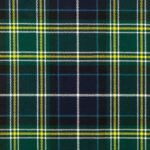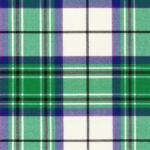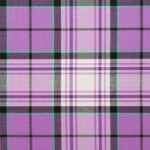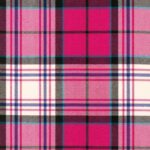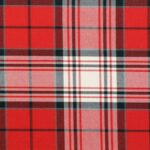
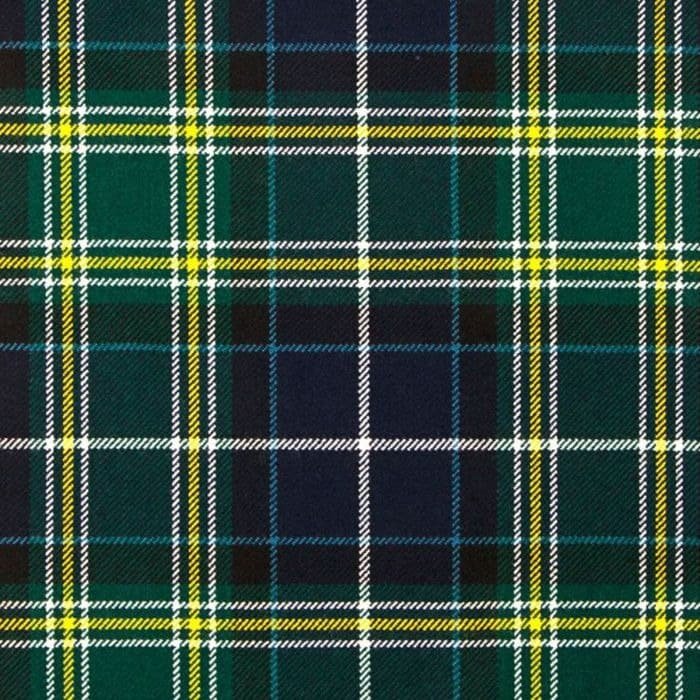
 MacKellar Modern
Clan MacKellar
MacKellar is from the Gaelic Mac Ealair, son of Ealair, the Gaelic form of the Latin name Hilarius or Hilary, which came into Scottish use through the cult of Hilary, Bishop of Poitiers. It is an Argyll name and it stays an Argyll name: the main family is recorded in Argyll from the thirteenth century, with MacKellars documented there from 1432, and the spellings run through McKellar, McEller and Mackellar without settling. Their ground was the head of Loch Fyne and the country behind it. The Mackellars of Glenshira held Maam, Stuckscarden and Kilblaan in Glen Shira above Inveraray, appearing in the Valuations of Argyll by 1629; others held Letternamoult in Glassary parish and Dail near what is now Cairnbaan, with connections to Ardchonnel and Brenfiorline on Lochaweside. They held these as tacksmen under the Campbells of Argyll, who were their feudal superiors from the sixteenth century onwards, and some of them served as Officers of Over Cowal for the ducal family. MacKellar is carried on the official sept list of Clan Campbell.
This is a small, well-documented tenantry rather than a warlike clan with a battle record, and it is more honest to say so than to borrow Campbell’s. The dateable episodes are estate ones. Glen Shira holdings appear in the valuation rolls of 1629 and the tacks run through the seventeenth century. In the late eighteenth century the family was broken up by litigation and by money lost in failed bank investments, and the MacKellars dispersed, many of them to Canada and Australia. Family tradition holds that MacKellar men were at the Massacre of Glencoe in 1692 at Campbell bidding and that the name was cursed with premature white hair in consequence; that is folklore and should be treated as such. Duncan MacKellar, described in one nineteenth-century account as chief, commanded a ship taken by the French in 1812, freed himself and his crew, recaptured the vessel and was given a gold medal, afterwards settling in Australia. In the twentieth century the best-known bearer was the Scots tenor Kenneth McKellar.
The MacKellar tartan
The Scottish Register of Tartans returns four records under MacKellar. MacKellar, the clan and family sett, has no designer recorded and a design date of 1 January 1964. MacKellar Dress is credited to Arthur Bottomley with a design date of 2002. MacKellar Dress (Reproduction colours) carries no designer and no date. MacKellar Dress Red is by D. C. Dalgliesh of Selkirk, dated 2002, and the Register files it under Fashion rather than clan and family.
There is no Wilsons of Bannockburn pattern for the name and no plate in the Vestiarium Scoticum of 1842. Nothing in the Register under MacKellar is older than the 1960s.
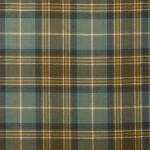
A note on honesty: these are modern mill designs with no clan history behind them. The 1964 sett is the oldest thing on record and it postdates the last MacKellar tack in Glen Shira by roughly two centuries; the rest are dress and dance variants produced for the trade in 2002. The MacKellars who worked Maam and Kilblaan had no MacKellar tartan, because at the time they were there nobody did. MacKellar Ancient, Modern and Weathered are not separate tartans and the Register holds no records under those names — they are the 1964 threadcount woven in lighter, standard or muted dye shades, which is a dyeing decision, not a different sett. That is not a reason to avoid the tartan. It is a reason to describe it accurately, and to know that a MacKellar who would rather wear something their ancestors plausibly wore is looking at Campbell, under whom they actually held their land.
Clan facts
| Chief | None. MacKellar has no chief of record and is not represented on the Standing Council of Scottish Chiefs. The name is carried as a sept of Clan Campbell, whose chief is the Duke of Argyll |
|---|---|
| Motto | None recorded. Tartan retailers circulate Perseverando, “by persevering”, but it is not traceable to any chief or armiger of the name |
| Plant badge | None recorded for MacKellar. Campbell, as the clan the name is a sept of, uses bog myrtle |
| Lands | Glen Shira above Inveraray at the head of Loch Fyne, including Maam, Stuckscarden and Kilblaan; Letternamoult in Glassary; Dail near Cairnbaan; Lochaweside |