The name Alexander
Alexander is a personal name that became a surname, and it did so in several unconnected places, so there is no single Alexander family line. The Court of the Lord Lyon recognises no chief of the Name of Alexander, and there is no commander either. Clan societies and the kilt trade conventionally treat Alexander as an associated name of Clan MacAlister — the Gaelic MacAlasdair means son of Alasdair, or Alexander — and the Council of Scottish Clans and Associations lists Alexander and Alexanderson among the names associated with MacAlister. That is a society convention rather than a ruling of the Lyon Court, and it does not establish that any particular Alexander family descends from the MacAlisters.
The best documented Alexander line is the Alexanders of Menstrie in Clackmannanshire. Sir William Alexander was born at Menstrie in 1567, was knighted in 1609, and obtained from James VI the royal warrant for the charter of Nova Scotia, signed at Windsor on 10 September 1621 and registered later that month. He served as Secretary of State for Scotland from 1626, was created Earl of Stirling by Charles I on 14 June 1633, and died in London on 12 February 1640. The earldom has been dormant since the death of the fifth Earl in 1739, and the name later attached to a notorious fraud: Alexander Humphrys, styling himself Earl of Stirling, was tried for forgery in Edinburgh in 1839. No living chiefly line descends from the Menstrie Alexanders.
The Alexander tartan
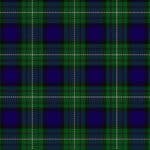
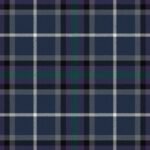
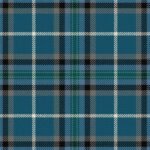
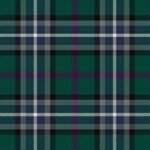
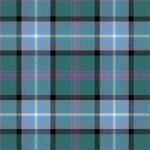
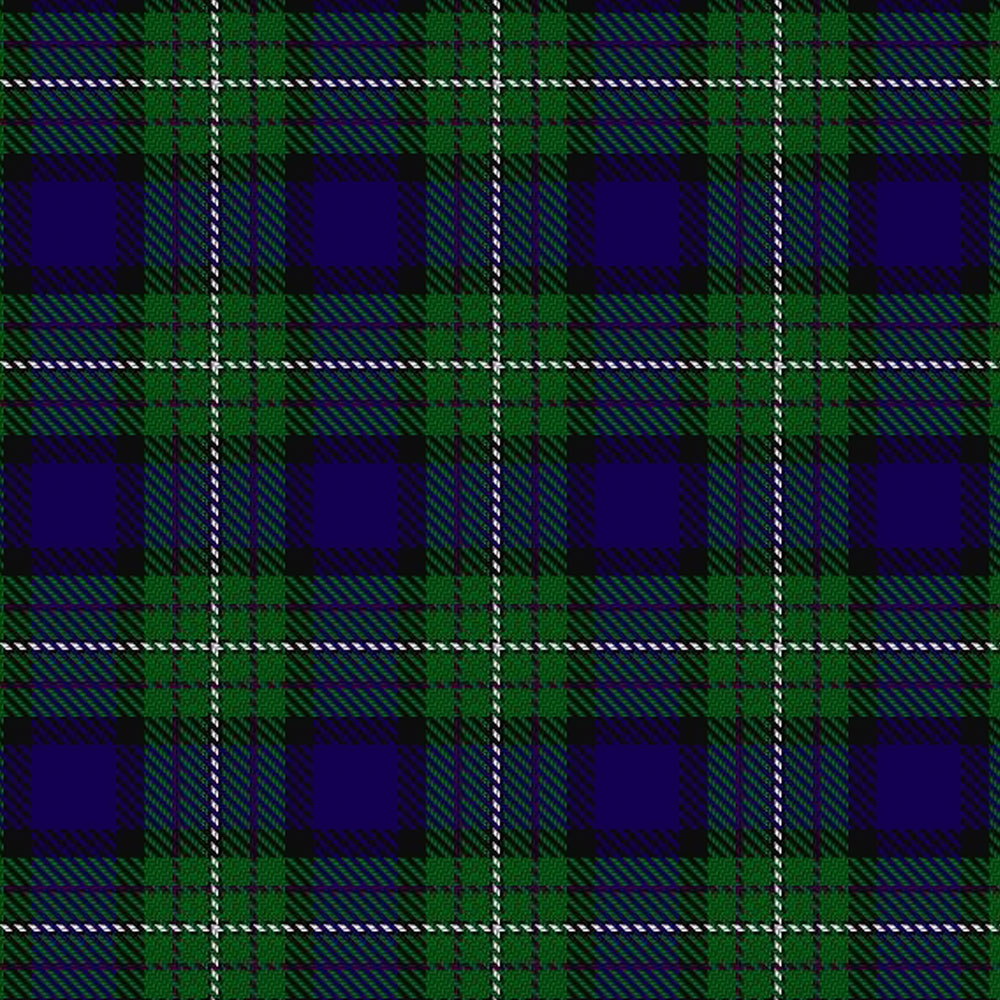
A search of the Scottish Register of Tartans for Alexander returns thirty-four entries, but only seven of them concern Alexander as a family name; the rest are personal, wedding and corporate tartans that merely contain Alexander as a forename. Of the seven, the plain Alexander sett (ref 45) is credited to the Edinburgh weavers Kinloch Anderson. Two further entries (refs 44 and 46) are personal tartans designed by the tartan historian Peter MacDonald, and one of those is recorded as restricted to its original owner, so neither is a clan tartan. A group of three — Alexander of Menstry, with its Dress and Hunting variants, refs 47 to 49 — was designed by Raydon Eiland Alexander, and is one design with two derivatives rather than three separate patterns. The register spells it “Menstry”.
Every one of those entries is recorded with the date “Not Specified”, which marks them as legacy records carried over from the older Scottish Tartans Society and Scottish Tartans World Register collections when the national register opened in 2009. That fixes an upper limit on when they were catalogued and says nothing about the age of the pattern. Alexander does not appear in the Vestiarium Scoticum, so unlike many clan setts it carries none of that book’s baggage, and no Alexander sett is attributed to Wilsons of Bannockburn.
A note on honesty: there is no evidence of any Alexander sett before the twentieth century, and no Alexander sett predates the commercial era. “Alexander Ancient”, “Alexander Weathered” and “Alexander Muted” are not separate tartans and are not in the register — they are dye colourways of the one Alexander threadcount. The motto Per mare per terras is often printed against the name by retailers; it belongs to Clan Donald and was used by the Earls of Stirling as a peerage family, and we do not offer it as an Alexander motto.
Clan facts
| Chief | No chief of the Name of Alexander is recognised by the Lord Lyon. Alexander is conventionally treated as an associated name of Clan MacAlister, whose chief is William St John Somerville McAlester of Loup and Kennox |
|---|---|
| Motto | Not recorded for the name Alexander. MacAlister uses Fortiter — “Boldly” |
| Plant badge | Not recorded for Alexander. MacAlister uses heath |
| Lands | Menstrie, Clackmannanshire, for the Alexanders of Menstrie; the MacAlister lands lay in Kintyre, Arran and Bute |