Clan Farquharson
Clan Farquharson, in Gaelic Clann Fhearchair and later styled MacFhionnlaigh after its first chief, is a Deeside clan of Mackintosh descent. The founder was Farquhar, fourth son of Alexander “Ciar” Mackintosh of Rothiemurchus, chief of Clan Shaw. About 1425 Farquhar crossed the Cairngorms from Rothiemurchus in Strathspey into the Braes of Mar and was made baillie there, and his descendants took the patronymic as a surname. His son Donald married Isobel Stewart, heiress of Invercauld and Aberarder, which brought the family its Upper Deeside estates. Their son Finlay Mór, born in 1487, is counted the first chief of Invercauld and the common ancestor of every branch. Three of Farquhar’s younger brothers fell out with the senior line around 1460 and moved to Atholl, where the older form of the name survived as MacKerracher. The clan joined the Chattan Confederation by 1595, and about 1632, under Robert of Invercauld, it took formal armorial bearings carrying the lion of MacDuff, a pine tree for Rothiemurchus, and the wild cats of Clan Chattan.
Finlay Mór was killed at the Battle of Pinkie in 1547 carrying the royal standard, and was buried in Inveresk churchyard near Musselburgh. John Farquharson of Inverey, the Black Colonel, killed the Baron of Brackley in 1666 in a quarrel over Dee fishings, fought for Viscount Dundee in 1689 and burned Braemar Castle to stop government troops garrisoning it; he died in 1698. The Earl of Mar gathered the chiefs at Invercauld House on 26 August 1715 and raised the standard near Braemar on 6 September. John Farquharson of Invercauld was a reluctant participant, bound by military service owed for his lands; he raised around 500 men, was taken after the Battle of Preston and held in the Marshalsea before being released. In 1716 he bought the forfeited Braemar Castle, which the government later leased back at fourteen pounds a year from 1748 as a Hanoverian garrison and did not vacate until 1831. Invercauld himself stayed out of the rising of 1745, but the clan went out under his nephew Francis Farquharson of Monaltrie, the Baron Ban. They fought at Falkirk on 17 January 1746, and 300 Farquharsons stood in the centre of the front line at Culloden on 16 April 1746, where they were badly cut up. Monaltrie was reprieved the night before his execution and held in England for twenty-one years, returning home in 1766. Anne Farquharson, daughter of Invercauld and wife of the Mackintosh chief, raised men for Prince Charles against both her father and her husband and engineered the Rout of Moy, which earned her the name Colonel Anne.
The Farquharson tartan
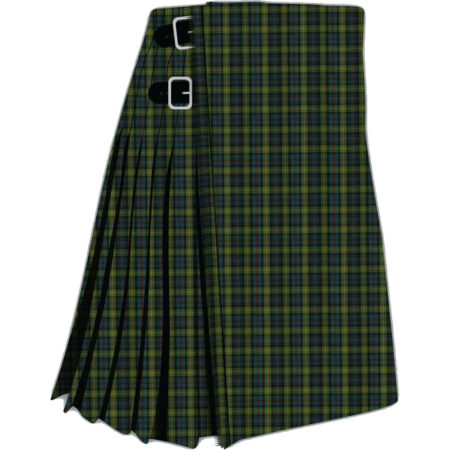
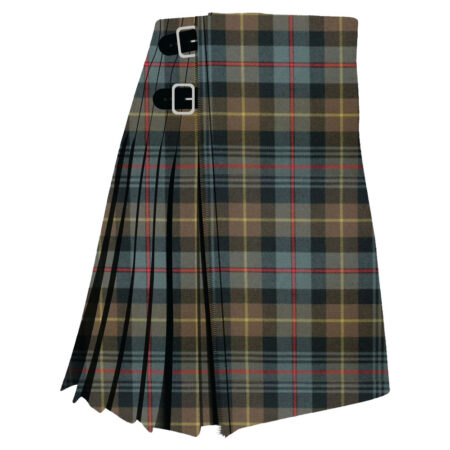
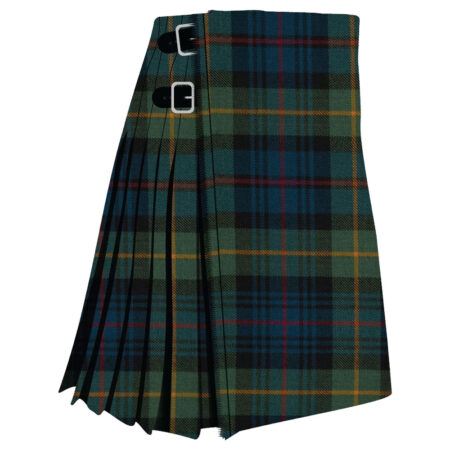
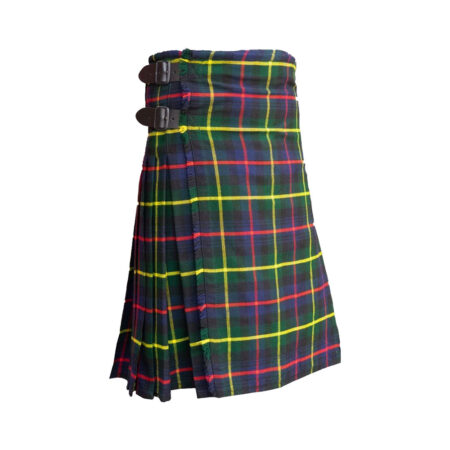
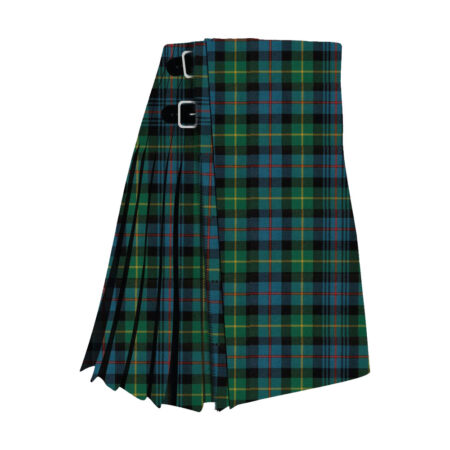
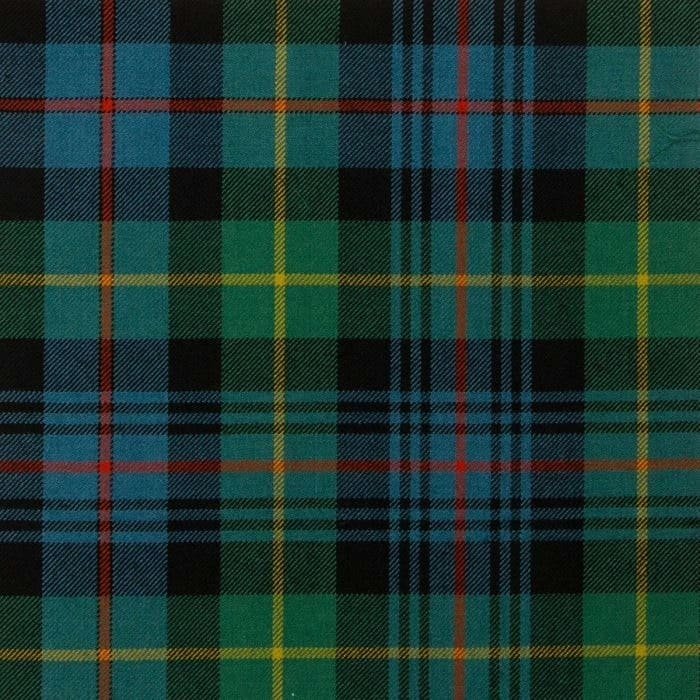
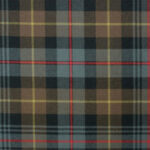
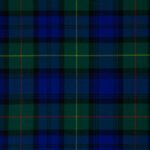
The Scottish Register of Tartans holds three records under the name, all Clan/Family: Farquharson, Farquharson Dress, and one entered as Farquharson (Vestiarium Scoticum) or MacEwen/MacEwan. The Register names no designer for any of them and gives no date of recording for any of them.
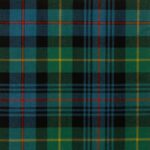
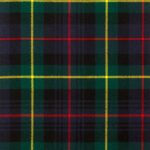
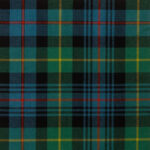
The plain Farquharson sett is a dark pattern built on the Black Watch ground with overchecks added, and it was in the hands of the commercial weavers by the early nineteenth century; it is recorded in the key pattern book of Wilsons of Bannockburn dated 1819, and fragments said to date from 1774 were shown at the Highland Exhibition in Inverness in 1930.
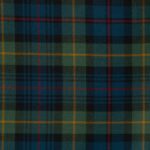
A note on honesty: the Register labels the second Farquharson sett as coming from the Vestiarium Scoticum, and that is not a compliment. The book was published in 1842 by the brothers who called themselves John Sobieski Stuart and Charles Edward Stuart and falsely claimed descent from Prince Charles Edward. It purported to reproduce a fifteenth-century manuscript of clan tartans. In 1895 Stevenson Macadam chemically tested the supposed 1721 copy and found the writing had been treated to look aged. It is not accepted as genuine by anyone who has examined it. The Register also records that same threadcount under MacEwen and MacEwan, so the Vestiarium’s “Farquharson” is not even distinctively Farquharson. As for the rest of the range, Farquharson Ancient, Weathered and Muted are dye shades over the same threadcount rather than separate tartans, and the Register holds no Farquharson Hunting record at all.
Clan facts
| Chief | Philip Farquharson, 17th of Invercauld, Chief of the Name and Arms of Farquharson. He succeeded his great-uncle Captain Alwyne Farquharson, 16th of Invercauld, in 2021; Alwyne had been chief since 1941 and died on 6 October 2021 aged 102 |
|---|---|
| Motto | Fide et Fortitudine — “By fidelity and fortitude” |
| Slogan | I force nae freen, I fear nae foe — set beneath the arms since the seventeenth century |
| Plant badge | Scots fir |
| Lands | The Braes of Mar and Upper Deeside, Aberdeenshire; seats at Invercauld and Braemar Castle |
References
Versions of the Farquharson tartan
Farquharson kilts & outfits
Every piece below is made to measure by Kilt 4 Less in the Farquharson tartan. Choose a product, then pick your size and options.
Farquharson Weathered Muted Tartan Kilt
Original price was: £241.80.£159.00Current price is: £159.00.View kiltFarquharson Weathered Tartan Kilt
Original price was: £241.80.£159.00Current price is: £159.00.View kiltFarquharson Muted Tartan Kilt
Original price was: £241.80.£159.00Current price is: £159.00.View kiltFarquharson Ancient Tartan Kilt
Original price was: £210.00.£105.00Current price is: £105.00.View kiltMen’s 8 Yard Prince Charlie Kilt Outfit
Original price was: £499.00.£315.00Current price is: £315.00.ConfigureMcCalls Highland Kilt Outfit With Argyll Jacket
Original price was: £510.00.£325.00Current price is: £325.00.ConfigureScottish Wedding Men Kilt Outfit
Original price was: £700.00.£304.00Current price is: £304.00.ConfigureForest Green Tweed Jacket Kilt Outfit
Original price was: £489.00.£249.99Current price is: £249.99.Configure