Clan Hay
Clan Hay is Norman in origin. The name comes from one of the Normandy villages called La Haye, and behind that from haia, a hedge or stockade; de la Haye became the Scots Hay. A Gaelic rendering, Garadh or MacGaradh, is in circulation, but the surname scholar George Fraser Black held MacGaradh to be an invention of John Hay Allan — the man who also called himself John Sobieski Stuart — which is worth knowing before anyone engraves it. The first Hay on record in Scotland is William II de Haya, cup-bearer to the king around 1160, who held Errol in the Carse of Gowrie. The better-known origin story — a ploughman and his two sons rallying the Scots against the Danes at Luncarty about 980, rewarded with as much land as a falcon flew over — is a different kind of document. Walter Bower’s Scotichronicon of about 1440 mentions the battle, but the Hay part comes from Hector Boece, whom Sir James Balfour Paul called an incorrigible old liar on the point, since armorial bearings did not exist in Scotland around 980; Cosmo Innes added that surnames did not either.
What is documented is better than the legend anyway. Gilbert de la Hay fought at Bannockburn for Robert the Bruce and in 1314 was granted the office of Constable of Scotland heritably, with Slains in Aberdeenshire and Delgatie. The Lord High Constable still ranks in Scotland above every title but those of the royal family; most of the office’s powers went with the Union of 1707, but it has stayed in the family since 1314. The Earldom of Erroll followed in 1452. Old Slains was the Earls’ principal seat until 1594, when Francis, 9th Earl, was caught up in a Catholic conspiracy and James VI had it blown up; a wall and part of a stair survive. Earl Francis built New Slains after 1597; it was stripped for salvage in the early twentieth century when the Erroll finances gave out. Delgatie Castle, near Turriff, came to the Hays by marriage with a Fraser heiress in the fifteenth century. In 1745 the Countess of Erroll called out the clan for Charles Edward Stuart.
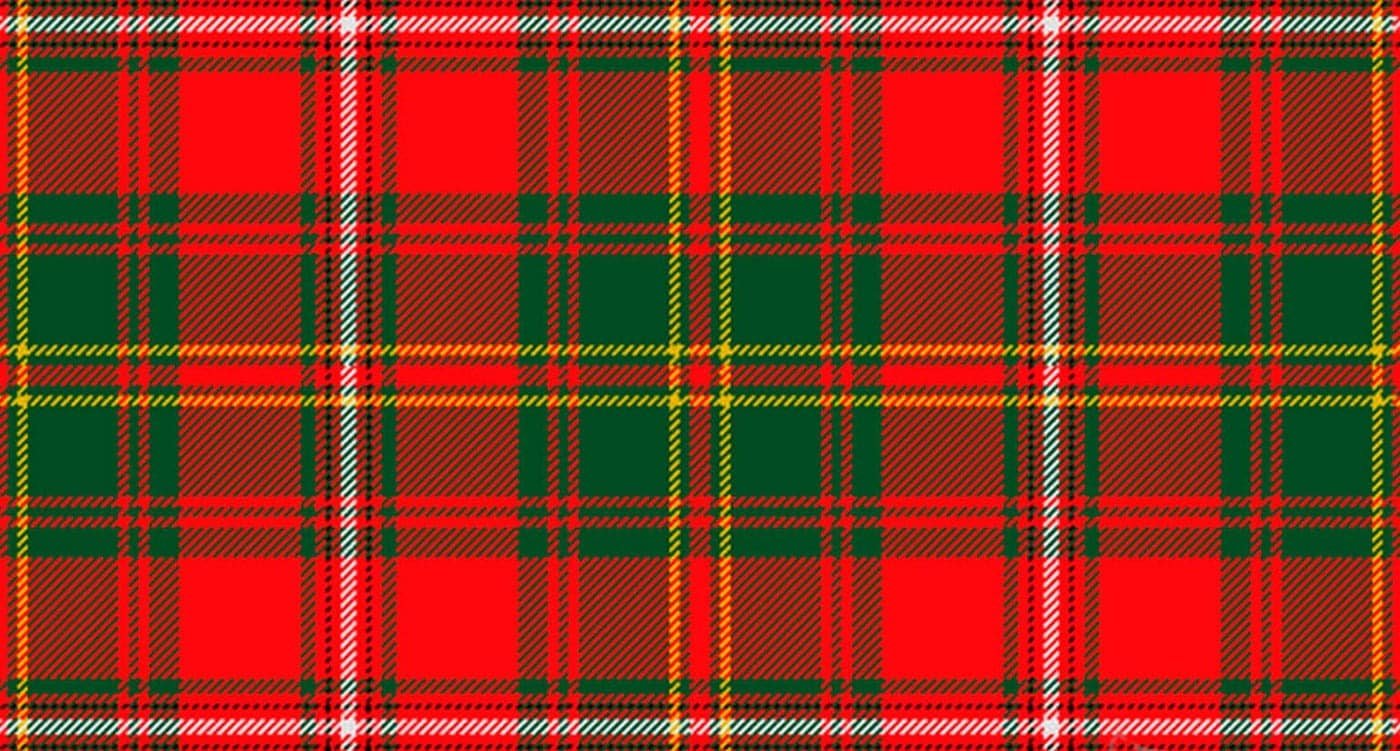
The Hay tartan
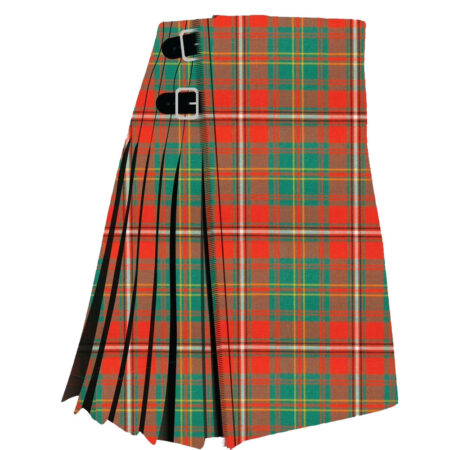
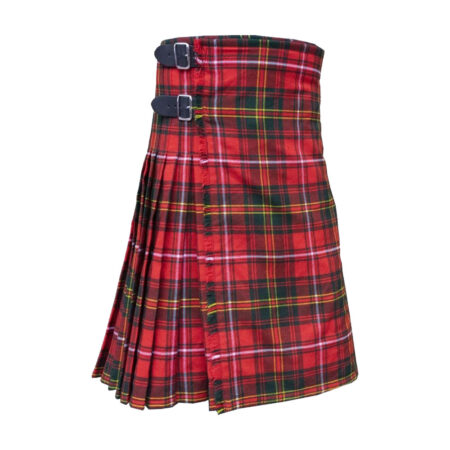
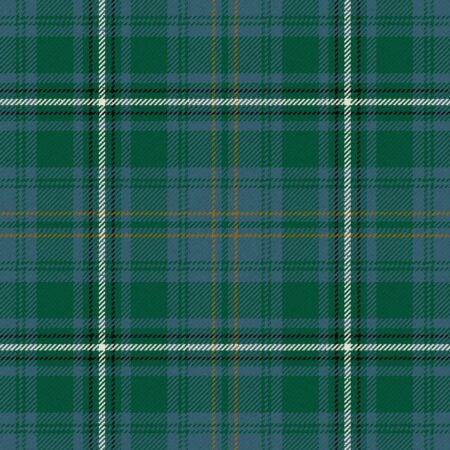
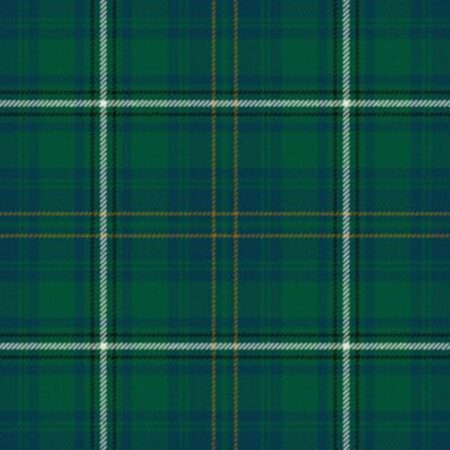
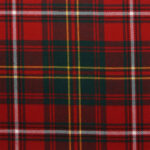
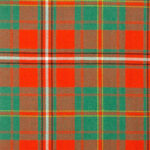
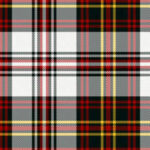
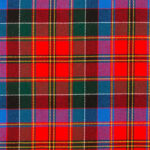
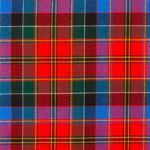
The Scottish Register of Tartans holds six records under the name: Hay (designer Unknown), Hay and Leith, Hay Stewart (designer given as Wilsons of Bannockburn), Hay Hunting (recorded 21 June 2013), Hay White Dress and Hay of Megginch (by Pamela Rotheroe Hay, 8 August 2023). Only the last two carry dates.
The clan society gives the provenance the Register does not. Hay and Leith is the oldest, appearing in the Cockburn Collection of 1810–15 under the name Leith, in Highland Society records of about 1816–22, and in the Wilsons of Bannockburn pattern book of 1819. Hay Stewart was produced by Wilsons in two versions in the late eighteenth century, and the same firm sold it as Ross, Rae, MacRae, Huntly and The Prince’s Own. The plain Hay sett, the one nearly everybody means, first appears as plate 51 of the Vestiarium Scoticum, published in Edinburgh in 1842 by the brothers who called themselves Sobieski Stuart.
A note on honesty: that book is a forgery, and the Hay tartan is one of its plates. The brothers presented it as a copy of a fifteenth-century manuscript and never let anyone outside the family examine the originals; the chemist Stevenson Macadam found their copy dated 1721 had been chemically treated to age the writing, and concluded it could not be depended upon as ancient. The genuinely older Hay patterns are not clan property either. Hay and Leith entered the record as a Wilsons trade pattern named Leith, and Hay Stewart was a Wilsons sett sold under at least five other surnames first. There is no record for a Hay Ancient or a Hay Weathered: those are dye recipes applied to the same threadcount, not separate tartans.
Clan facts
| Chief | Merlin Sereld Victor Gilbert Hay, 24th Earl of Erroll, 32nd Chief of the Name of Hay and 28th hereditary Lord High Constable of Scotland; born 1948, succeeded his mother in 1978; listed by the Standing Council of Scottish Chiefs as The Earl of Erroll |
|---|---|
| Motto | Serva Jugum — “Keep the yoke” |
| Slogan | A Hay! A Hay! |
| Plant badge | Mistletoe |
| Lands | Errol in the Carse of Gowrie, Perthshire; Slains and Delgatie in Aberdeenshire. Delgatie Castle, near Turriff, is the Clan Hay Centre |
References
Versions of the Hay tartan
Hay kilts & outfits
Every piece below is made to measure by Kilt 4 Less in the Hay tartan. Choose a product, then pick your size and options.
Hay & Leith Modern Tartan Kilt
Original price was: £210.00.£122.00Current price is: £122.00.View kiltHay Hunting Ancient Tartan Kilt
Original price was: £241.80.£159.00Current price is: £159.00.View kiltHay Dress Ancient Tartan Kilt
Original price was: £241.80.£159.00Current price is: £159.00.View kiltMen’s 8 Yard Prince Charlie Kilt Outfit
Original price was: £499.00.£315.00Current price is: £315.00.ConfigureMcCalls Highland Kilt Outfit With Argyll Jacket
Original price was: £510.00.£325.00Current price is: £325.00.ConfigureScottish Wedding Men Kilt Outfit
Original price was: £700.00.£304.00Current price is: £304.00.ConfigureForest Green Tweed Jacket Kilt Outfit
Original price was: £489.00.£249.99Current price is: £249.99.Configure