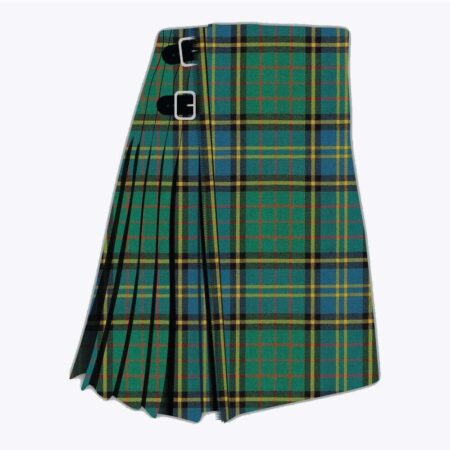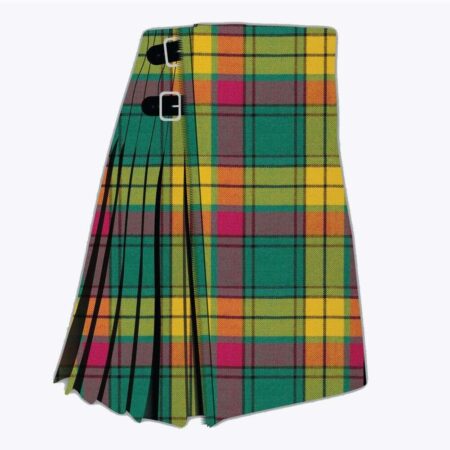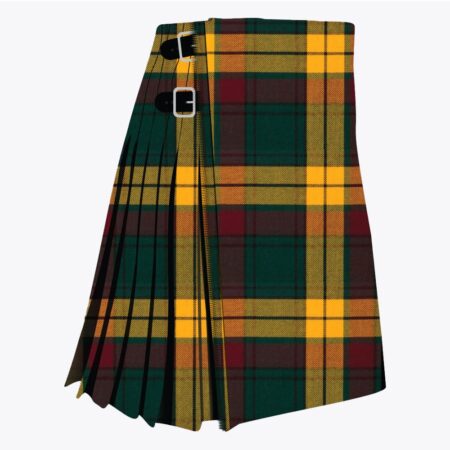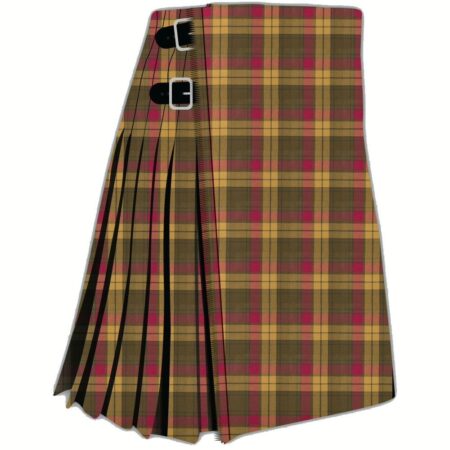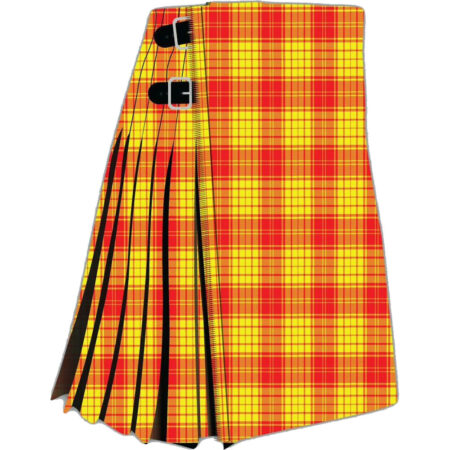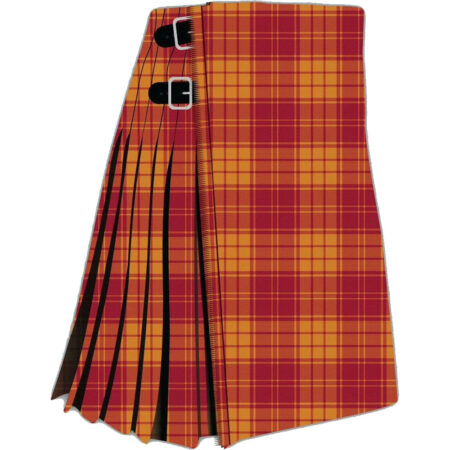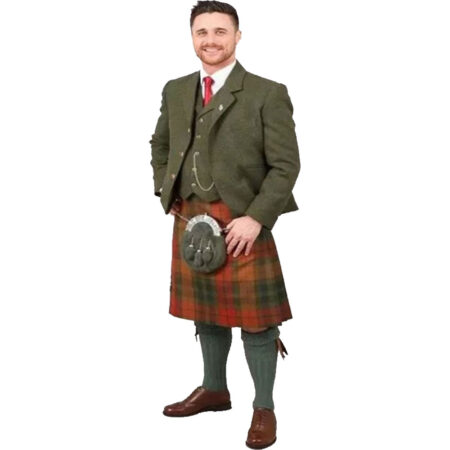
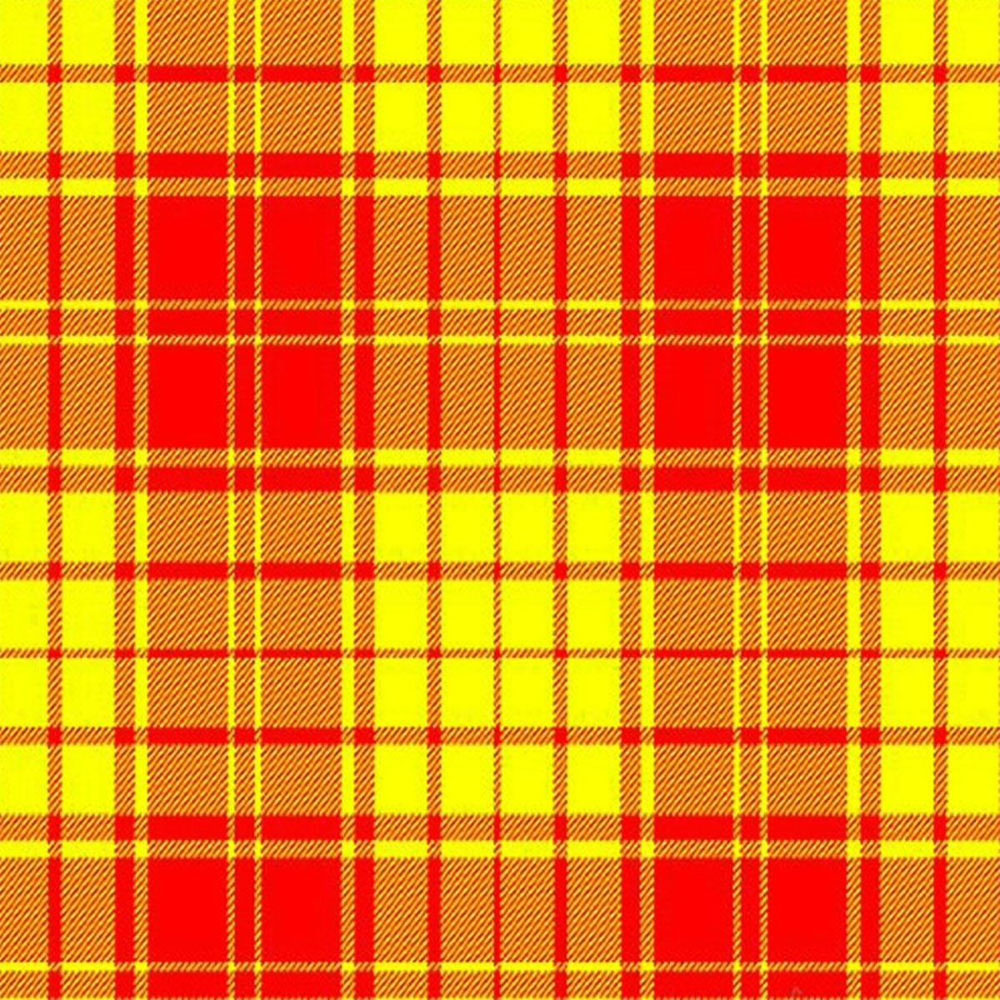
 Macmillan Dress
Clan MacMillan
Clan MacMillan takes its name from the tonsure. The clan society traces the 253 documented spellings of the surname to two Gaelic forms, MacMhaolain and MacGhillemhaoil, both built on maol, bald or shorn, in the sense of the Celtic clerical tonsure; the eponym is Gilchrist, son of Bishop Cormac, nicknamed Maolan or Gillemaol because he wore it. The descent claimed is from Airbertach, a Hebridean prince of the old royal house of Moray. Three districts matter: Lochaber around Loch Arkaig, home of the branch called Clann ’ic ’illemhaoil Abrach; Knapdale in Argyll, which held the chiefly family; and Galloway, thickest in the Glenkens, whose chieftains were the McMillans of Brockloch.
The chiefly family was all but exterminated at the Palm Sunday Massacre of 1430, and a survivor, Alexander mac Lachlan, fled to Knapdale, where some of the clan had probably been settled since the mid-thirteenth century. The MacMillans held Castle Sween from 1362, and in the 1470s Alexander MacMillan held it for the Lord of the Isles and built the tower there still called MacMillan’s Tower. The same Alexander commissioned the fifteenth-century cross at Kilmory Knap chapel, carved with a crucifixion on one face and the chief hunting deer on the other. Knapdale also produced the clan’s best-known folklore, a charter said to have been cut into the rock at the Point of Knap: MacMillan’s right to Knap shall be as long’s this rock withstands the sea. The rock outlasted the right. When the Lordship of the Isles fell at the start of the sixteenth century the crown granted Knapdale to the Campbells, and the MacMillans stayed on as tenants. The Lochaber men went another way, serving as some of Lochiel’s most loyal followers from the mid-sixteenth century through the Jacobite risings to Culloden in 1746. The chiefship then became obscure. Duncan MacMillan of Dunmore was recognised by the Lord Lyon in 1742 as representative of the ancient family of MacMillan of Knapdale, but the line lapsed from view, and General Sir Gordon MacMillan did not discover he was chief until he set out to matriculate arms; he was declared hereditary chief in 1952 and established the chiefs’ seat at Finlaystone.
The MacMillan tartan
The Scottish Register of Tartans holds eleven records under the name, seven of them Clan/Family: MacMillan Dress, MacMillan Hunting, MacMillan Hunting #2 (credited to Baillie Donald Macmillan), MacMillan Ancient, MacMillan Anc (Clans Originaux), MacMillan Society of Glasgow and MacMillan (1946). None carries a date of origin; only one names a designer. The rest are modern commissions, among them the Macmillan Cancer Support tartan by Kinloch Anderson, recorded on 16 September 2015 — the charity, not the clan.
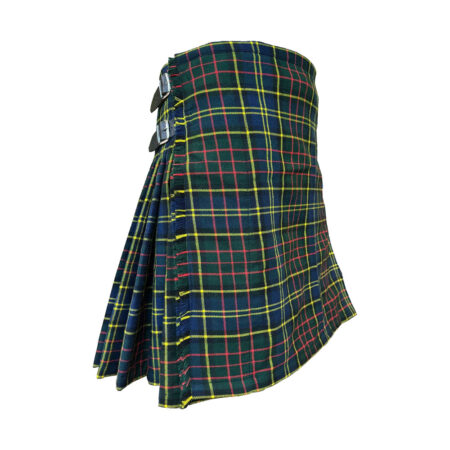
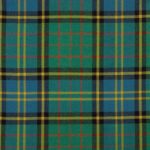
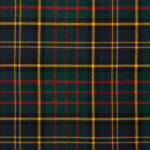
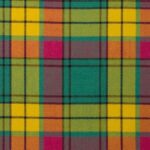
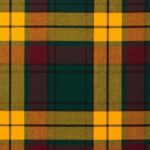
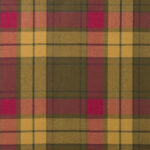
The clan society is unusually frank about where the three working setts came from. Dress MacMillan is the oldest, of unknown origin but documented by 1874, when emigrating MacMillans carried it to New York. Hunting MacMillan was patented in the early 1890s by Donald MacMillan, a Glasgow draper and a founder of the clan society, who laid red and yellow lines over a dark ground. Ancient MacMillan was worked up by weavers in the early twentieth century from McIan’s 1840s illustration of a MacMillan.
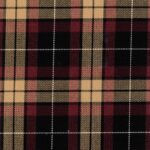
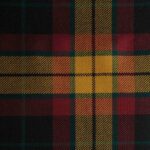
A note on honesty: MacMillan Ancient is the youngest of the three, not the oldest. It is an Edwardian weaving-trade reconstruction of a Victorian artist’s drawing, and the Register attaches neither date nor designer to it. The Hunting sett is a patented commercial design of the 1890s. The Dress sett, the genuinely old one, cannot be traced beyond the 1870s, and the claim that it was granted to the clan by Robert the Bruce is rejected by the clan’s own society. Old Colours, Modern Colours and Weathered are not separate tartans either: they are three dye treatments applied to the same threadcounts, and the society says so plainly.
Clan facts
| Chief | George MacMillan of MacMillan and Knap, listed as such by the Standing Council of Scottish Chiefs. He succeeded his father, General Sir Gordon MacMillan, in 1986; Sir Gordon was declared hereditary chief in 1952 |
|---|---|
| Motto | Miseris Succurrere Disco — “I learn to succour the unfortunate” |
| Plant badge | Holly |
| Lands | Lochaber around Loch Arkaig; Knapdale in Argyll, with Castle Sween and Kilmory Knap; the Glenkens in Galloway. The chief’s seat is Finlaystone House, Langbank, Renfrewshire |
References
Versions of the MacMillan tartan
MacMillan kilts & outfits
Every piece below is made to measure by Kilt 4 Less in the MacMillan tartan. Choose a product, then pick your size and options.
Clan MacMillan Hunting Ancient Tartan Kilt
Original price was: £241.80.£145.00Current price is: £145.00.View kiltMacMillan Old Ancient Tartan Kilt
Original price was: £241.80.£159.00Current price is: £159.00.View kiltMacMillan Old Modern Tartan Kilt
Original price was: £210.00.£119.00Current price is: £119.00.View kiltMacMillan Old Weathered Tartan Kilt
Original price was: £241.80.£159.00Current price is: £159.00.View kiltClan Macmillan Dress Tartan Kilt
Original price was: £241.80.£159.00Current price is: £159.00.View kiltMacMillan Dress Muted Tartan Kilt
Original price was: £210.00.£120.00Current price is: £120.00.View kiltMacMillan Hunting Modern Tartan Kilt
Original price was: £241.80.£130.00Current price is: £130.00.View kiltMen’s 8 Yard Prince Charlie Kilt Outfit
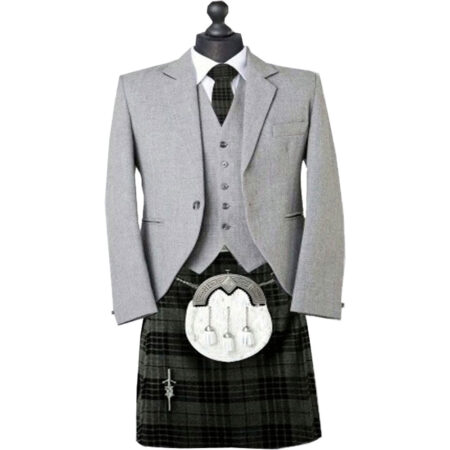
Original price was: £499.00.£315.00Current price is: £315.00.ConfigureMcCalls Highland Kilt Outfit With Argyll Jacket
Original price was: £510.00.£325.00Current price is: £325.00.ConfigureScottish Wedding Men Kilt Outfit
Original price was: £700.00.£304.00Current price is: £304.00.ConfigureForest Green Tweed Jacket Kilt Outfit
Original price was: £489.00.£249.99Current price is: £249.99.Configure