 Baird Modern
Clan Baird
The Bairds were a Lowland family whose earliest lands were in Strathaven in Lanarkshire, with later branches at Posso in Peeblesshire and, most importantly, at Auchmedden in Aberdeenshire, which became the seat of the chiefly line. The firmest date in the Baird record is 1672, when Sir James Baird of Auchmedden registered the undifferenced arms — gules, a boar passant or — in the Public Register of All Arms and Bearings set up by the Act of that year. Eleven other Bairds registered differenced arms between then and 1908.
Earlier Baird history is thinner than clan literature suggests. Bairds are said to appear in the Ragman Roll of 1296, though we have not seen the names in the roll itself, and the frequently repeated date of 1292 for that document is simply wrong. The much retold tale of a Baird who saved William the Lion from a wild boar and was granted lands for it is tradition with no document behind it. The chiefly line failed in the eighteenth century: William Baird of Auchmedden borrowed heavily in support of the rising of 1745, the lands were sold, and the direct succession is generally reckoned to have ended around 1775. Nobody has matriculated the undifferenced arms since.
The Baird tartan
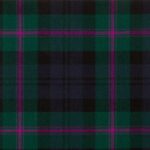
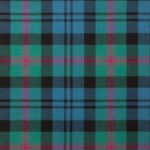
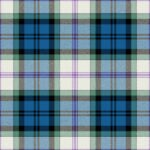
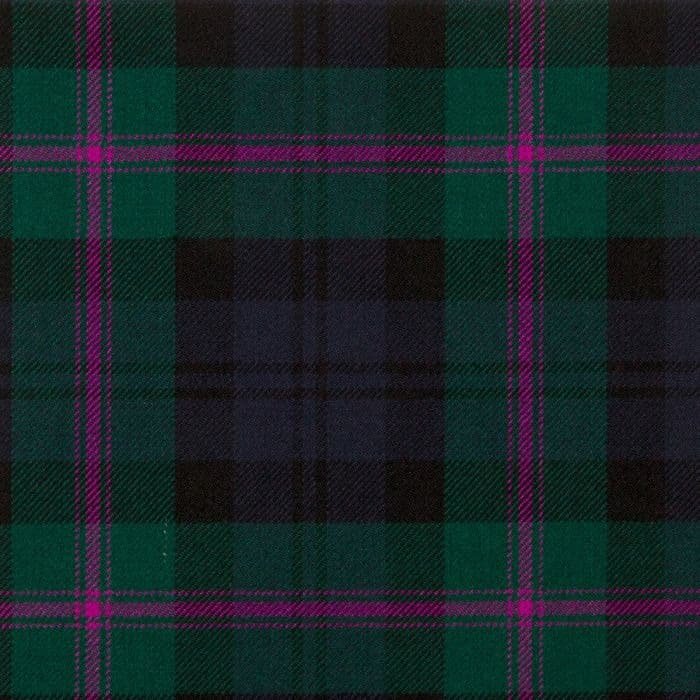
The national register holds only four Baird entries, and just three of them are family tartans: Baird (ref 169), Baird (Modern) (ref 168) and Baird Dress (ref 170). The fourth is a personal tartan registered by Kinloch Anderson in June 2019 for one family. All three family entries carry “Designer: Not Specified” and no recorded date, so the register attributes them to no weaver, no clan commission and no designer at all. Baird is not in the Vestiarium Scoticum, and no Baird sett is attributed to Wilsons of Bannockburn.
Baird Dress is a genuinely separate registration, since dress patterns substitute a white ground and that is a real change of threadcount. Whether refs 168 and 169 are two patterns or one pattern recorded twice we cannot say: they carry different numbers in the older collections, which argues for two records, but “(Modern)” is normally the register’s marker for a shade range rather than a pattern, and the register’s detail pages do not load, so the threadcounts cannot be compared. Commercially, treat Baird as two setts: Baird and Baird Dress.
A note on honesty: no Baird sett can be documented earlier than the twentieth century, and none predates the commercial era. “Baird Ancient”, “Baird Weathered”, “Baird Muted” and “Baird Hunting” are not in the register — the first three are dye colourways of the sett above, and we can find no registered Baird hunting pattern at all, although the clan’s own website counts four Baird tartans. Where the clan society and the national register disagree, this page follows the register and says so. You will also see the claim that the Baird sett comes from Wilsons of Bannockburn and dates to the 1840s; that wording describes a mill’s reproduction fabric range in general, not the Baird pattern, and the register supports no such attribution.
Clan facts
| Chief | None. The chiefship is dormant and no chief of the Name of Baird is recognised. Richard Holman Baird of Rickarton, Ury and Lochwood holds a commission as Clan Commander from the Lord Lyon, granted on 19 August 2019 and since renewed. A commander is not a chief, and no restoration of the chiefship has taken place |
|---|---|
| Motto | Dominus fecit — “The Lord made” |
| Plant badge | Not recorded. Neither the clan society nor COSCA gives one |
| Lands | Strathaven, Lanarkshire, and Posso, Peeblesshire, early; Auchmedden, Aberdeenshire, the chiefly seat; later Newbyth, Saughtonhall and Ury |